Scriu acest articol chiar din amintiri… Este despre o călătorie din septembrie anul trecut (!), înaintea căreia însă au intrat „la tipar” alte câteva articole. Cumva, pentru că păreau mai „de moment”, sau și-au cerut altfel prioritatea, sau poate pentru că aveam deja câteva articole despre mare - din Năvodari, de la Corbu, ba chiar și din Constanța, din cartierul vecin, Tăbăcăriei.
Dar între ele exista încă un „gol” de umplut pe hartă: cartierul Mamaia din Constanța. Noi l-am vizitat, cum ziceam, anul trecut, în extrasezon și, deși unele atracții erau deja închise, vremea și peisajul au ținut cu noi, astfel că amintirile sunt încă destul de vii. Până să se risipească de tot, le pun pe hârtie, pentru a face loc unora noi!
I am writing this article straight from memory… It is about a trip from last September (!), before which, however, a few other articles went “to print.” Somehow, because they seemed more “of the moment,” or claimed their priority in a different way, or perhaps because I already had a few articles about the seaside — from Năvodari, from Corbu, and even from Constanța, from the neighboring district, Tăbăcăriei.
But between them, there is still a “gap” to fill on the map: the Mamaia neighborhood of Constanța. We visited it, as I was saying, last year, in the off-season, and although some attractions were already closed, the weather and the landscape were on our side, so the memories are still quite vivid. Before they fade away completely, I am putting them down on paper, to make room for new ones!
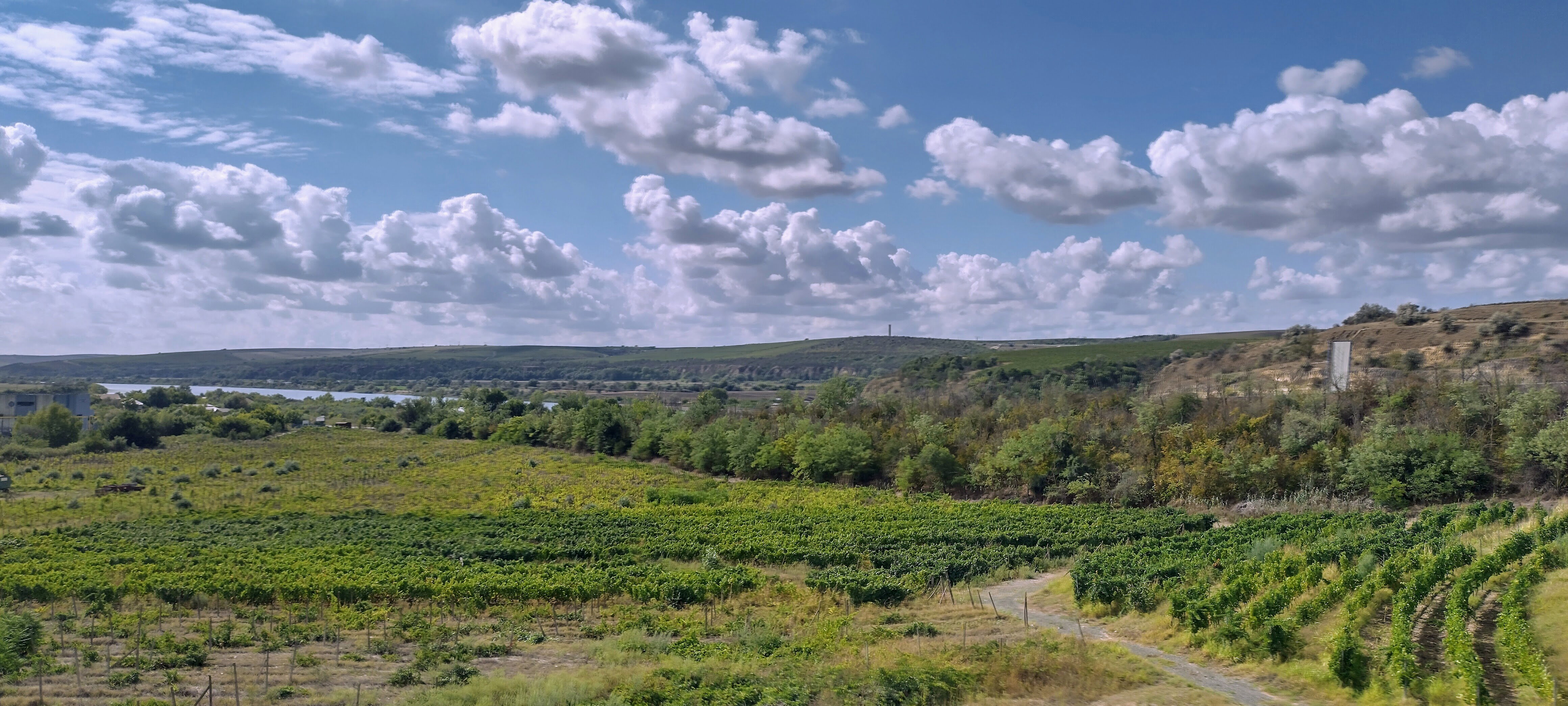
Într-o zi însorită de toamnă… (peisaj din tren) // On a sunny autumn day… (view from the train)
Ziua 1. Am plecat de dimineață din București cu IC 538, până la Constanța. Trenul se formează la Brașov, oprește doar la Ploiești Vest și București Nord, de unde pleacă direct către Constanța.
Am ajuns în Constanța cu 10 minute întârziere, ceea ce internetul zice că e tipic pe această rută, vara acumulând chiar întârzieri de până la două ore! Deci să ne considerăm norocoși.
Day 1. We left Bucharest in the morning on IC 538, heading to Constanța. The train starts from Brașov, stops only at Ploiești West and Bucharest North, from where it goes straight to Constanța.
We arrived in Constanța 10 minutes late, which the internet says is typical on this route, with delays in summer sometimes adding up to as much as two hours! So let’s consider ourselves lucky.
Cu trenul // By train
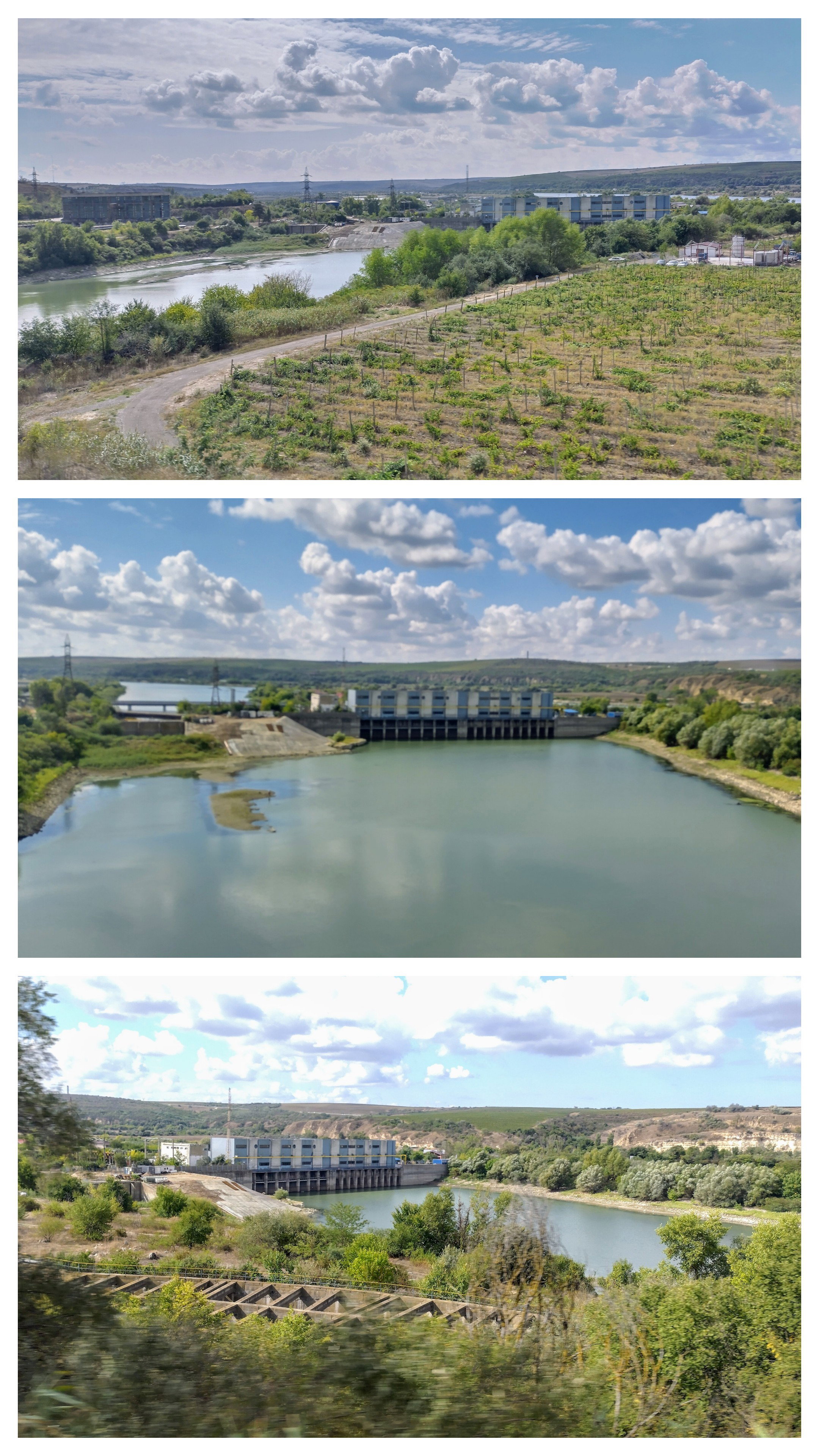
Stația de pompare Cernavodă // The Cernavodă Pumping Station
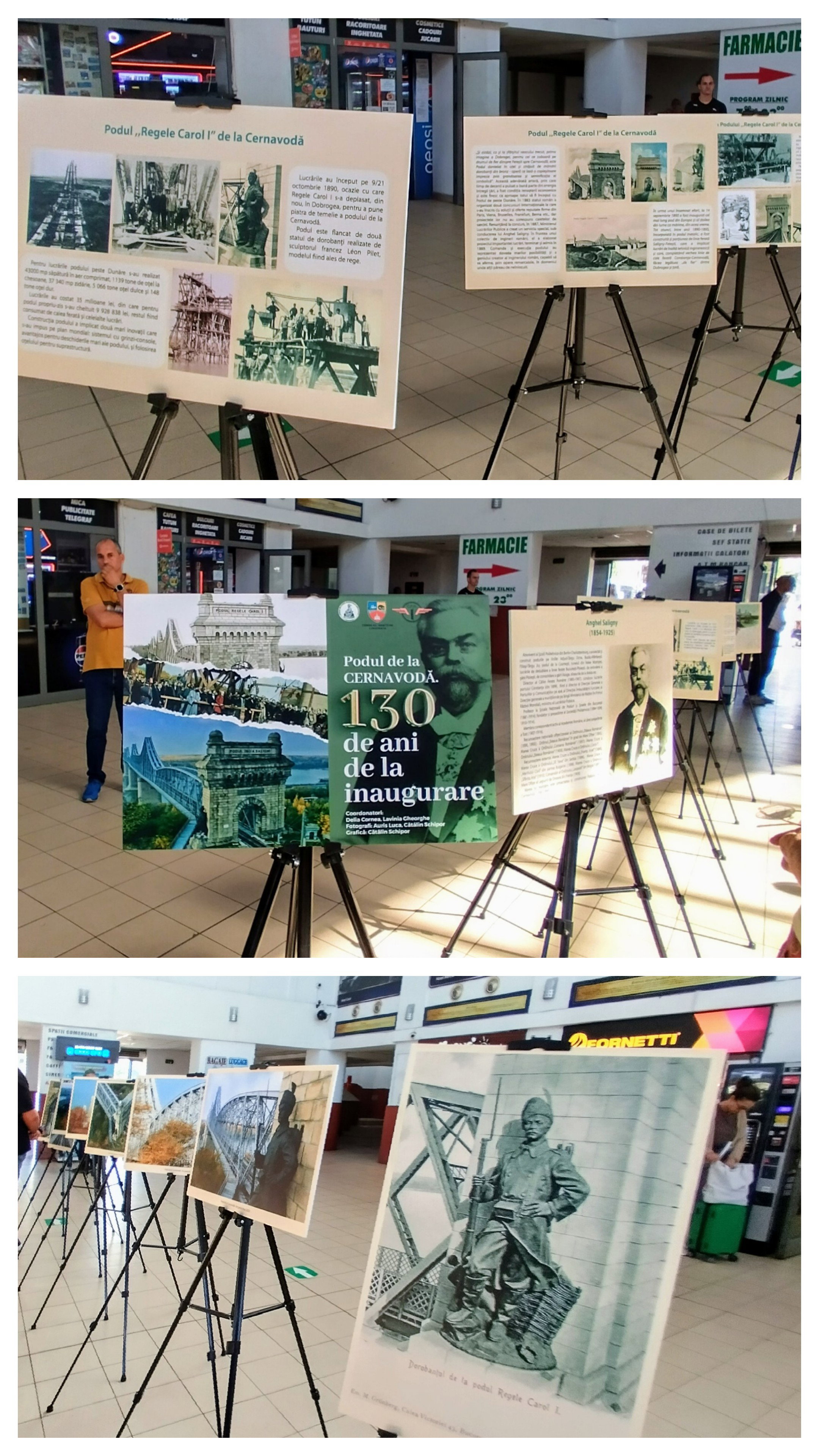
În gara din Constanța ne aștepta o expoziție foto dedicată podului de la Cernavodă, iar imediat afară ne-am întâlnit cu familiarele simboluri constănțene: nava și, ceva mai târziu pe traseu (din autobuz), elicea.
In the Constanța train station, a photo exhibition dedicated to the Cernavodă bridge was waiting for us, and immediately outside we encountered the familiar symbols of Constanța: the ship and, a little later along the route (from the bus), the propeller.
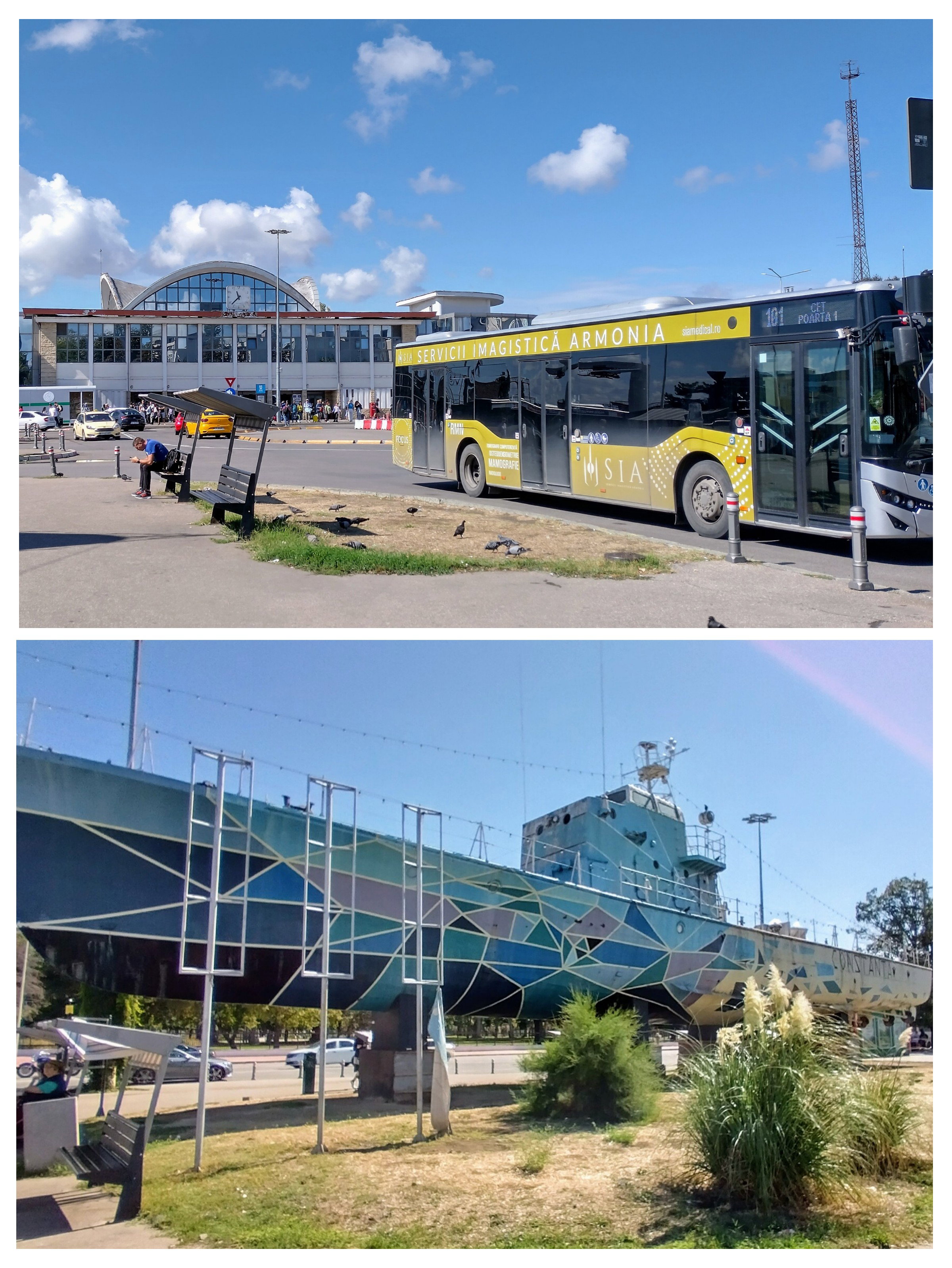
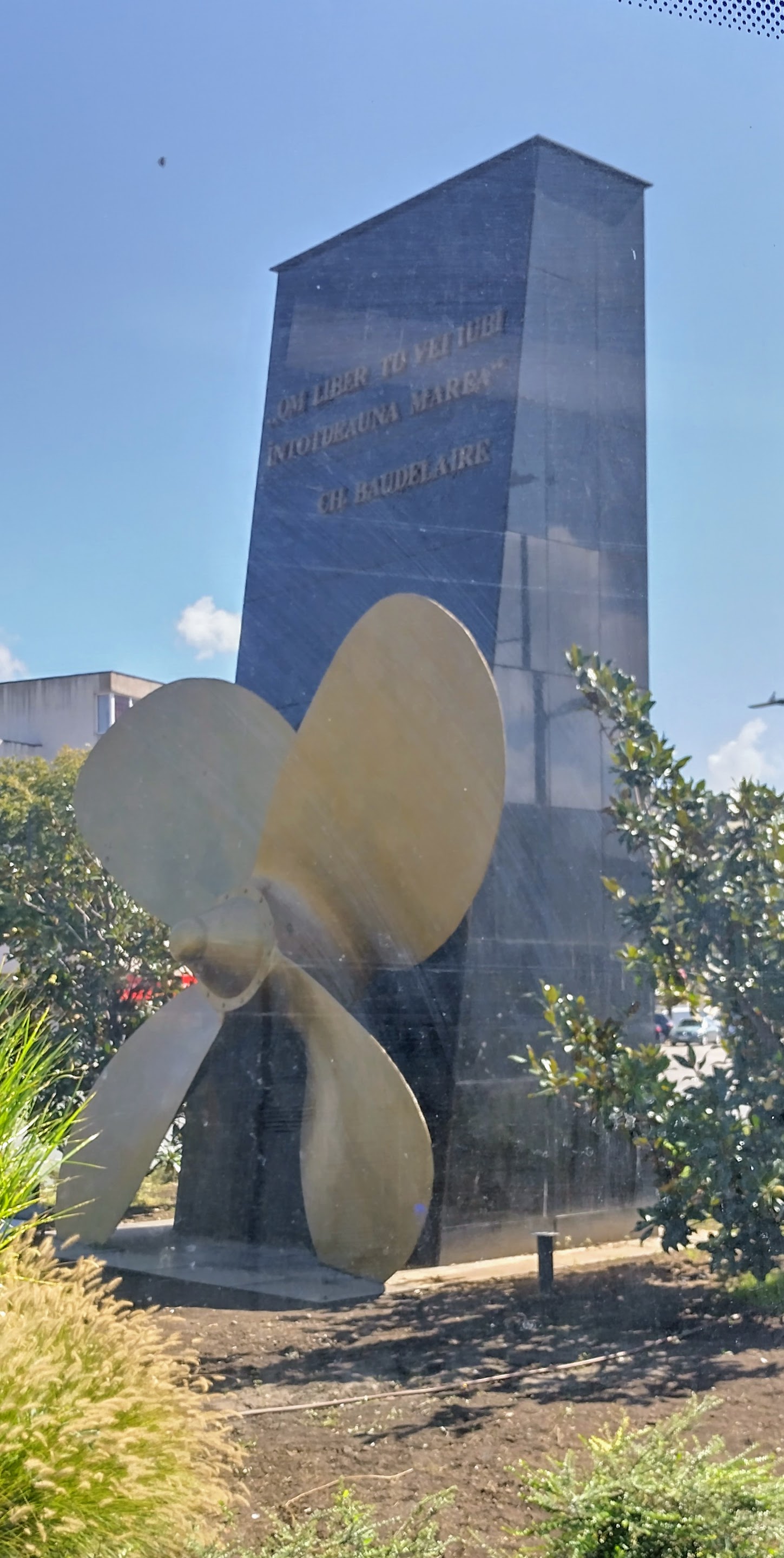
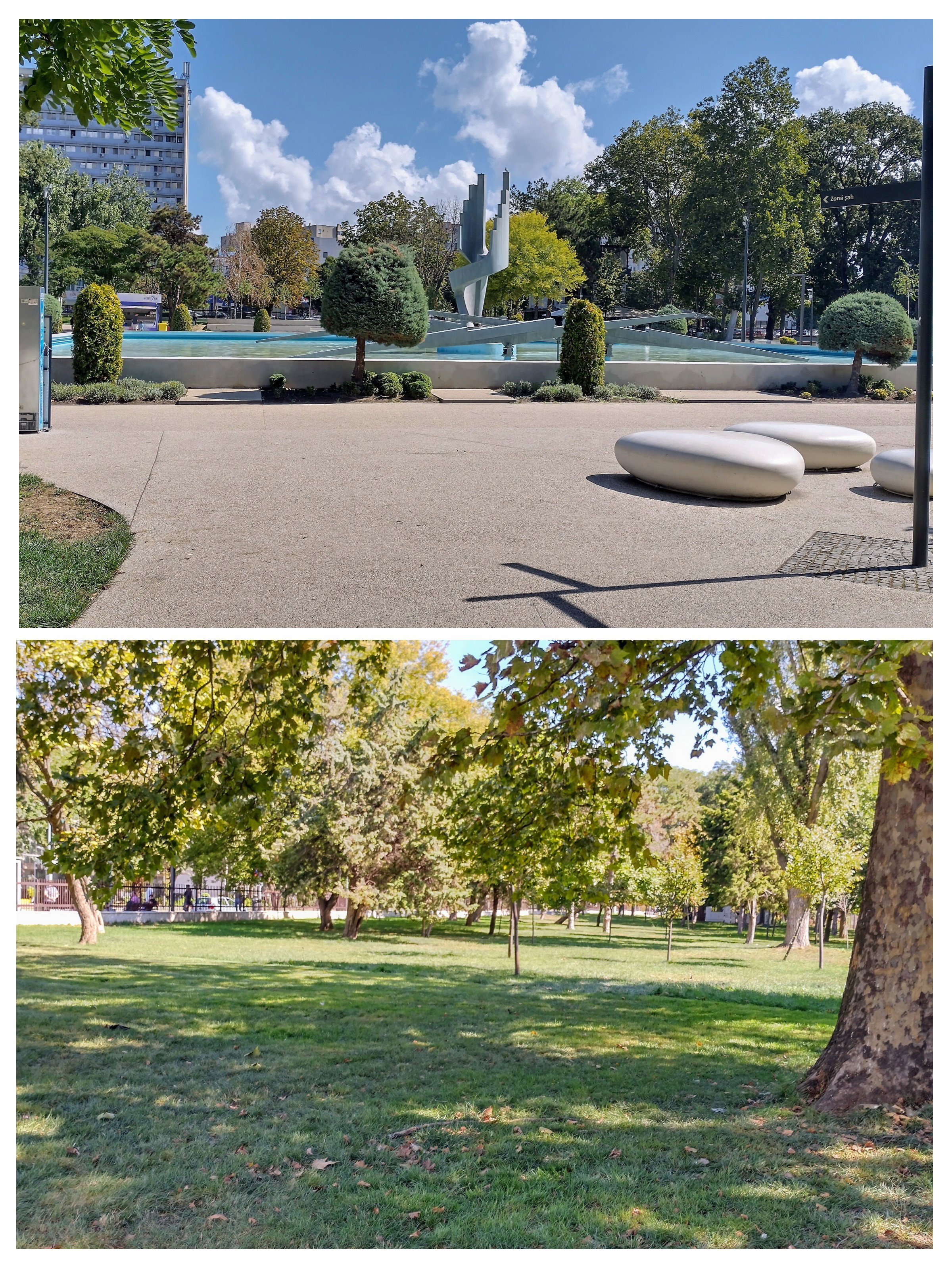
Până să pornim însă spre hotel, am dat o tură scurtă prin Parcul Gării, la umbră, după care ne-am urcat în autobuzul 100C, care ne-a lăsat la City Park Mall, unde ne-am oprit pentru ceva de mâncare.
Before heading to the hotel, however, we took a short walk through the Station Park, in the shade, after which we got on bus 100C, which dropped us off at City Park Mall, where we stopped for something to eat.
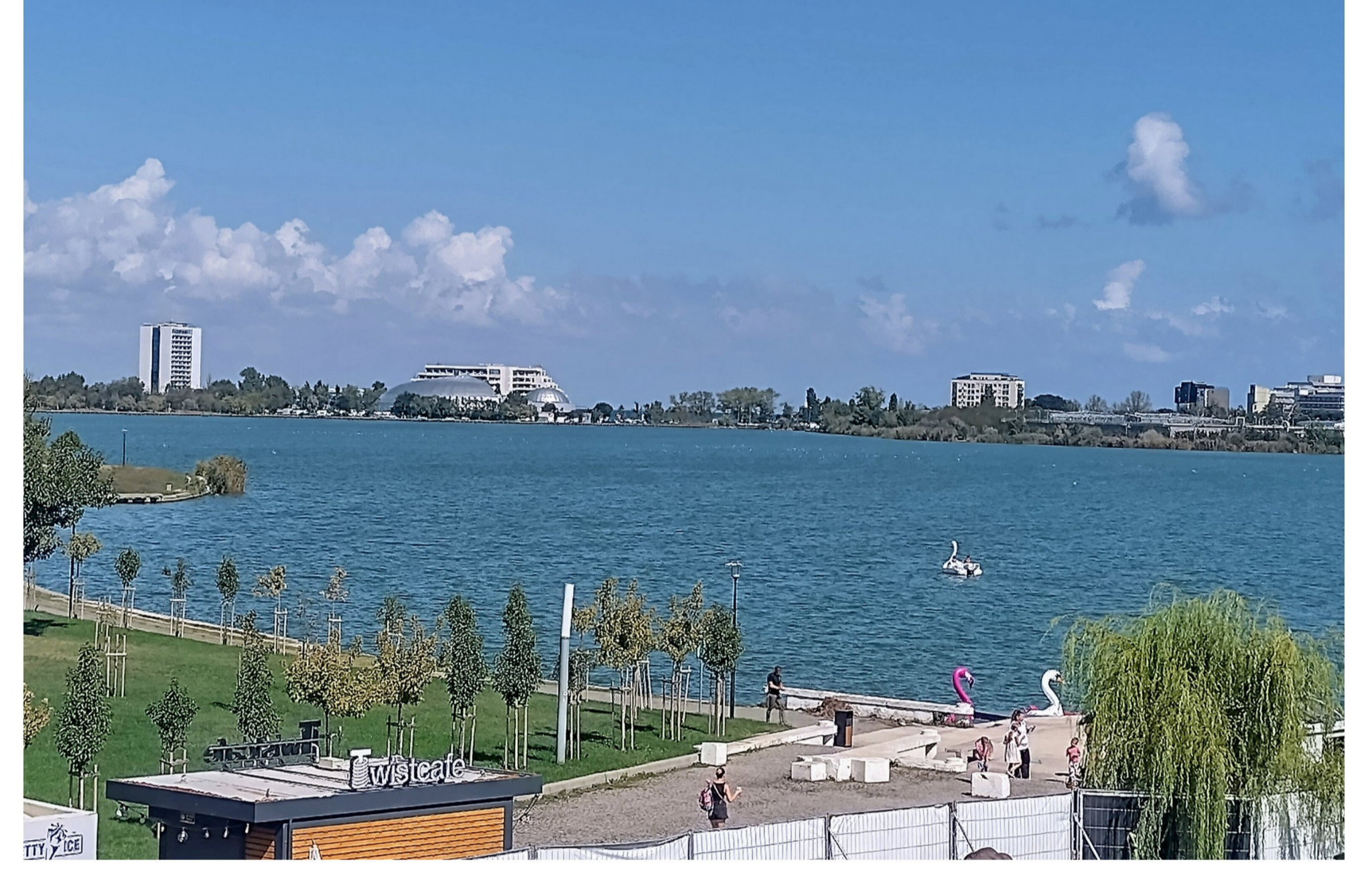
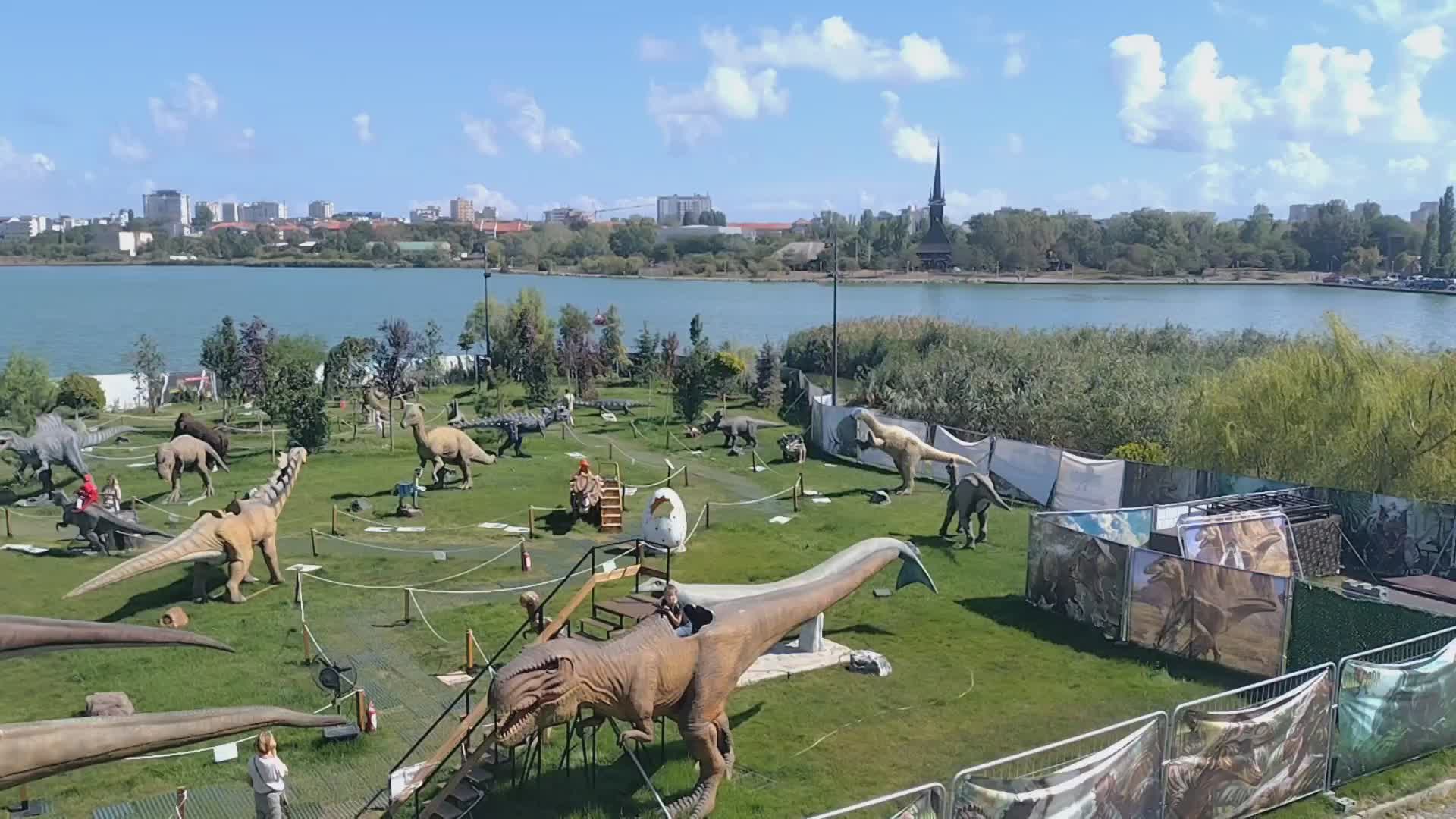
De pe terasa mall-ului am revăzut de sus Lacul Tăbăcăriei și, între el și mall, pe un colț de parc, o expoziție de dinozauri „vii”. Pentru copii.
From the mall terrace, we saw Lake Tăbăcăriei again from above and, between it and the mall, on a corner of the park, an exhibition of “live” dinosaurs. For children.
Am continuat apoi drept prin Luna Park, spre cazare, unde, fiind și extrasezon, ne-am răsfățat cu o noapte la celebrul Hotel Parc.
We then continued straight through Luna Park, toward our accommodation, where, since it was also the off-season, we treated ourselves to a night at the famous Hotel Parc.
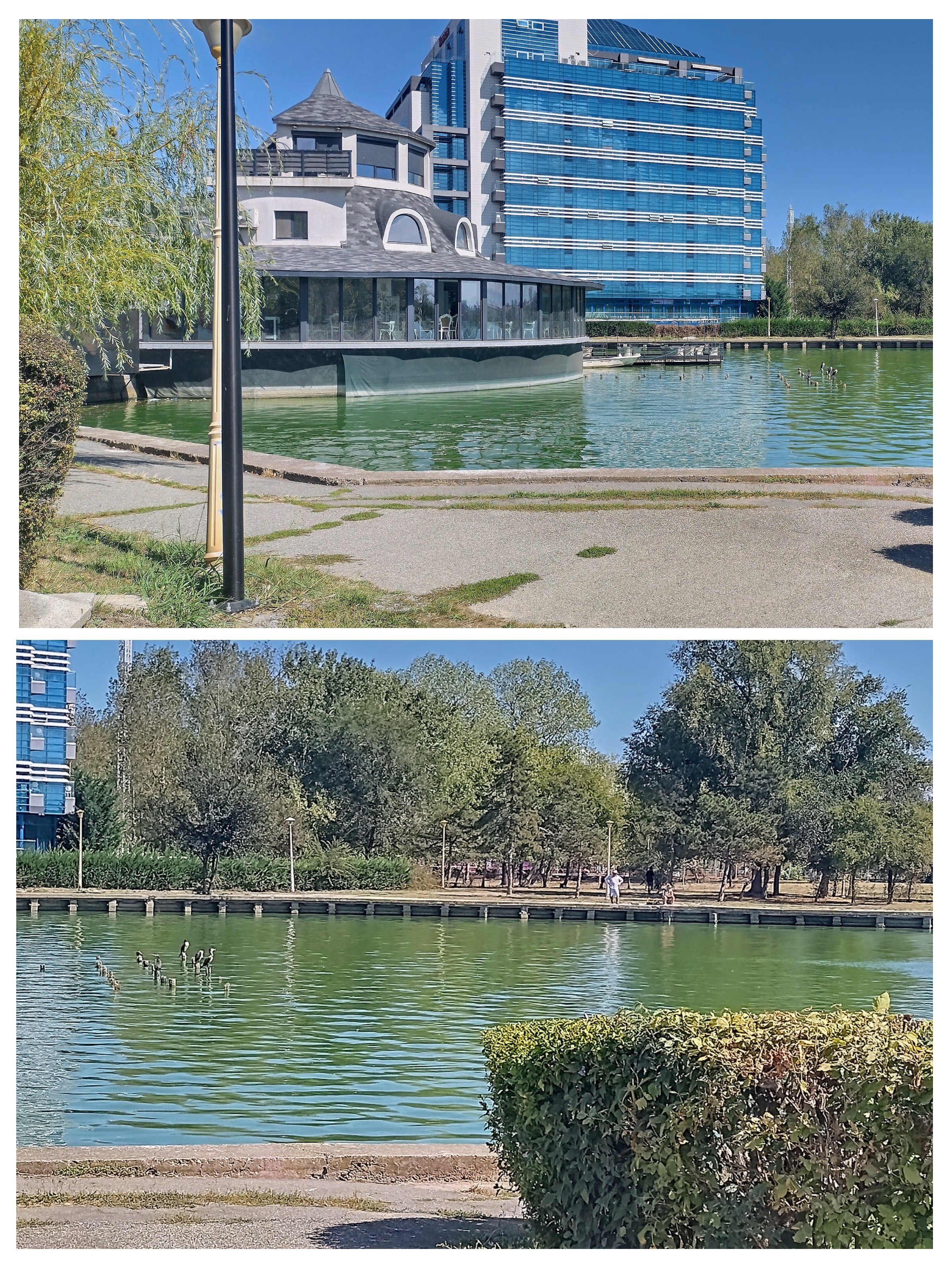
Restaurantul B’Arca și Hotelul Ramada, în colțul nord-vestic al Lacului Tăbăcăriei // The B’Arca Restaurant and the Ramada Hotel, in the northwestern corner of Lake Tăbăcăriei
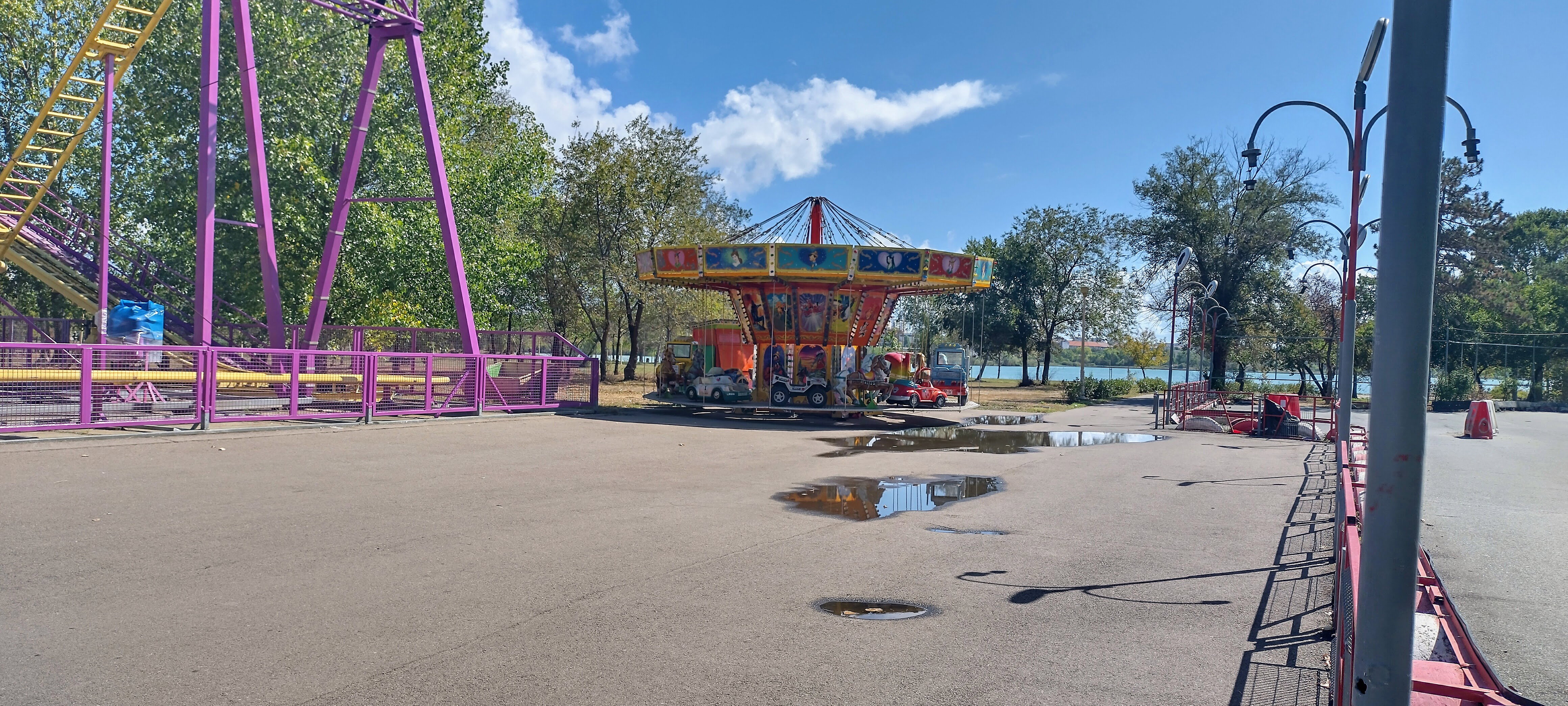
Luna Park sau fostul Sat de Vacanță // Luna Park, or the former Holiday Village
Hotelul Parc este unul dintre reperele moderniste ale stațiunii Mamaia, ridicat în etapa de mare sistematizare turistică de la sfârșitul anilor ’50 și începutul anilor ’60, când vechea stațiune a elitelor interbelice a fost transformată într-un ansamblu turistic de masă. Inaugurat la 30 iunie 1962, la intrarea sudică în Mamaia, Parc făcea parte din „ansamblul celor 10.000 de paturi” și era proiectat ca hotel de categorie superioară, cu funcționare permanentă. Turnul său, gândit ca reper vizual pentru accesul dinspre Constanța, avea 16 niveluri și 426 de locuri de cazare, cu camere orientate spre mare, lacul Siutghiol sau lacul Tăbăcăriei. Proiectat de Violeta Constantinescu și Gabriela Gheorghiu, hotelul includea restaurant, spații publice tratate cu materiale moderne și finisaje de calitate, iar la ultimul nivel avea o terasă-club, cu bar, ring de dans și panoramă asupra litoralului, considerată primul sky-bar de pe litoralul românesc.
Hotel Parc is one of the modernist landmarks of the Mamaia resort, built during the major stage of tourist systematization in the late 1950s and early 1960s, when the old resort of the interwar elites was transformed into a mass tourism complex. Inaugurated on June 30, 1962, at the southern entrance to Mamaia, Parc was part of the “10,000-bed complex” and was designed as a higher-category hotel, operating year-round. Its tower, conceived as a visual landmark for access from Constanța, had 16 levels and 426 accommodation places, with rooms facing the sea, Lake Siutghiol, or Lake Tăbăcărie. Designed by Violeta Constantinescu and Gabriela Gheorghiu, the hotel included a restaurant, public spaces treated with modern materials and quality finishes, and, on the top level, a club terrace with a bar, dance floor, and panorama over the seaside, considered the first sky bar on the Romanian coast.
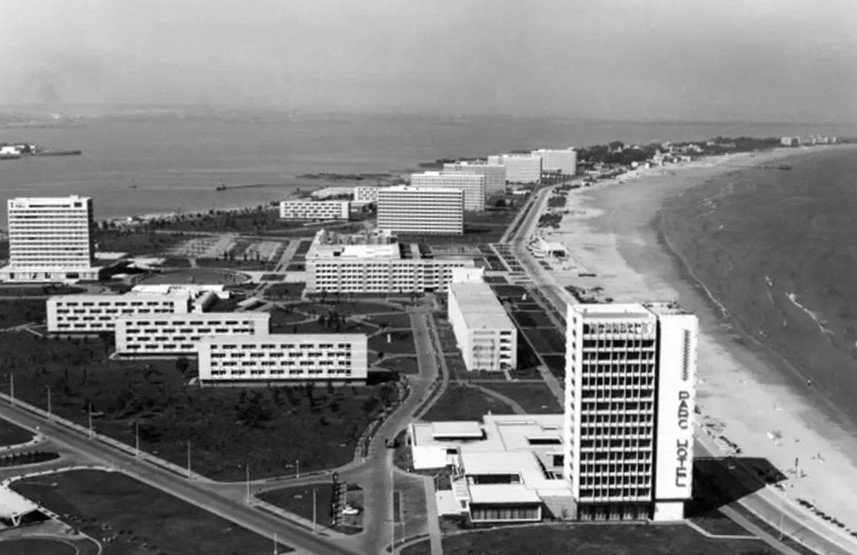
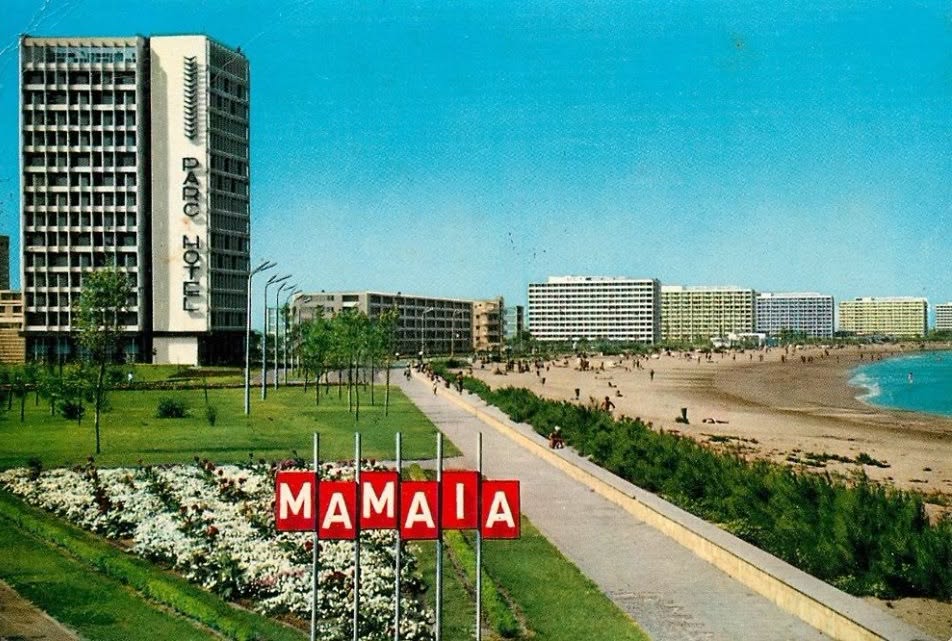
Atunci... // Then...
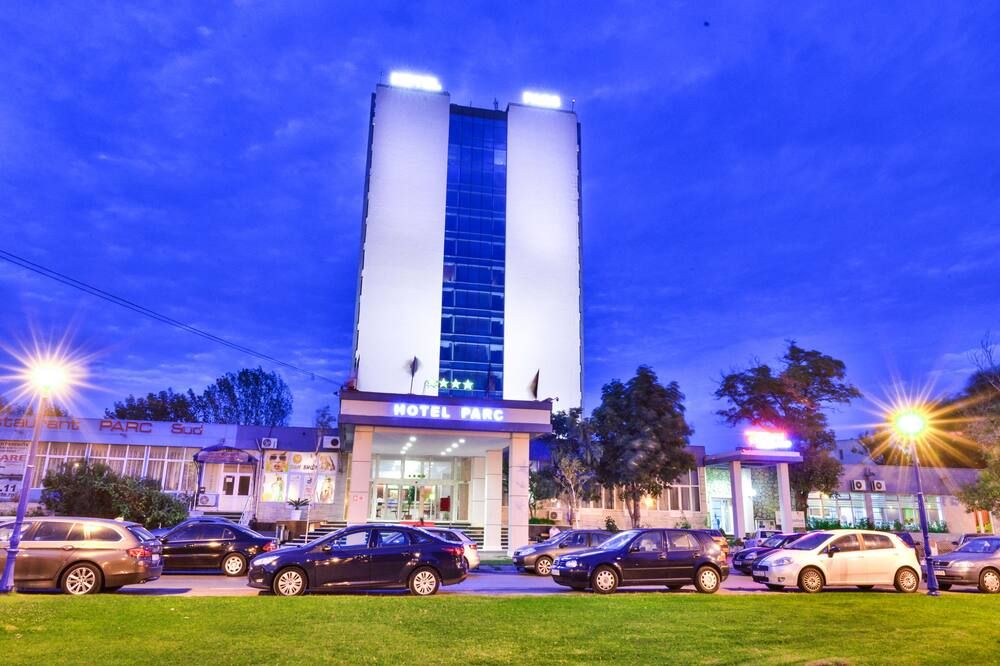
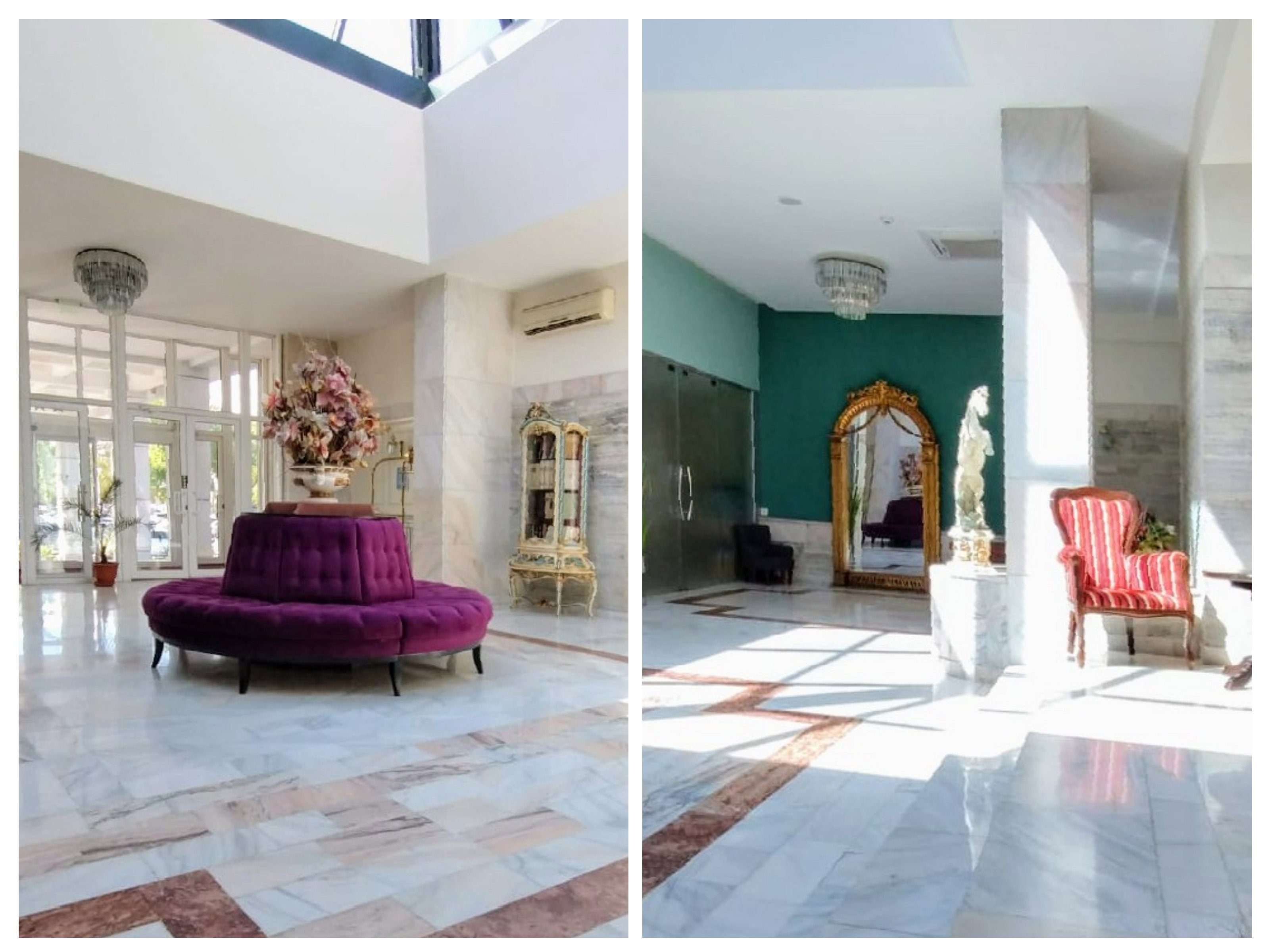
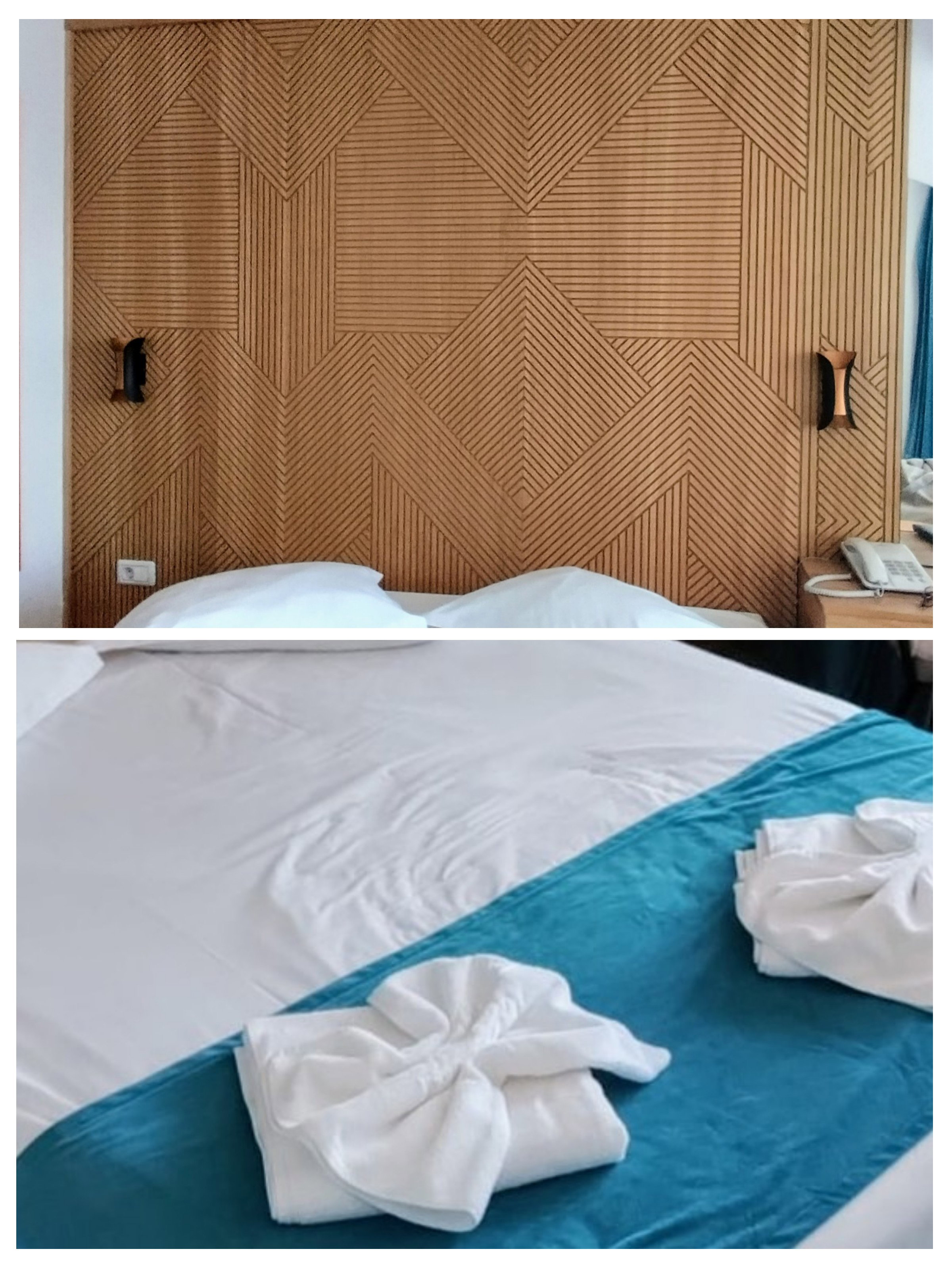
...și acum // ...and now
Găsiți aici un articol excelent, care vă spune în detaliu despre planuri, arhitectură și facilități, și, mai jos, o foarte interesantă, dar mai scurtă, postare pe Facebook, via cIMeC.
You can find here an excellent article, which tells you in detail about the plans, architecture, and facilities, and, below, a very interesting, but shorter, Facebook post, via cIMeC.
Ah, și deci am început cu istoria stațiunii Mamaia! Să mergem atunci la începuturile ei, acum 120 de ani, când, în 1906, zona actualei stațiuni era încă aproape complet neconstruită. Mamaia veche se afla mai la nord și era un mic sat dobrogean de coastă, cu pescari greci și lipoveni, oieri români și crescători de cai tătari, iar numele ar veni de la Mamai, un proprietar tătar din vremea stăpânirii otomane.
Stațiunea propriu-zisă apare după extinderea portului Constanța, când vechile băi de mare din sudul orașului sunt mutate spre nord. În 1906 se ridică aici primele cabine de lemn, grupate în două pavilioane cu foișoare, plus o punte care înainta în mare; inaugurarea are loc pe 22 august 1906. Pentru acces, între gara Constanța și Mamaia se montează și o linie ferată, pe traseul actualului Bulevard Mamaia, dispărută abia în anii ’60.
Oh, and so we have begun with the history of the Mamaia resort! Let us then go back to its beginnings, 120 years ago, when, in 1906, the area of today’s resort was still almost completely unbuilt. Old Mamaia was located farther north and was a small Dobrogean coastal village, with Greek and Lipovan fishermen, Romanian shepherds, and Tatar horse breeders, while the name is said to come from Mamai, a Tatar landowner from the time of Ottoman rule.
The resort proper appeared after the expansion of the Port of Constanța, when the old sea baths from the south of the city were moved northward. In 1906, the first wooden cabins were built here, grouped into two pavilions with small lookout towers, plus a pier extending into the sea; the inauguration took place on August 22, 1906. For access, a railway line was also laid between Constanța station and Mamaia, along the route of today’s Mamaia Boulevard, disappearing only in the 1960s.
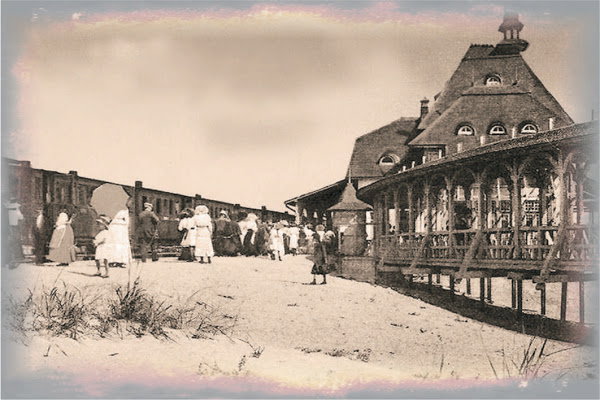
Din gară... (via constanta.ro) // From the train station... (via constanta.ro)
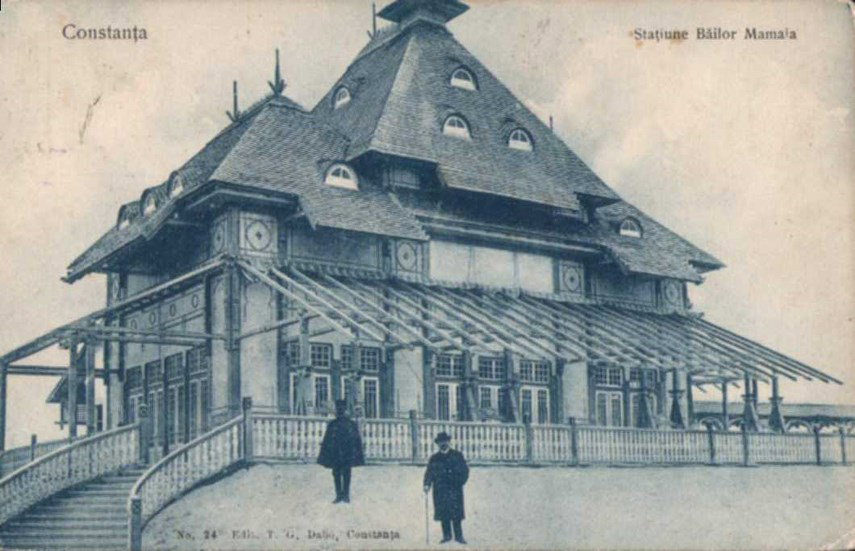
...direct pe plajă... // ...directly on the beach...
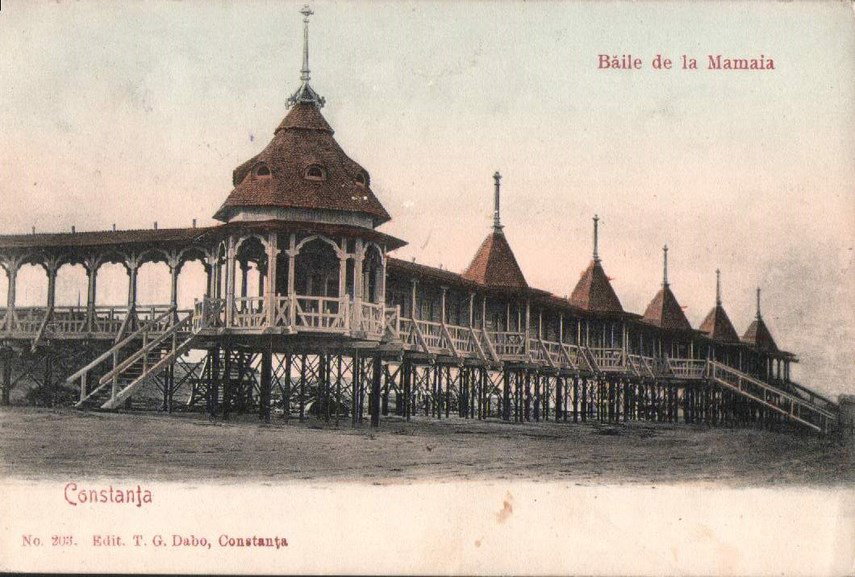
...sau în apă (via ziuaconstanta.ro) // ...or in the water (via ziuaconstanta.ro)
A doua vârstă a stațiunii este Mamaia burgheziei și aristocrației. Primele pavilioane rămân centrul vieții turistice până în 1920, când dispar într-un incendiu, dar, după Primul Război Mondial, stațiunea capătă un profil mult mai elegant. Apar reședința de vară a familiei regale, în zona actualului Club Castel, vile particulare, apoi Cazinoul, inaugurat în 1935, și Hotelul Rex, deschis în 1936, simbolul luxului interbelic de la mare. Mamaia devine astfel o stațiune de promenadă, plajă, sezon monden și arhitectură reprezentativă, legată de familia regală, de elita politică, de burghezie și de „lumea bună” a României interbelice.
„Mamaia: imense întinderi de nisip, o plajă atât de largă încât sfârșitul i se pierde în depărtare, cu scoici trandafirii ca niște petale de flori aruncate de zâne, băi de mare și acel râs ce izbucnește anume când năvălește asupra ta apa rece, foșnetul șoptit al valurilor ce se sparg rând pe rând domol de mal, lăsând fiecare o fâșie de spumă albă ca zăpada; jocuri prin nisip, câini nebunatici luptându-se cu câte o bucată groasă de lemn azvârlită de valuri pe mal sau înnebuniți de bucurie și alergând ca niște ogari cenușii într-o fugă zănatecă de-a lungul plajei, lătrat îmbătat de fericire; bone cu uneltele necesare pentru baie: cu umbrele de soare și cuvinte de dojană, apoi iarăși râsete, râsete. Bărci încete lunecând alene pe întinderea lacurilor, soare revărsat fără milă asupra capetelor noastre, prefăcând apa într-o pânză de lumină care arde ochii.” - Regina Maria
The second age of the resort is the Mamaia of the bourgeoisie and the aristocracy. The first pavilions remained the center of tourist life until 1920, when they disappeared in a fire, but after the First World War, the resort acquired a much more elegant profile. The summer residence of the royal family appeared, in the area of today’s Club Castel, along with private villas, then the Casino, inaugurated in 1935, and Hotel Rex, opened in 1936, the symbol of interwar seaside luxury. Mamaia thus became a resort of promenade walks, beach life, fashionable seasons, and representative architecture, linked to the royal family, the political elite, the bourgeoisie, and the “good society” of interwar Romania.
“Mamaia: immense stretches of sand, a beach so wide that its end is lost in the distance, with pinkish shells like flower petals scattered by fairies, sea baths and that laughter which bursts out precisely when the cold water rushes over you, the whispered rustle of the waves breaking one by one, gently, against the shore, each leaving behind a strip of foam as white as snow; games in the sand, madcap dogs struggling with some thick piece of wood thrown by the waves onto the shore, or driven wild with joy and running like greyhounds in a frantic dash along the beach, barking drunk with happiness; nannies with the necessary things for bathing: with sun umbrellas and words of reproach, then again laughter, laughter. Slow boats gliding lazily across the expanse of the lakes, sun pouring mercilessly over our heads, turning the water into a sheet of light that burns the eyes.” Queen Marie
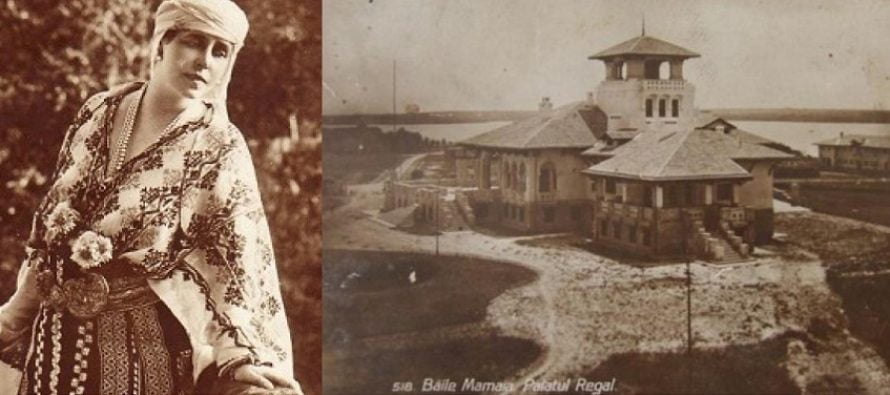
via themoodboard.ro
După al Doilea Război Mondial, Mamaia este „popularizată” din nou, dar ca stațiune de masă. La sfârșitul anilor ’50 și începutul anilor ’60 începe marea sistematizare turistică, iar sudul stațiunii se umple de hoteluri moderniste, restaurante, spații comerciale și infrastructură pentru un număr tot mai mare de turiști. Hotelurile Parc și Perla marchează intrarea sudică în Mamaia, în timp ce ansamblul celor 10.000 de paturi transformă stațiunea într-un produs turistic. În epocă, Mamaia funcționează și ca vitrină: primește români, turiști din blocul estic, dar și occidentali atrași de prețurile mici.
After the Second World War, Mamaia is “popularized” once again, but as a mass resort. In the late 1950s and early 1960s, the major tourist systematization begins, and the southern part of the resort fills with modernist hotels, restaurants, commercial spaces, and infrastructure for an ever-growing number of tourists. The Parc and Perla hotels mark the southern entrance to Mamaia, while the 10,000-bed complex transforms the resort into a tourist product. At the time, Mamaia also functions as a showcase: it receives Romanians, tourists from the Eastern Bloc, but also Westerners attracted by the low prices.
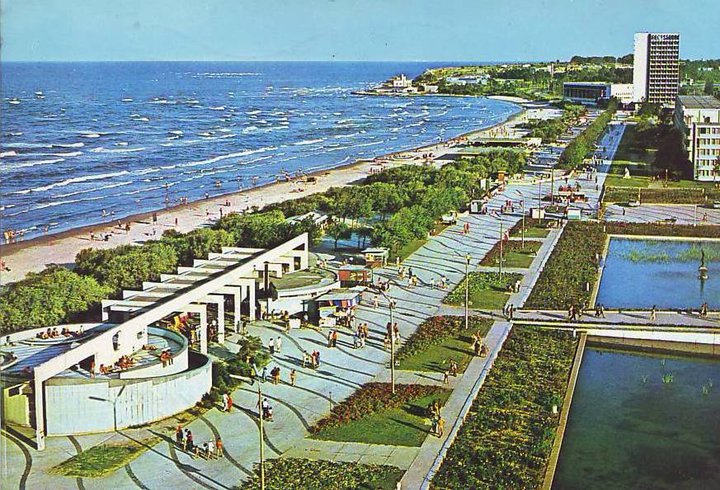
Mamaia, zona Perla, 1977 (via telegrafonline.ro // Mamaia, the Perla area, 1977 (via telegrafonline.ro)
După 1989, Mamaia intră într-o nouă etapă, mai liberă, dar și mult mai haotică: dispare turismul controlat, hotelurile sunt privatizate, unele, precum Rex, se degradează, altele, precum fostul Yalta, apoi București, acum IAKI al lui Gică Hagi, sunt renovate și repoziționate comercial, iar stațiunea începe să se reconstruiască după logica pieței - terase, beach-baruri, parcări, clădiri ridicate lângă plajă, extinderi, improvizații și, treptat, dezvoltări imobiliare tot mai agresive.
Luxul vechi supraviețuiește mai degrabă ca memorie; peste această moștenire se așază luxul de rit nou, mai zgomotos și mai comercial: plaje private, cluburi, festivaluri, restaurante scumpe și zona de nord transformată în decor de noapte, cu nume ca Bamboo, Fratelli, Loft, Ego, Nuba sau plajele H2O, Kudos, Ipanera și Crazy Beach. Mamaia se „aristocratizează” din nou…
After 1989, Mamaia enters a new stage, freer, but also much more chaotic: controlled tourism disappears, the hotels are privatized, some, such as Rex, deteriorate, others, such as the former Yalta, then București, now Gică Hagi’s IAKI, are renovated and commercially repositioned, and the resort begins to rebuild itself according to the logic of the market — terraces, beach bars, parking lots, buildings erected next to the beach, extensions, improvisations and, gradually, increasingly aggressive real estate developments.
The old luxury survives rather as memory; over this legacy settles a luxury of a new rite, louder and more commercial: private beaches, clubs, festivals, expensive restaurants, and the northern area transformed into a nighttime setting, with names like Bamboo, Fratelli, Loft, Ego, Nuba or the beaches H2O, Kudos, Ipanera and Crazy Beach. Mamaia “aristocratizes” itself again…
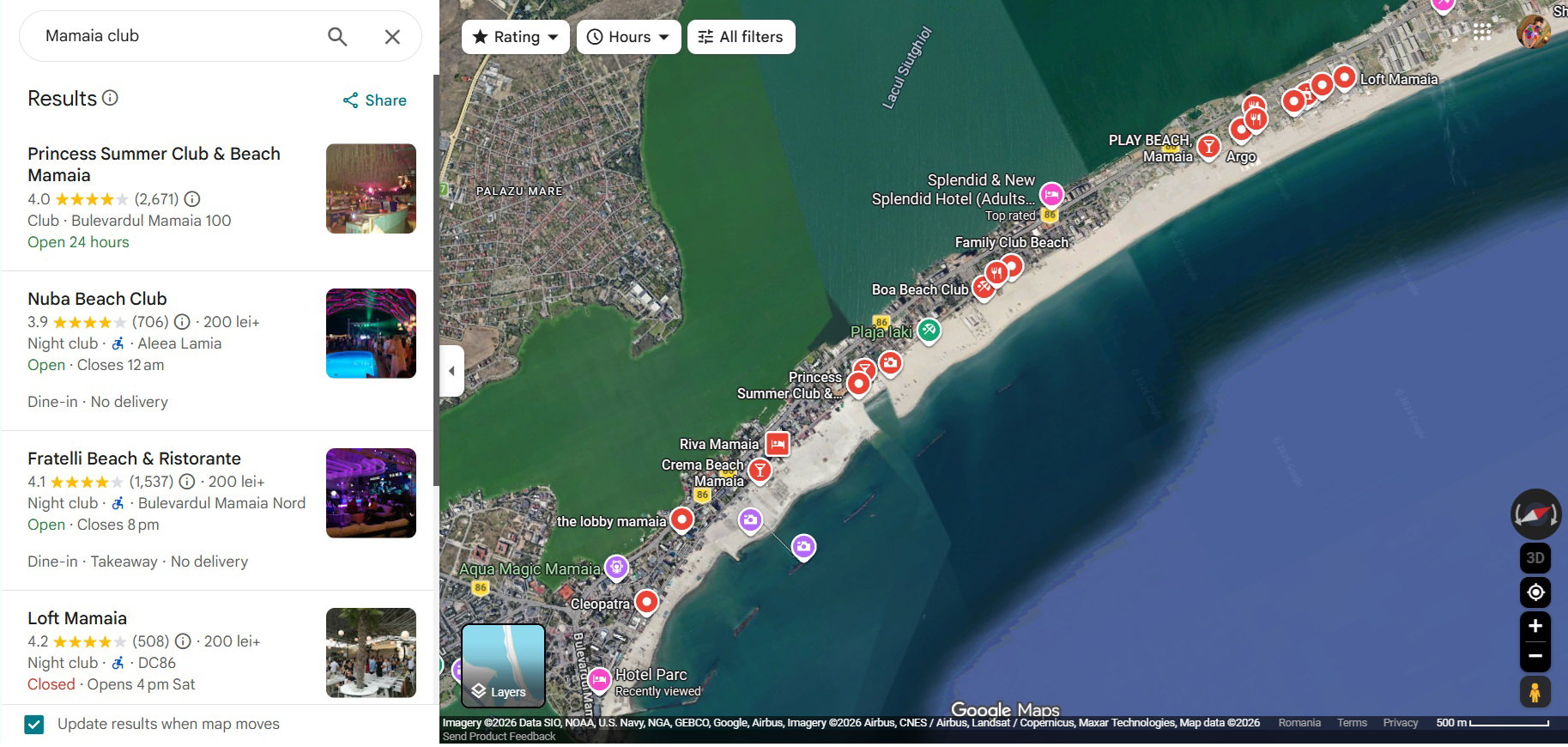
Dar, pentru că noi nu suntem aristocrați, ci turiști de rând, după ce parcăm bagajele la hotel și după o baie foarte scurtă pe plaja din față, căci apa nu era chiar caldă, am urcat în telegondolă pentru a experimenta și această ultimă mare realizare turistică a stațiunii. Se trece peste Aqua Magic, care, când am fost noi, era închis. Vedeți ce am văzut și noi în clipul de mai jos.
Telegondola din Mamaia a fost inaugurată pe 16 iulie 2004 și a devenit rapid unul dintre simbolurile moderne ale stațiunii. Traseul are aproximativ 2 kilometri, între zona Hotel Perla și Cazino, iar o călătorie durează în jur de 8–12 minute. Cabinele urcă până la circa 50 de metri înălțime, trecând peste hoteluri și oferind o panoramă largă asupra stațiunii, Constanței și Mării Negre.
But because we are not aristocrats, but ordinary tourists, after dropping our luggage at the hotel and after a very short swim on the beach in front, since the water was not exactly warm, we went up in the cable car to experience this latest major tourist achievement of the resort as well. It passes over Aqua Magic, which, when we were there, was closed. You can see what we saw too in the video below.
The Mamaia cable car was inaugurated on July 16, 2004, and quickly became one of the modern symbols of the resort. The route is approximately 2 kilometers long, between the area of Hotel Perla and the Casino, and a ride takes around 8–12 minutes. The cabins rise to about 50 meters in height, passing over hotels and offering a broad panorama over the resort, Constanța, and the Black Sea.
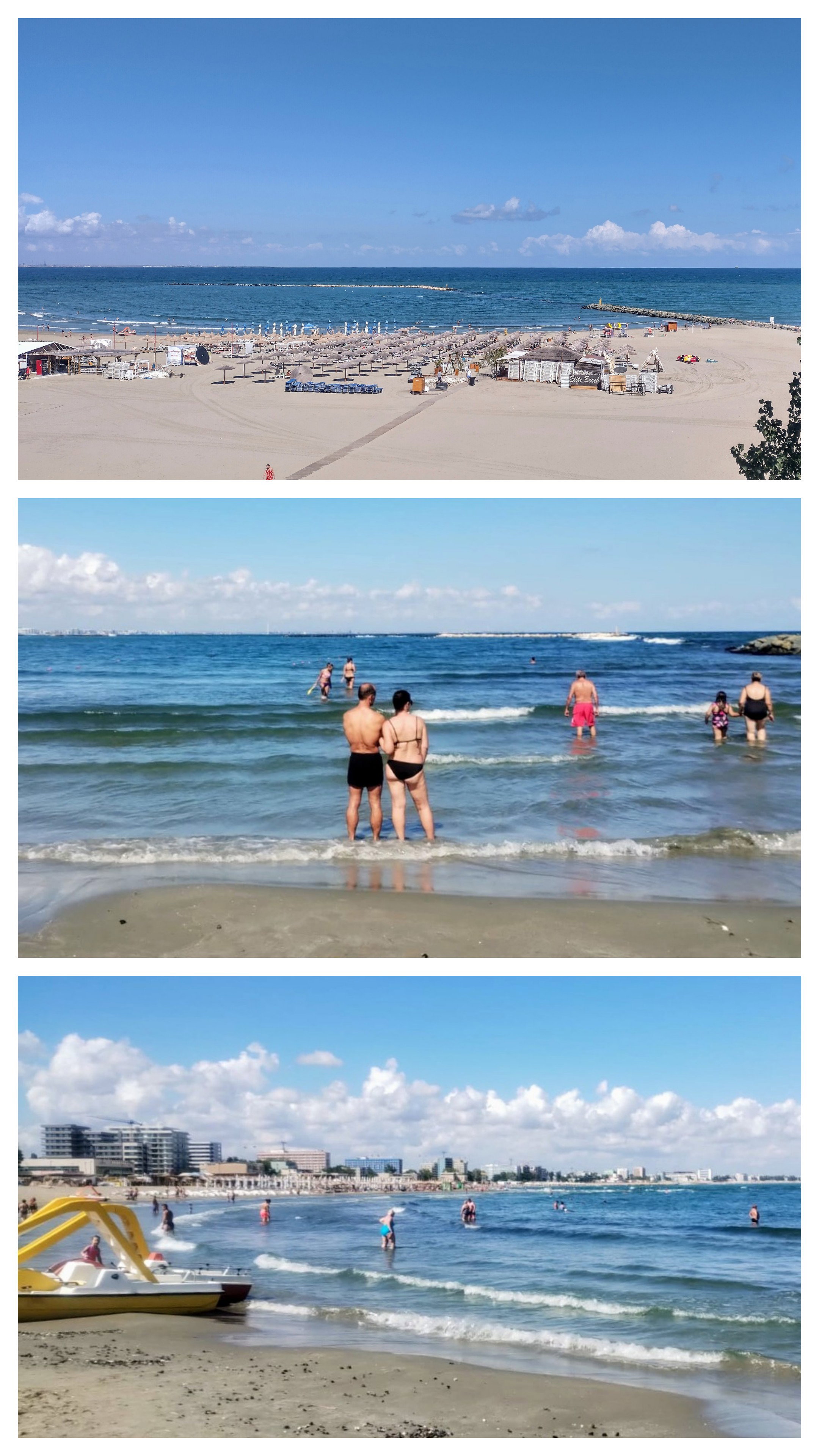
Elite Beach, 2025
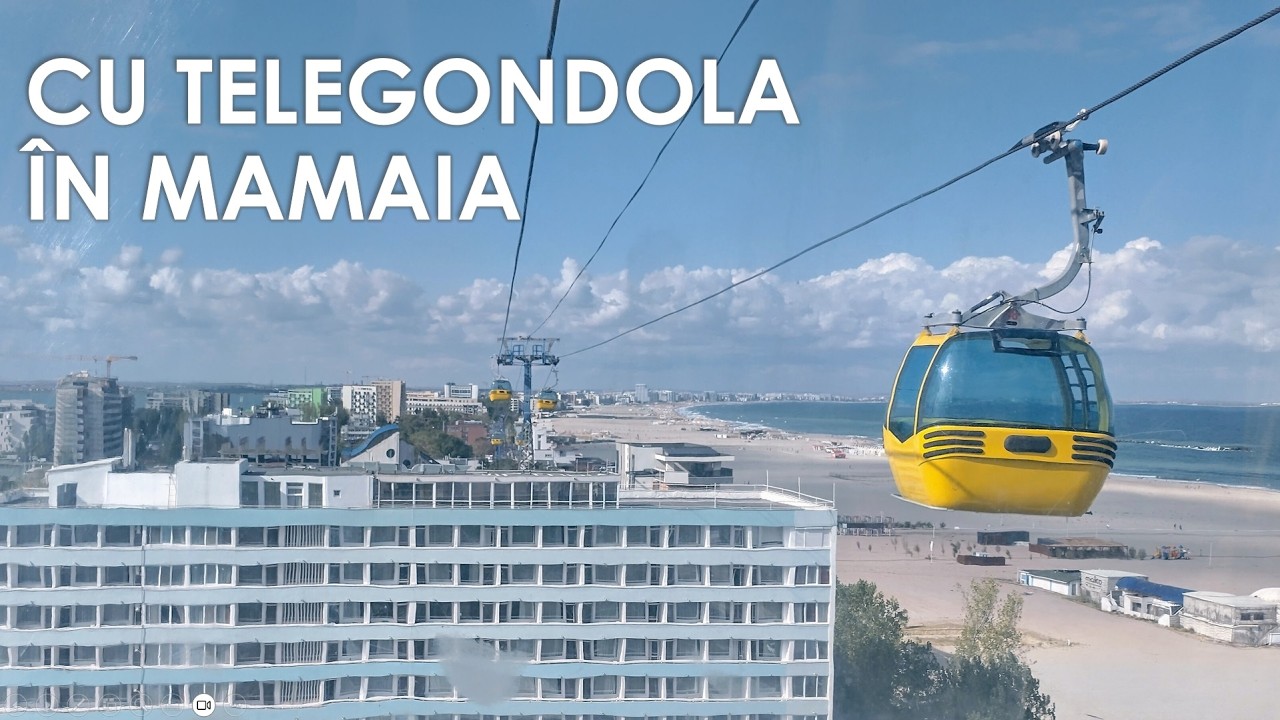
Telegondola // The cable car
Chiar vizavi de capătul nordic al telegondolei, care este lângă Cazino, se află Vila Reginei Maria, pe care noi am văzut-o mai de la distanță, având în minte altă destinație: ne-am dus direct pe plajă, unde ne-au întâmpinat rămășițe de beach-baruri, un nisip întins și fin și zeci de pescăruși localnici. Dacă am fi mers în stânga, am fi trecut pe lângă complexul IAKI, iar mai sus am fi dat și de Statuia Foca, în fața căreia se află Hotelul Rex. De aici, dacă am fi continuat spre nord, am fi ajuns în Mamaia-Sat.
Dar, cum acolo am petrecut vacanța de anul trecut, acum facem dreapta la Cazino și mergem direct pe plajă, printre scoici, până înapoi în sudul stațiunii.
Directly opposite the northern end of the cable car, which is near the Casino, stands Queen Marie’s Villa, which we saw only from a distance, having another destination in mind: we went straight to the beach, where we were greeted by the remains of beach bars, a wide stretch of fine sand, and dozens of local seagulls. If we had gone left, we would have passed by the IAKI complex, and farther up we would also have come across the Seal Statue, in front of which stands Hotel Rex. From here, if we had continued north, we would have reached Mamaia-Sat.
But since we spent last year’s holiday there, now we turn right at the Casino and go straight along the beach, among shells, all the way back to the southern part of the resort.
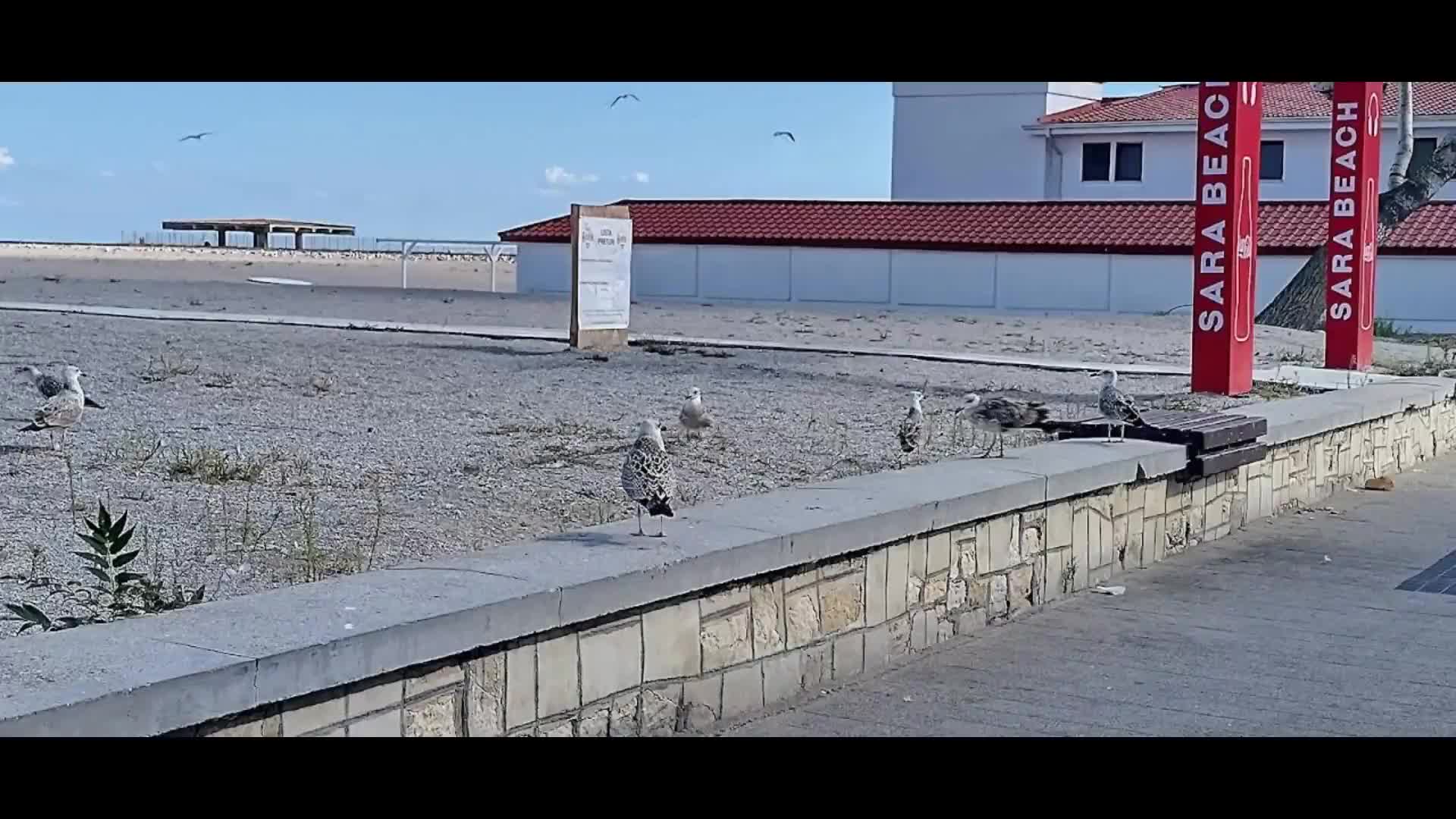
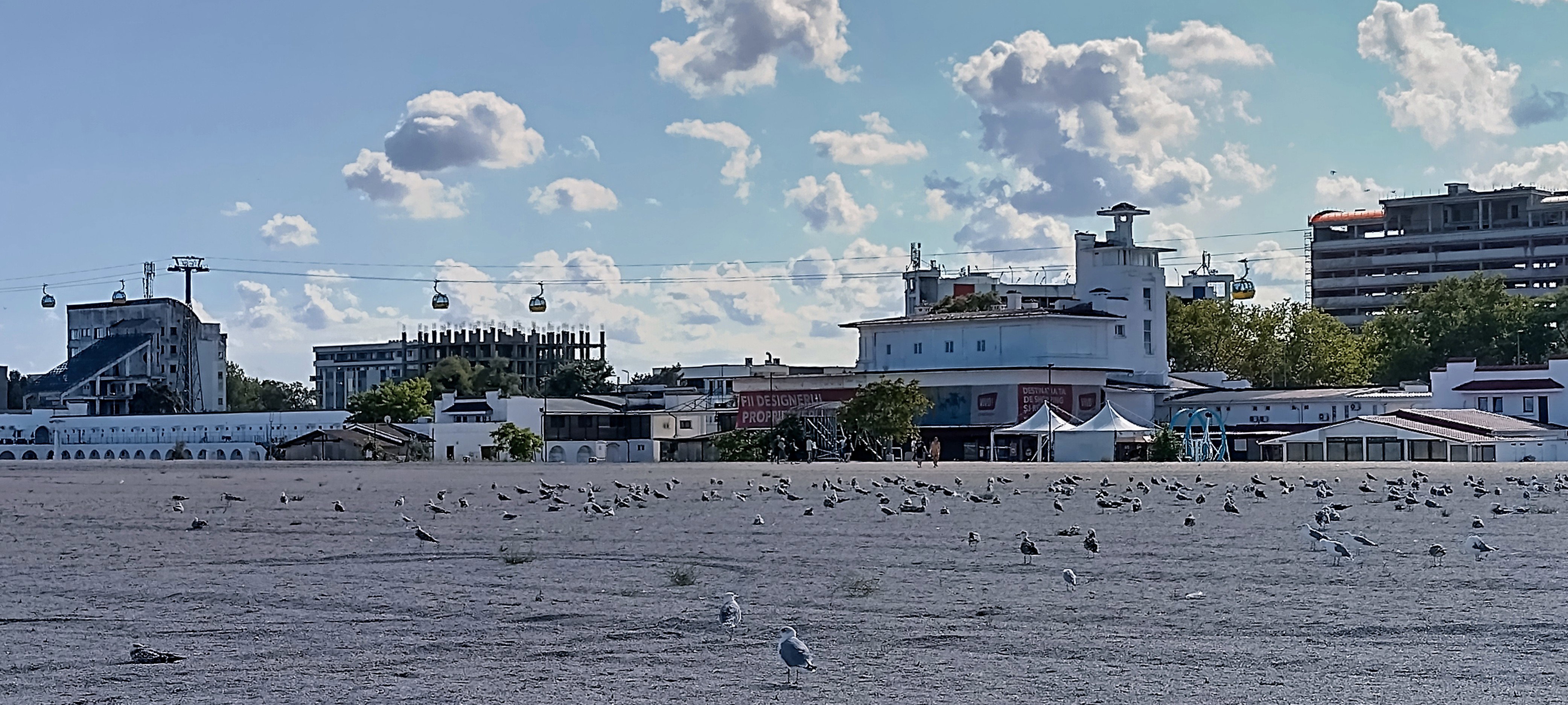
Pe plajă, în spatele Cazinoului; siesta pescărușilor // On the beach, behind the Casino; the seagulls’ siesta
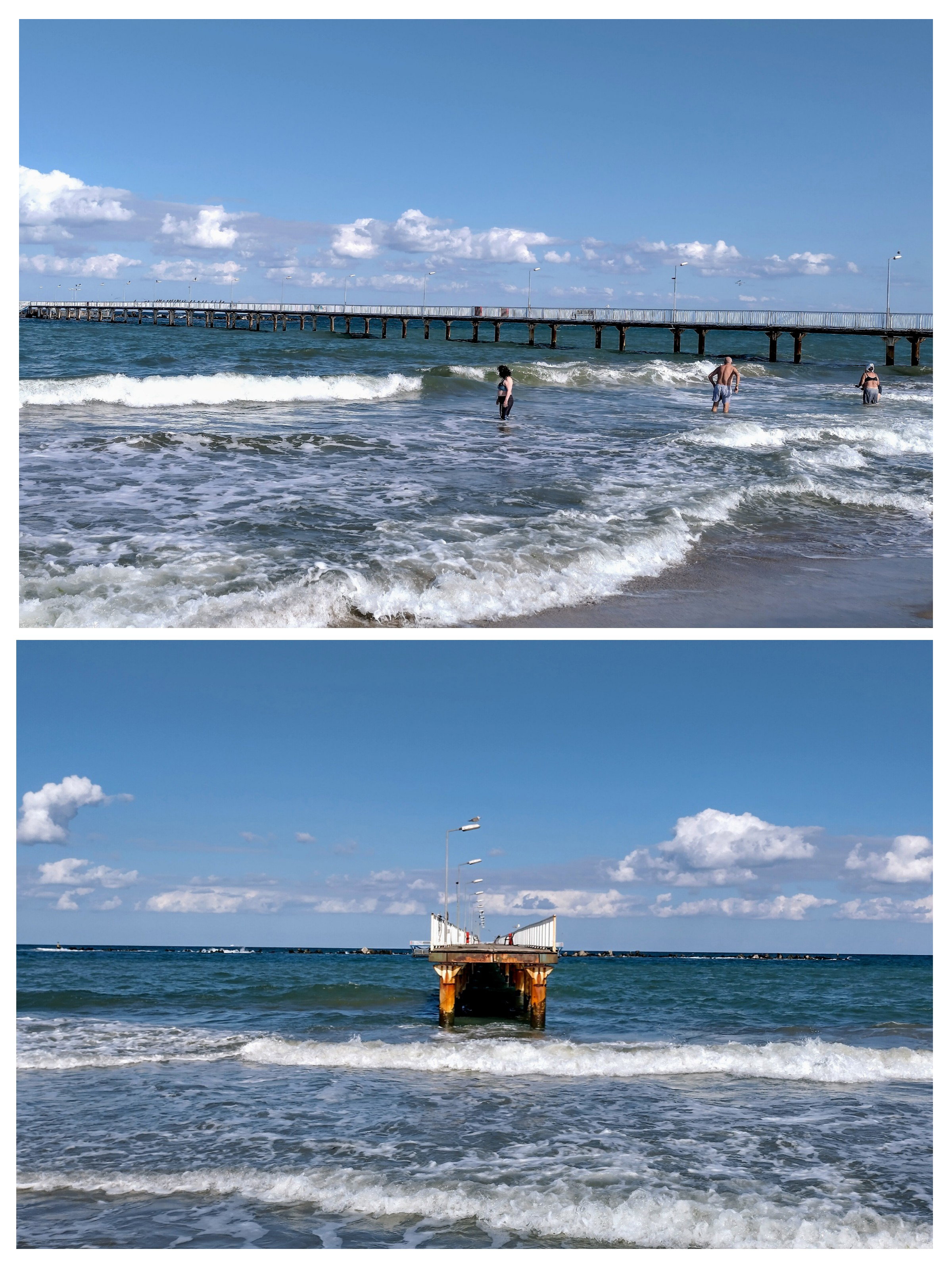
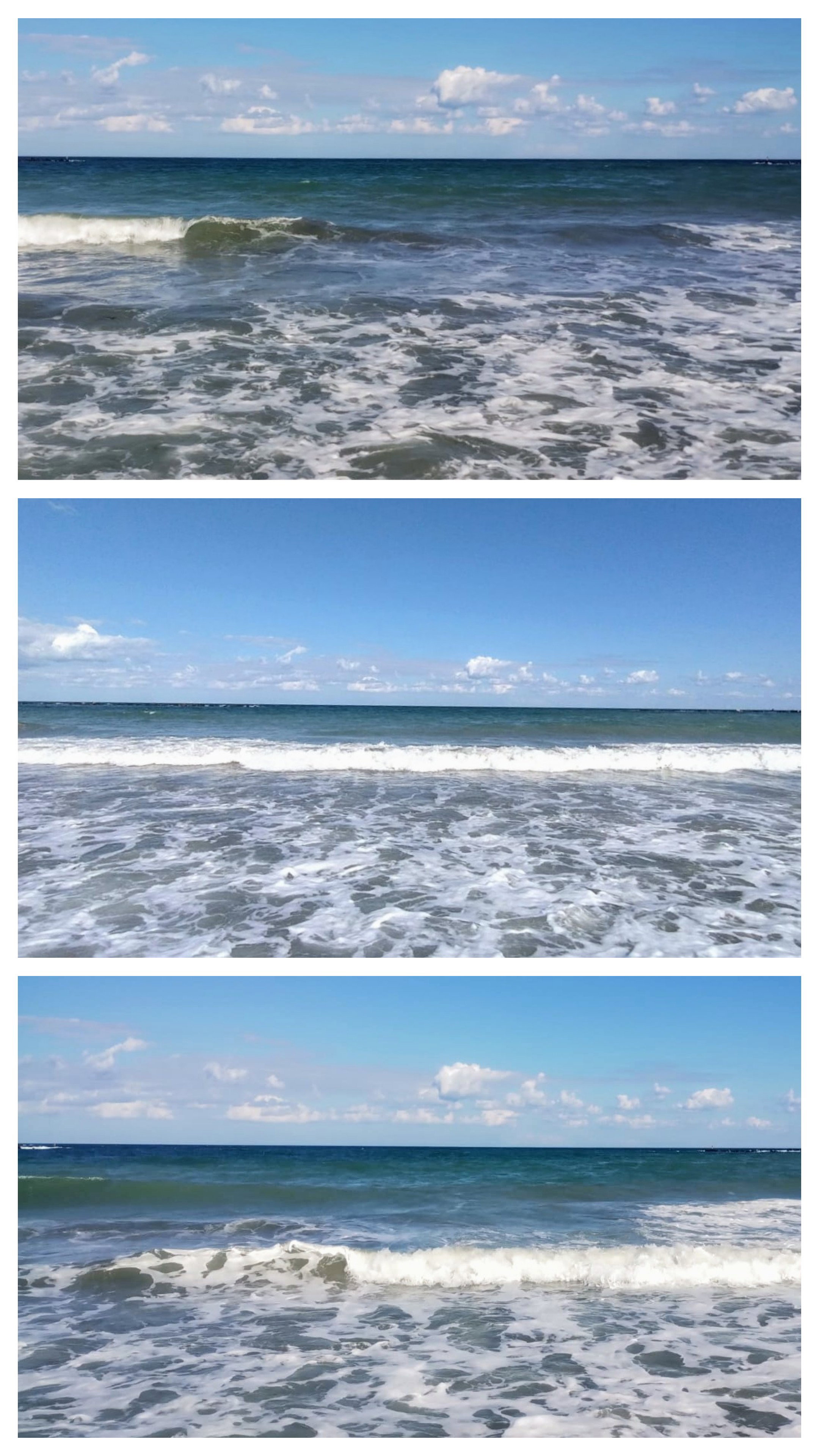
Am trecut pe lângă rămășițe din ce ar putea fi pontonul Mamaiei, care, curios, are bănci și stâlpi de iluminat, dar nu are modalități de acces. Am mai făcut o scurtă baie - unii dintre noi cu totul, alții doar cu picioarele. :)
We passed by remnants of what might be Mamaia’s pier, which, curiously, has benches and lighting poles, but no means of access. We took another short dip — some of us fully, others only with our feet. :)
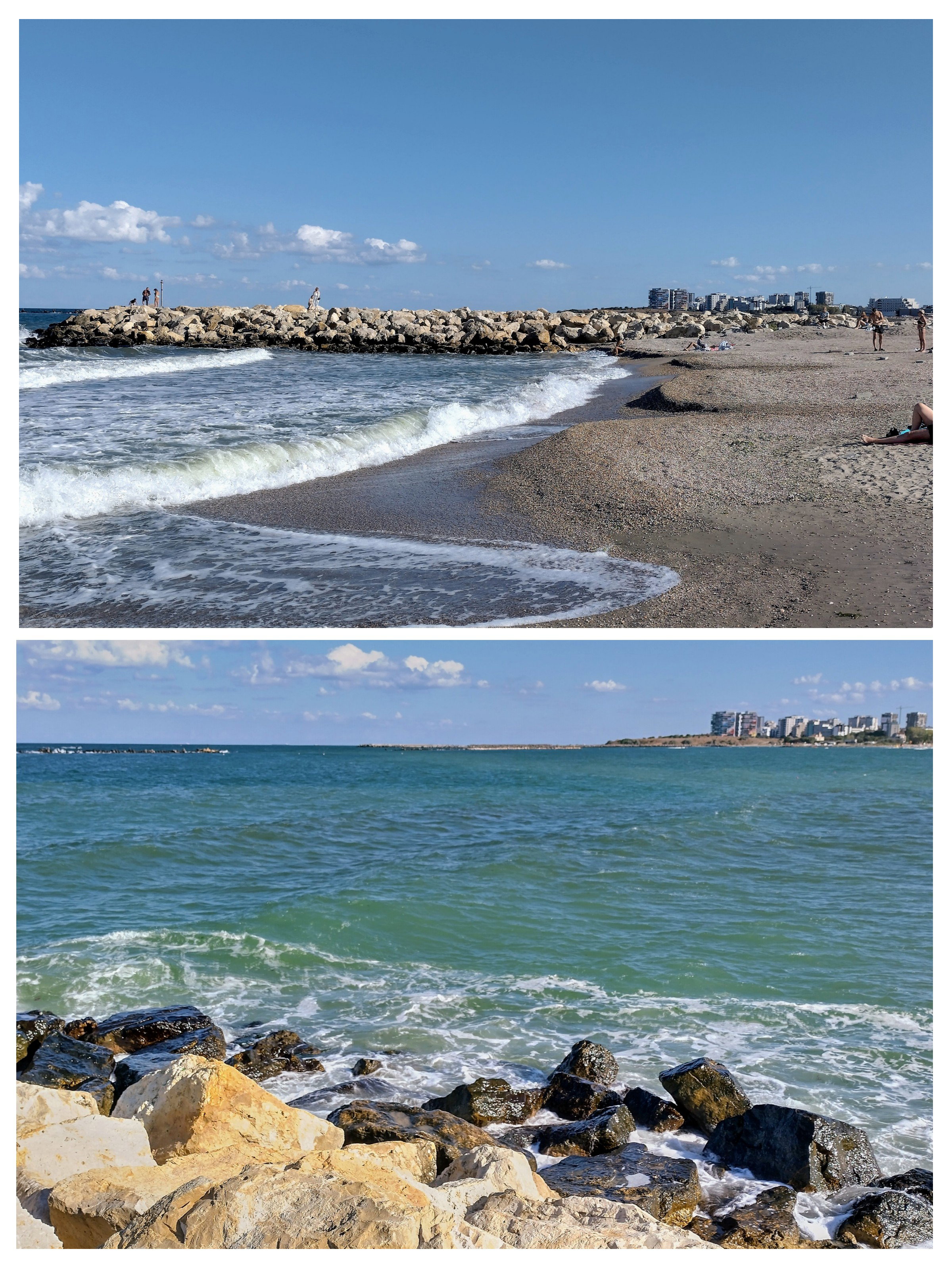
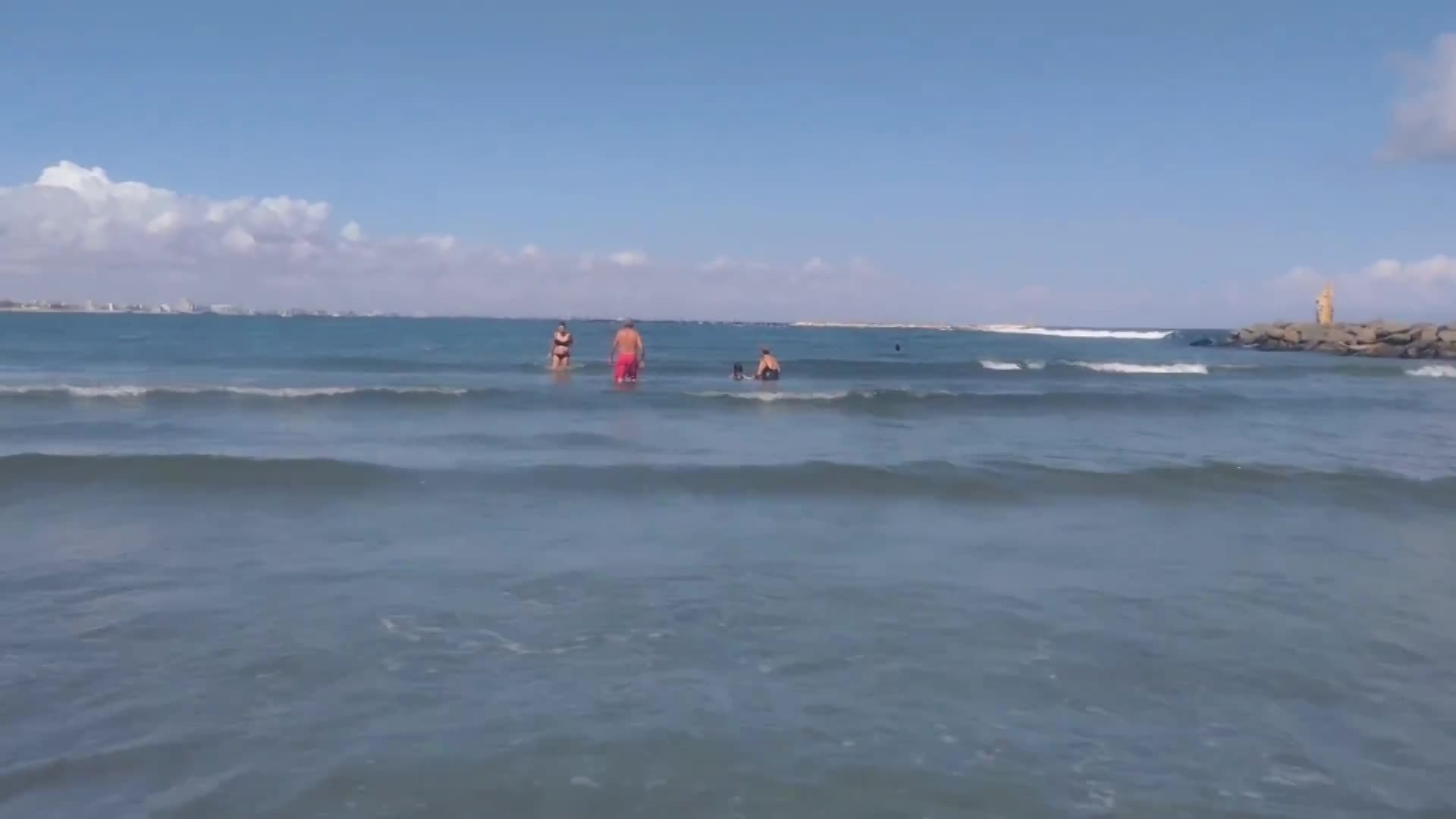
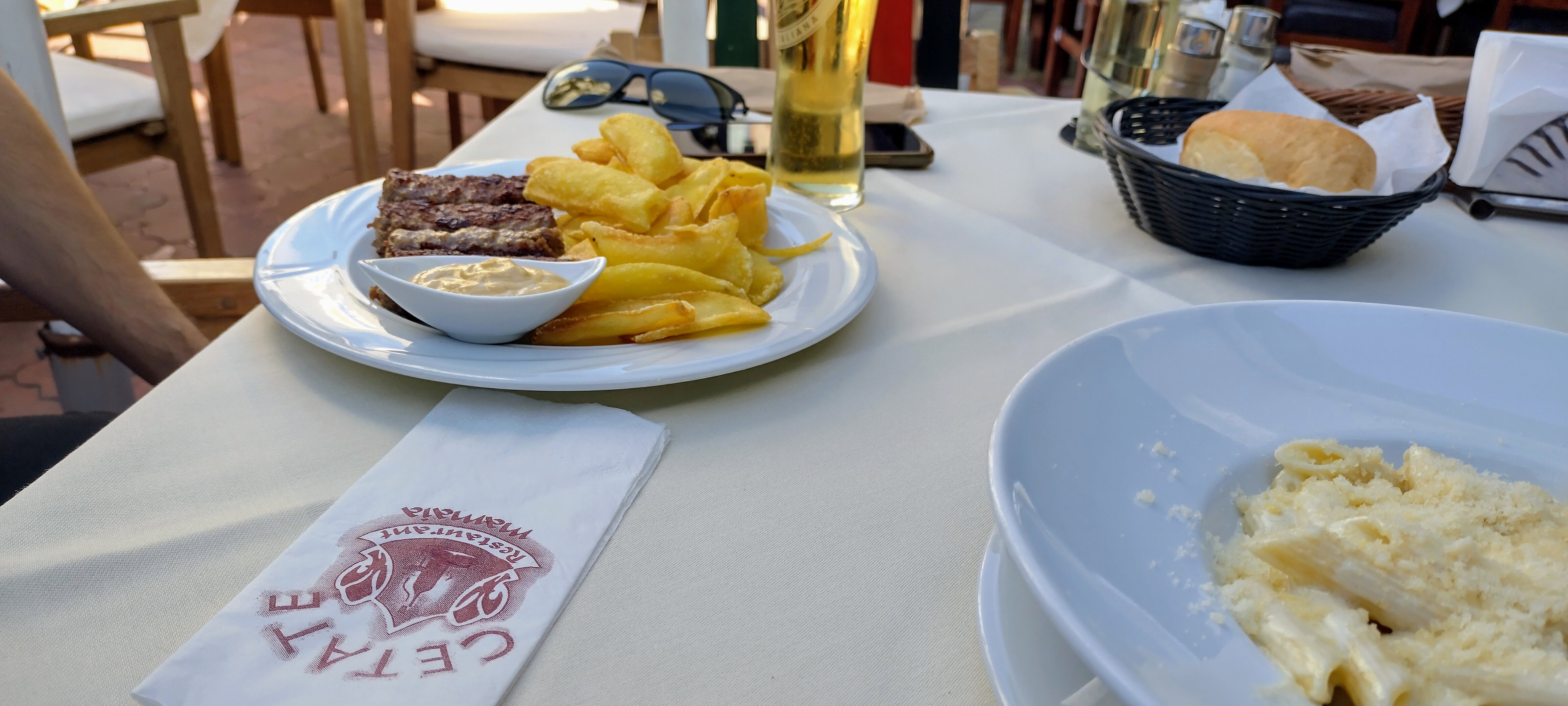
Înainte de a ajunge înapoi la capăt, la hotelul nostru, am făcut o oprire la Restaurantul Cetate, unde am mâncat ceva.
Before reaching the end again, at our hotel, we made a stop at Cetate Restaurant, where we had something to eat.
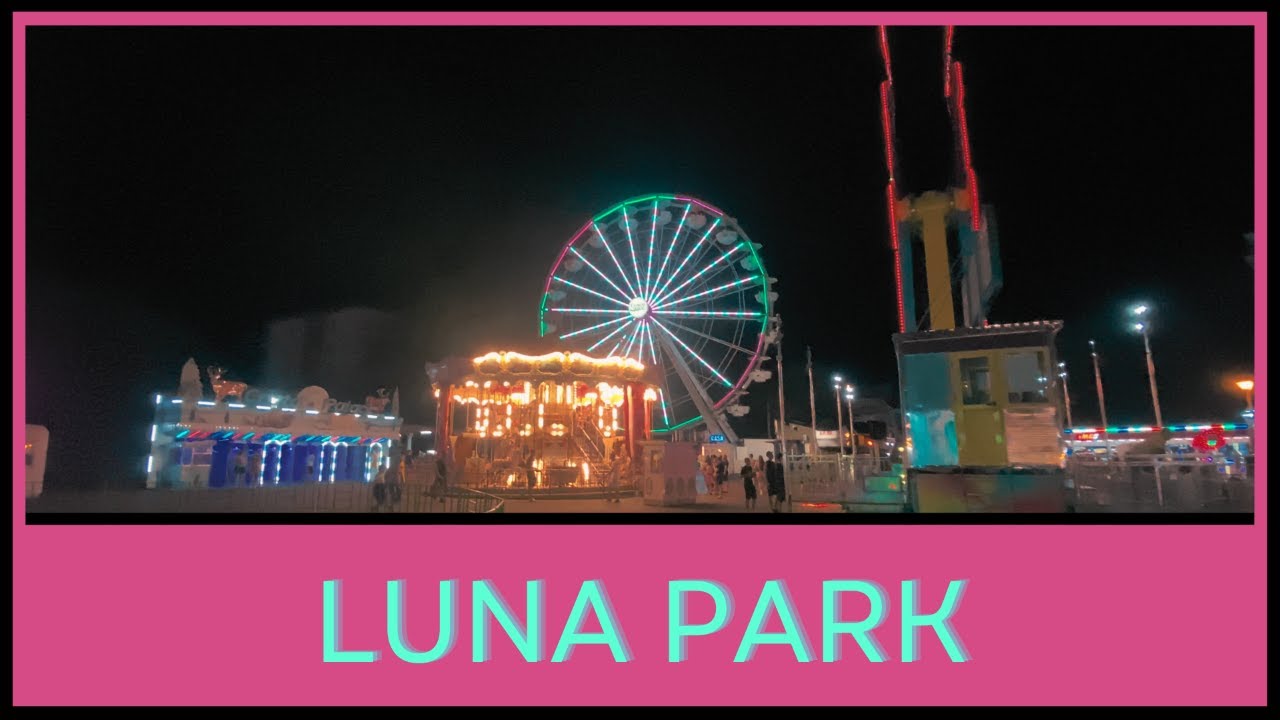
Intenționasem să mai facem o plimbare și seara prin Luna Park, cu ce a mai rămas din Satul de Vacanță, dar era închis, așa că am preferat să mergem în mall, la film.
We had intended to take another walk in the evening through Luna Park, with what remains of Satul de Vacanță, but it was closed, so we preferred to go to the mall, to the cinema.
via @aquacobra3600
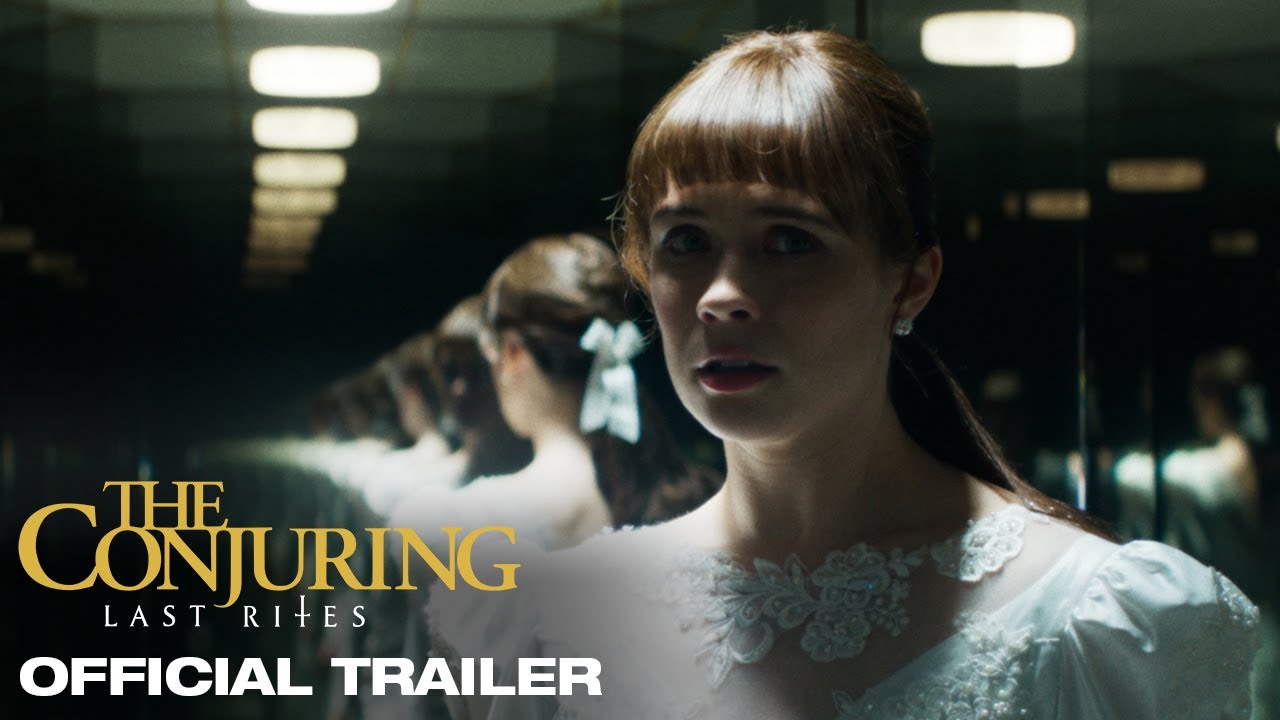
Am văzut Trăind printre demoni. Din nefericire, am nimerit într-o seară cu ofertă pentru elevi, iar aceștia au năvălit ca o armată barbară în sala de cinema, unde numai la film nu s-au uitat. Iar seara, care deja se așternea devreme în septembrie, ne-a prins oricum la întors pe aleile parcului, motiv pentru care am simțit că ne-am luat doza de horror și ne-am întors la cazare.
We watched The Conjuring. Unfortunately, we happened to go on an evening with a student offer, and they poured into the cinema like a barbarian army, where watching the film was just about the last thing they did. And the evening, which was already falling early in September, caught us anyway on our way back along the alleys of the park, which made us feel that we had had our dose of horror, so we returned to our accommodation.
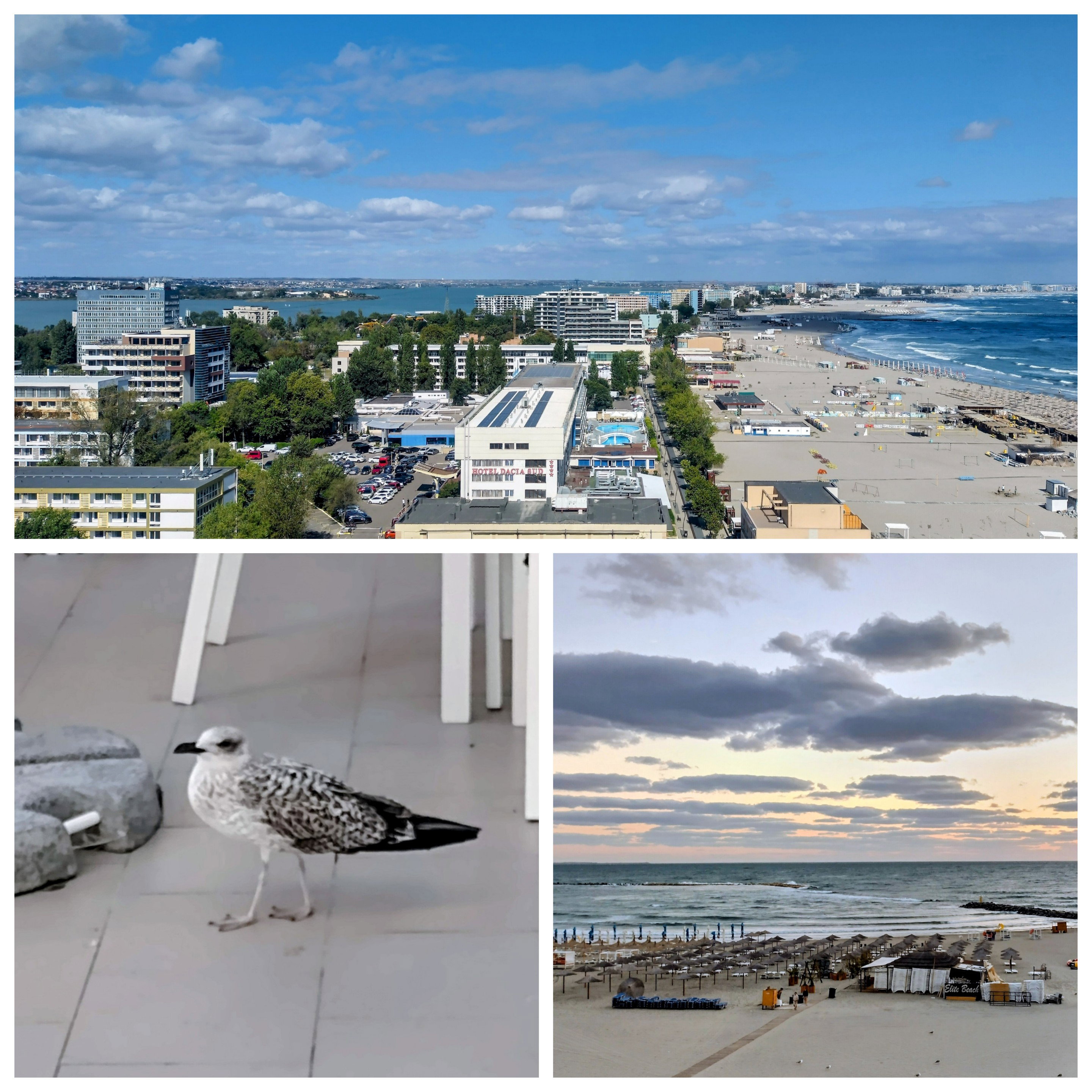
Ziua 2. De dimineață, după check-out, căci mini-excursia a fost mini într-adevăr, am ales să continuăm plimbarea în dreapta, spre Constanța. Dar, înainte de a părăsi camera de hotel, să mai aruncăm o ultimă privire de pe balcon.
Day 2. In the morning, after check-out, since the mini-trip really was mini indeed, we chose to continue our walk to the right, toward Constanța. But before leaving the hotel room, let us take one last look from the balcony.
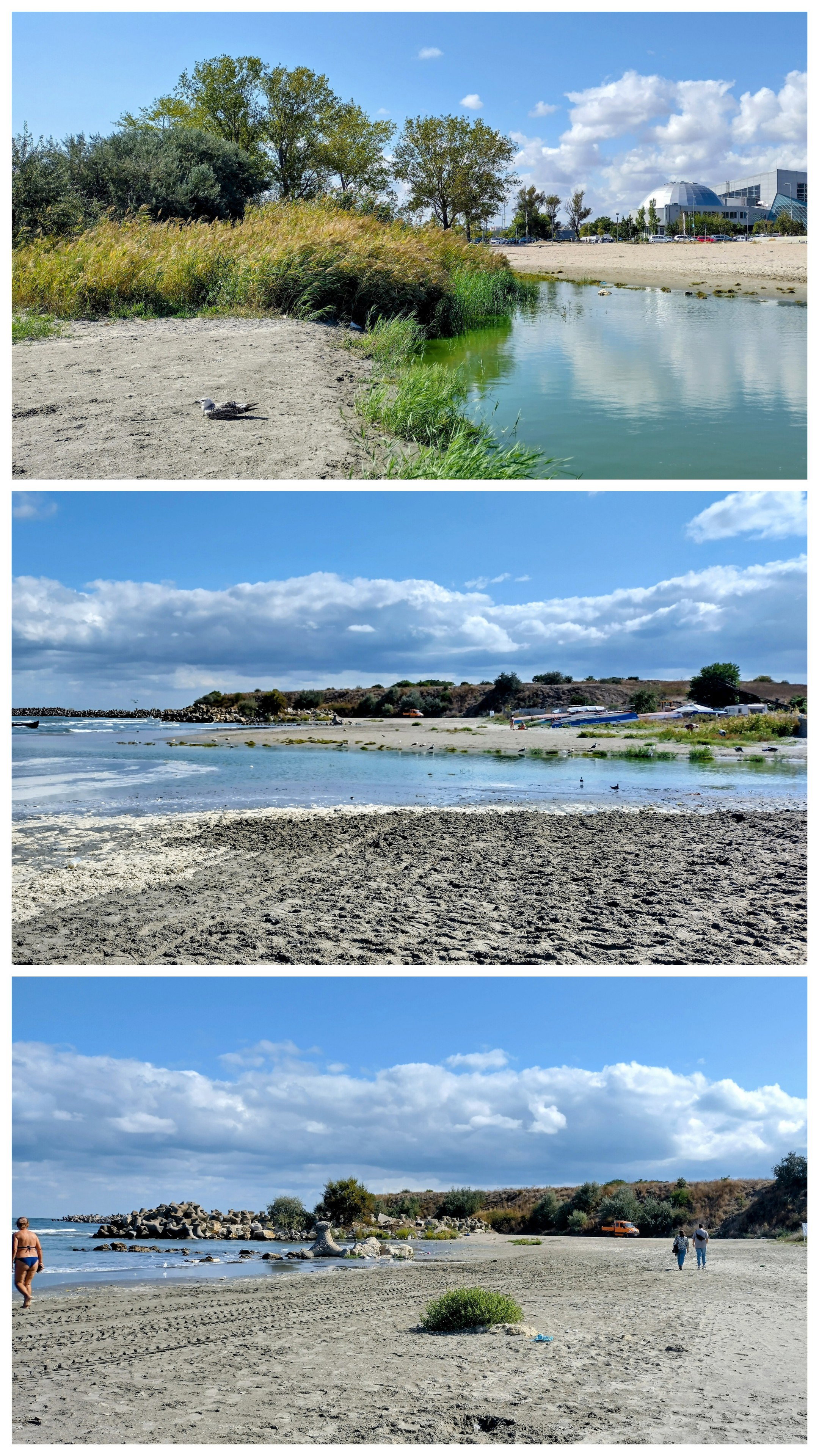
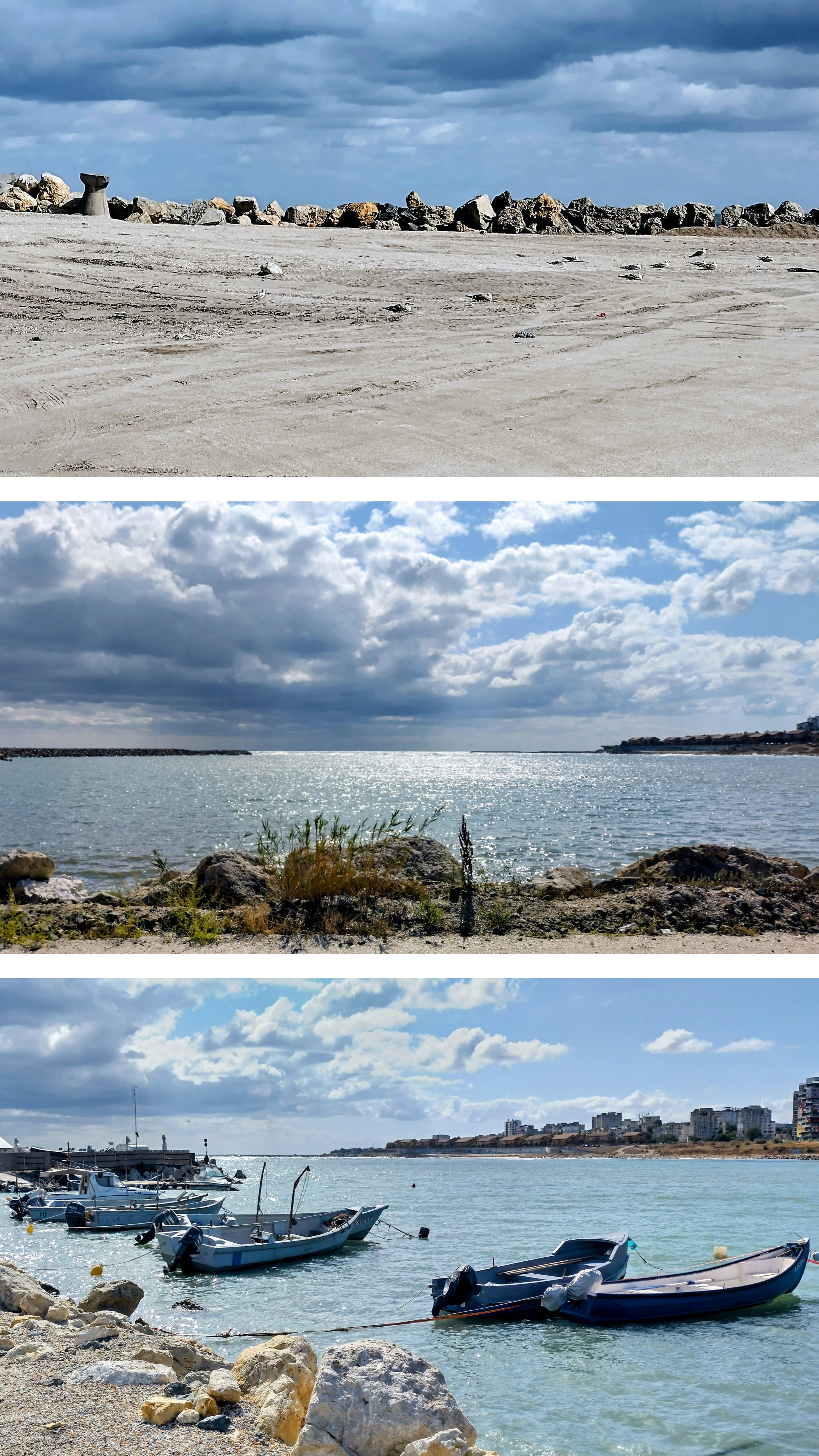
Gata, am plecat! Începem cu micul canal format între Marea Neagră și Lacul Tăbăcăriei, unde crește stufăriș și își fac culcuș pescărușii. Aici, pe partea dinspre Mamaia a Digului Pescăriei, se află ultima plajă a acestei stațiuni: Plaja Triunghi.
That’s it, we’re off! We begin with the small channel formed between the Black Sea and Lake Tăbăcăriei, where reeds grow and seagulls make their nests. Here, on the Mamaia-facing side of the Pescărie Breakwater, lies the last beach of this resort: Triangle Beach.
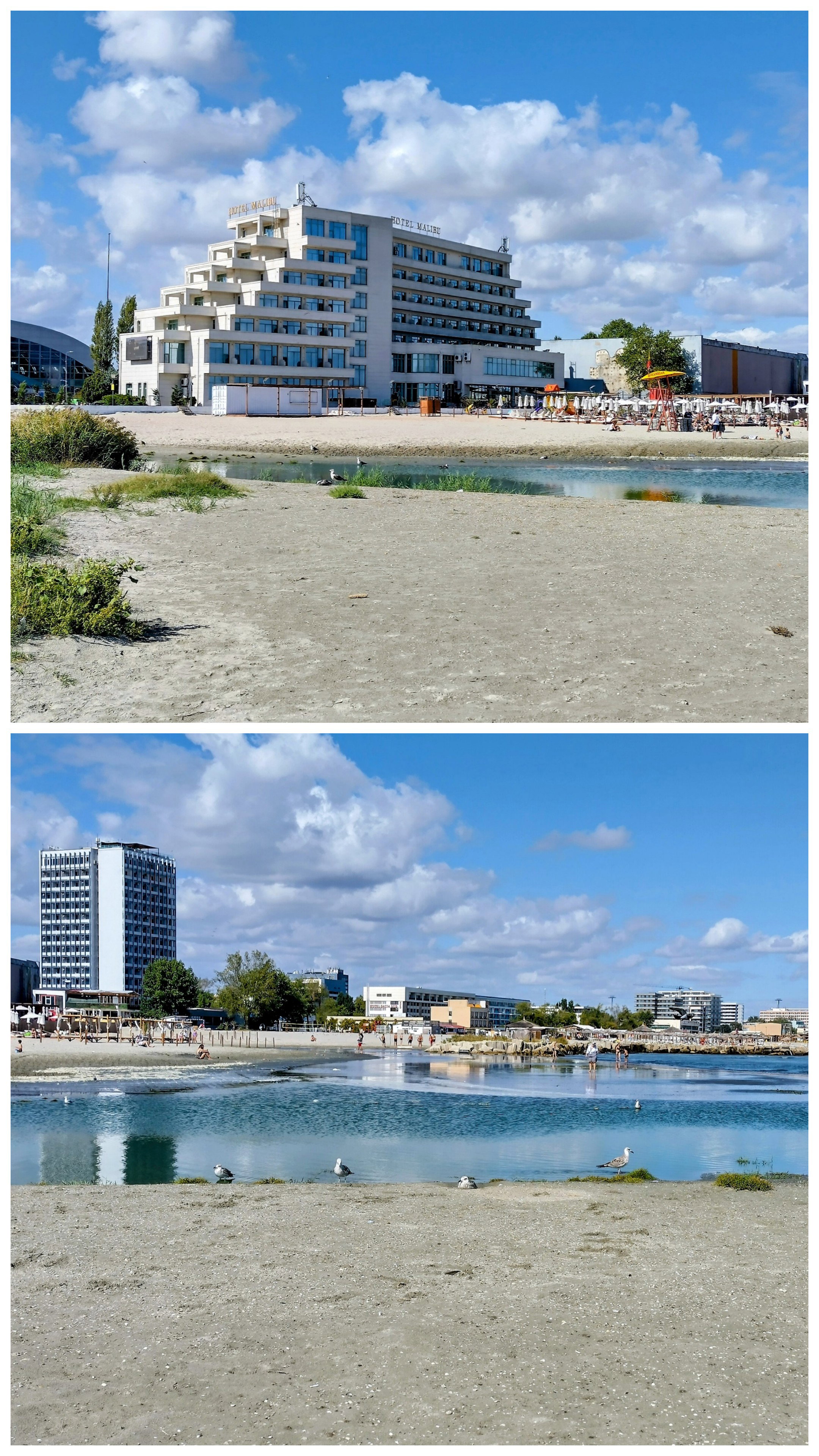
Mari repere... // Big landmarks...
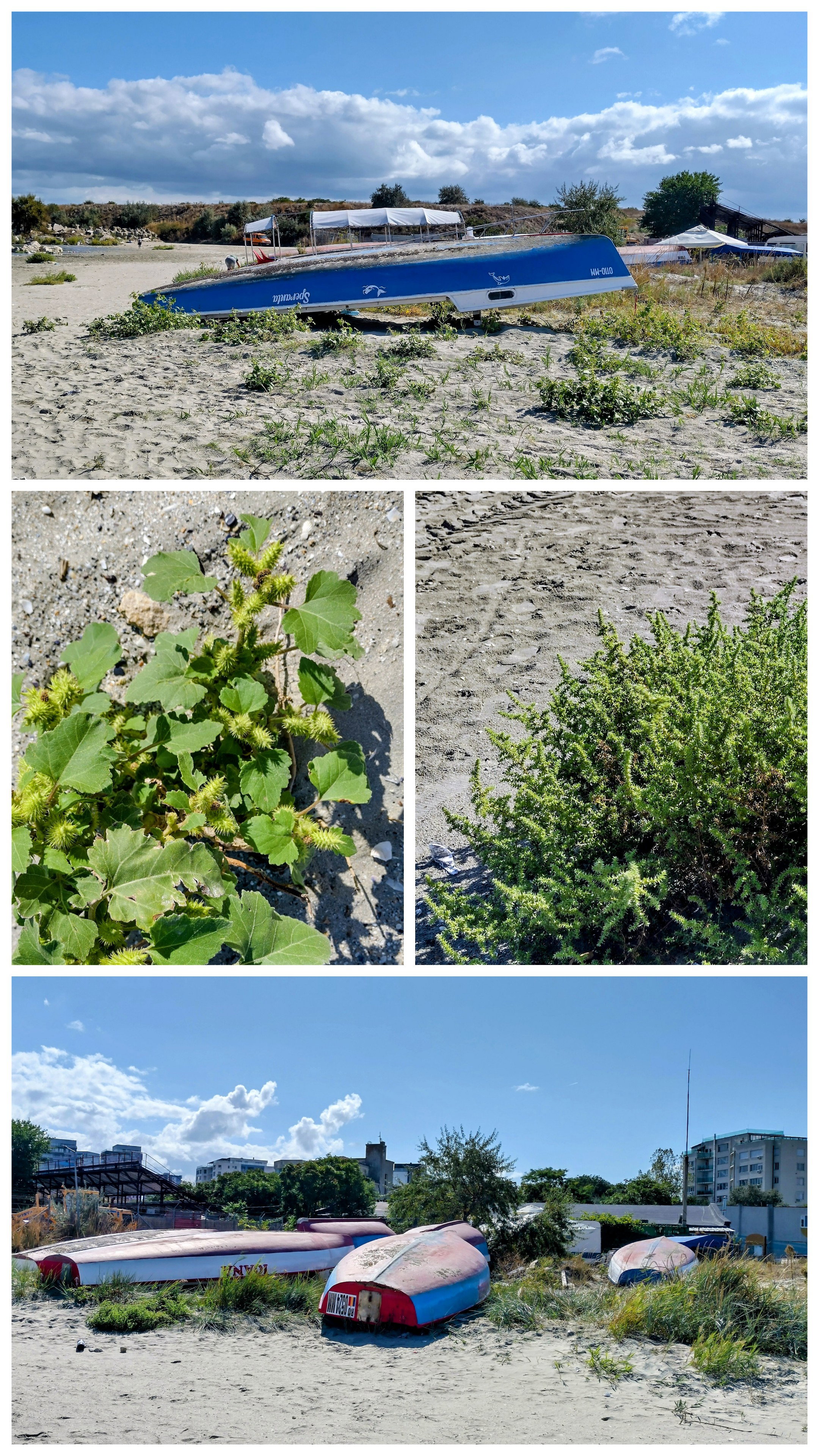
...mici comori // ...small treasures
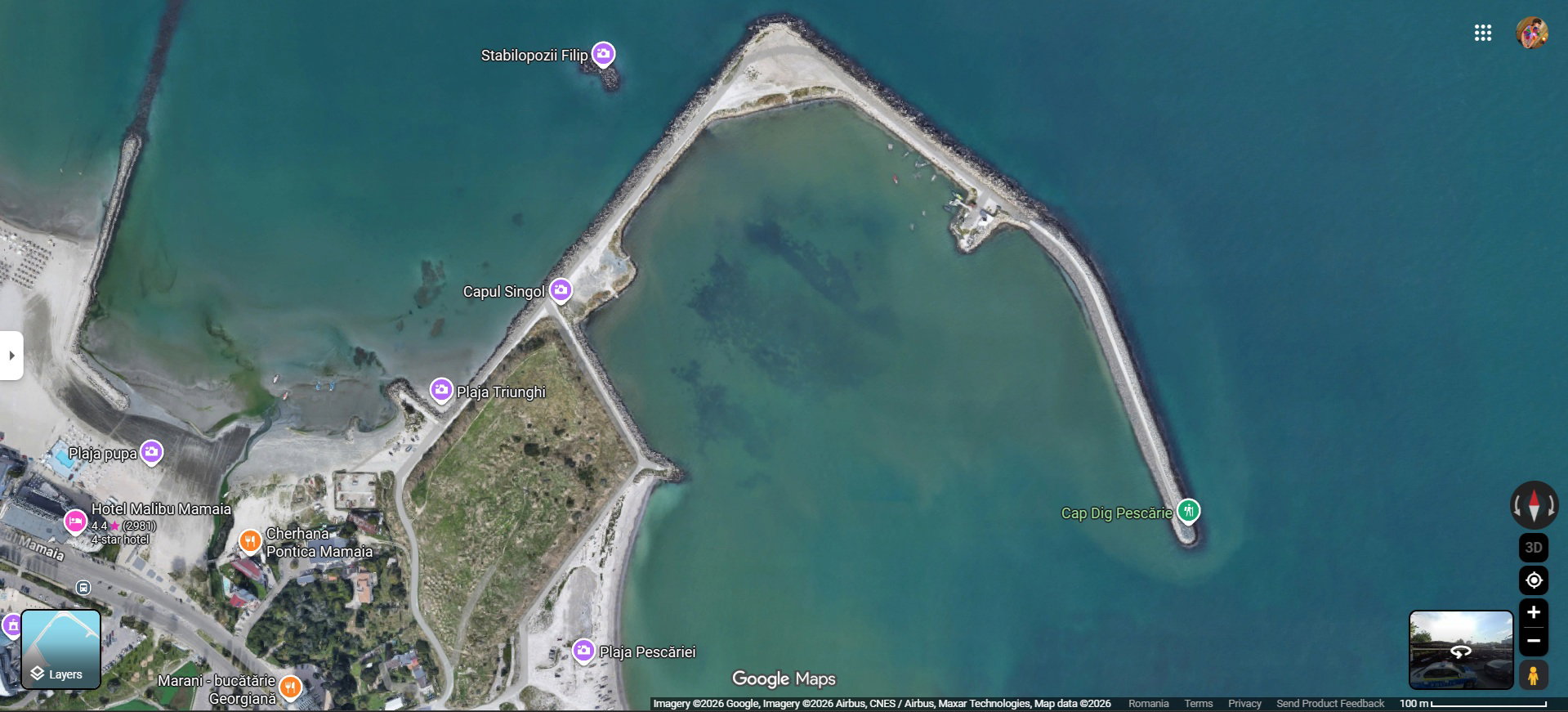
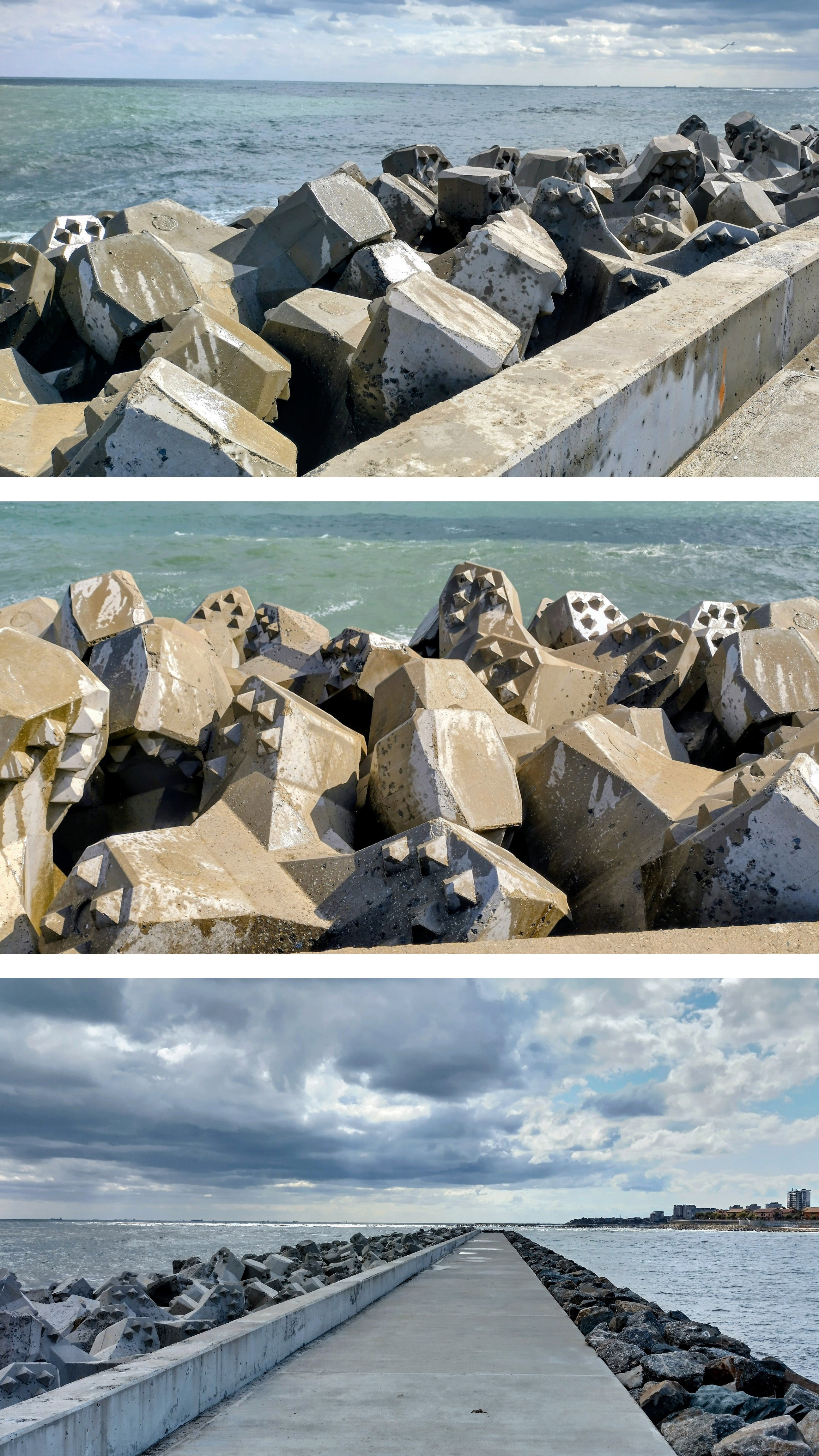
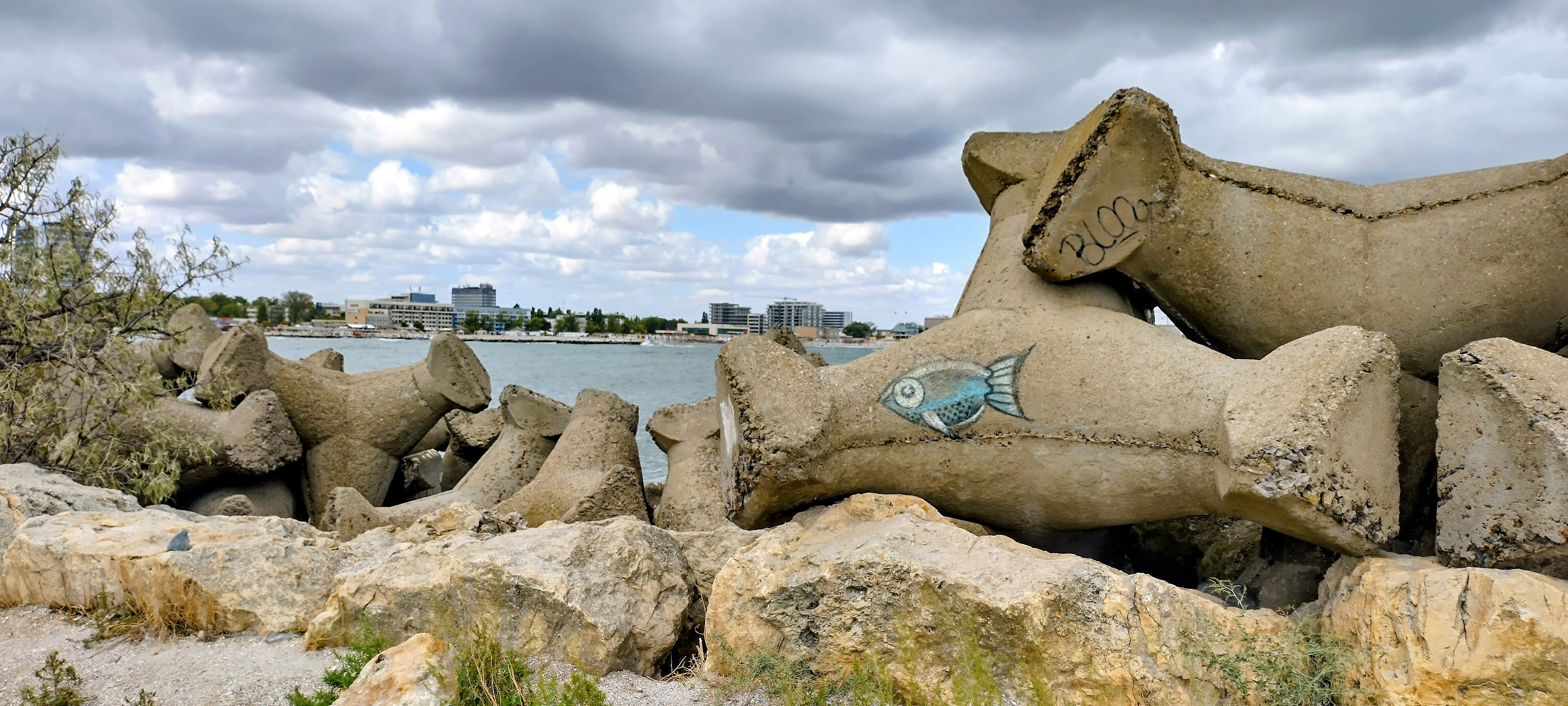
Noi urcăm pe Digul Pescăriei, unde ne întâlnim cu pescăruși, pescari, bărci pescărești… După cam 500 m, digul cotește la dreapta, la 90 de grade, și mai continuă 500 m în mare, oferind o priveliște frumoasă asupra cartierului Faleza Nord din Constanța.
We climb onto the Pescărie Breakwater, where we encounter seagulls, fishermen, fishing boats… After about 500 m, the breakwater turns right, at a 90-degree angle, and continues another 500 m into the sea, offering a beautiful view of the Faleza Nord district of Constanța.
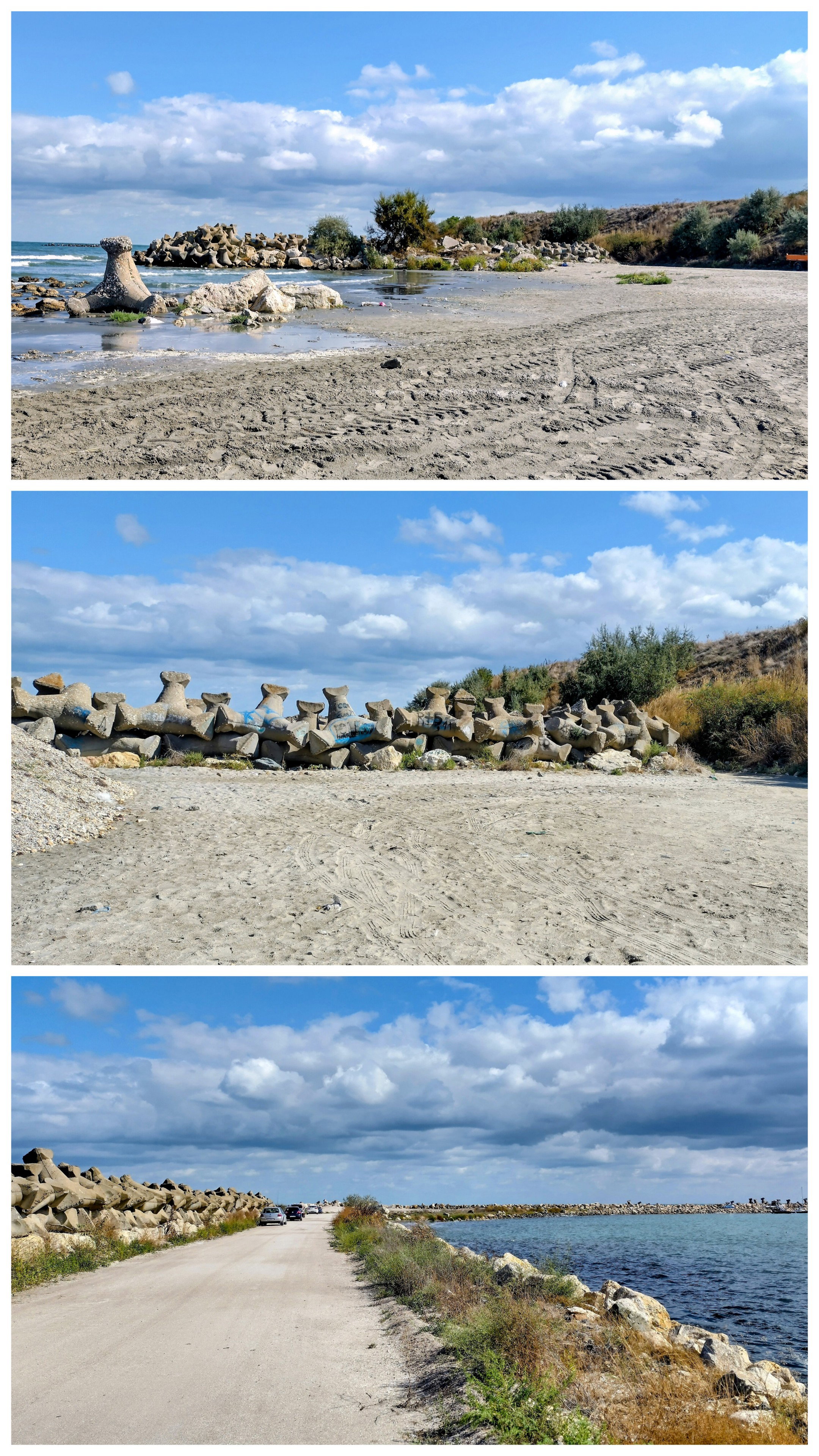
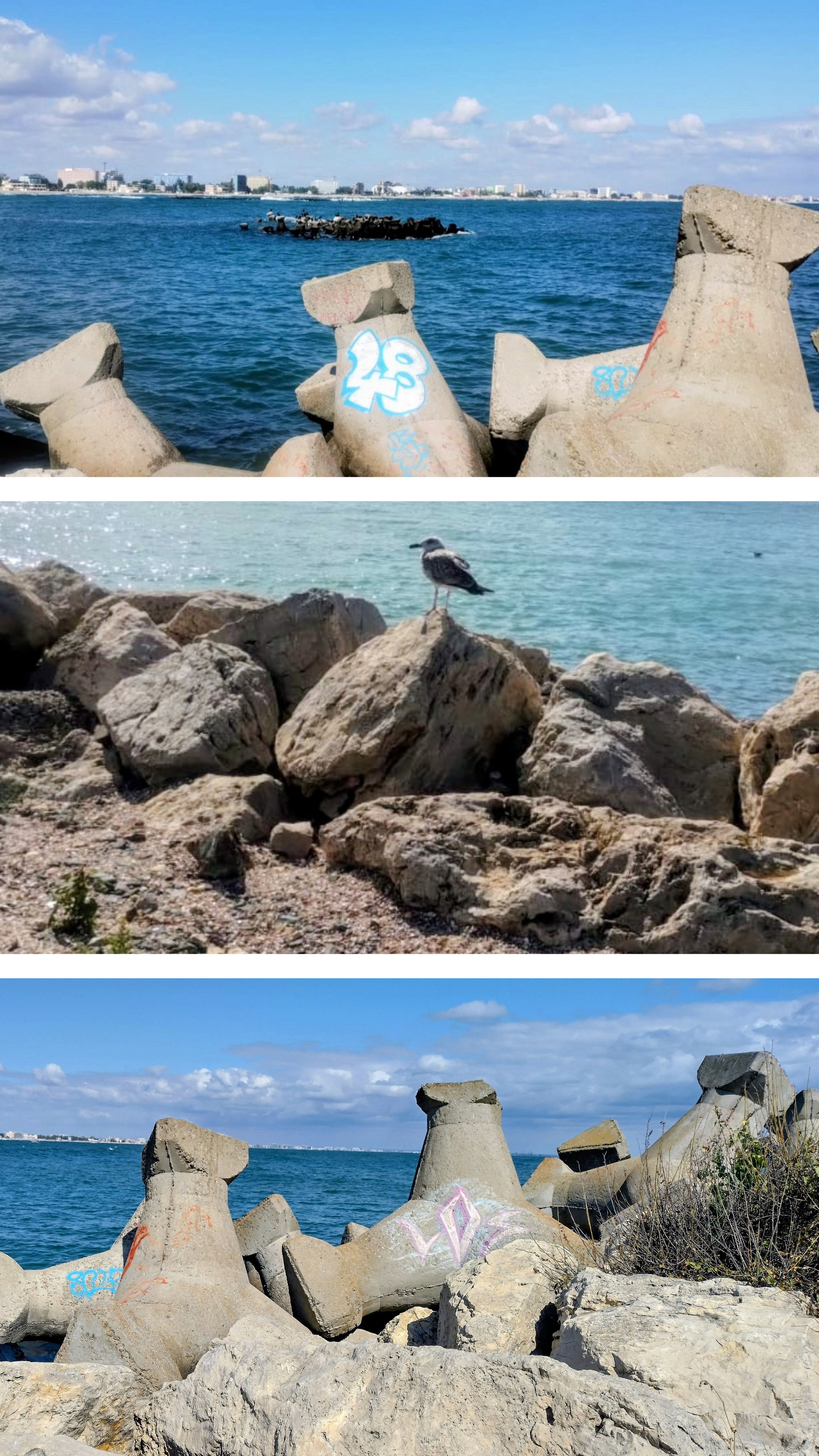
Stabilopozii FIlip; pescăruși // Filip’s stabilopods; seagulls
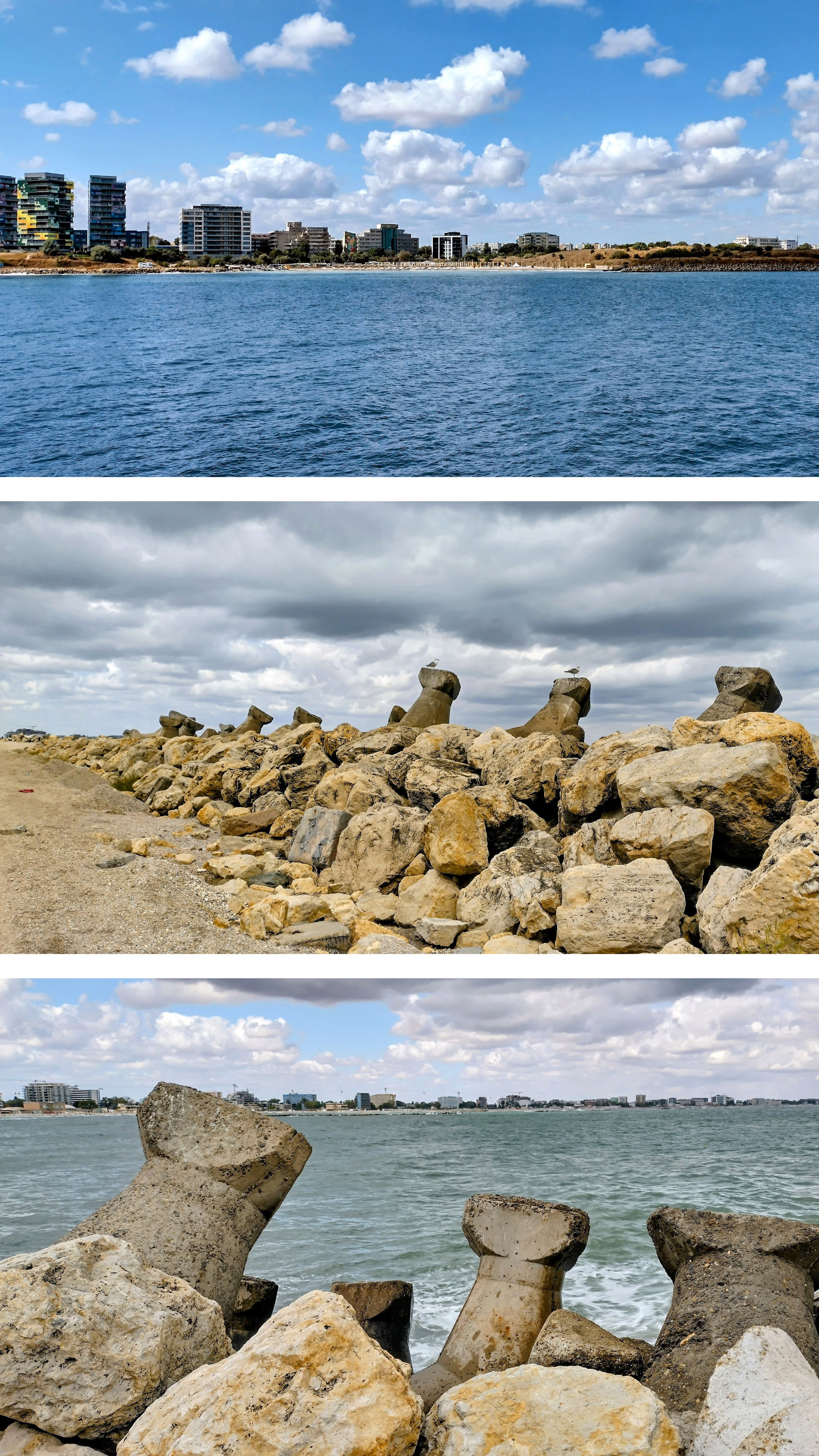
Capul Singol // Singol cape
Capătul Digului Pescăriei // The end of the Pescărie Breakwater
Aici se întețește vântul, se strâng norii, ne udă valurile și ne piere speranța că vom ajunge uscați la mal…
Here the wind picks up, the clouds gather, the waves soak us, and our hope of reaching the shore dry begins to fade…
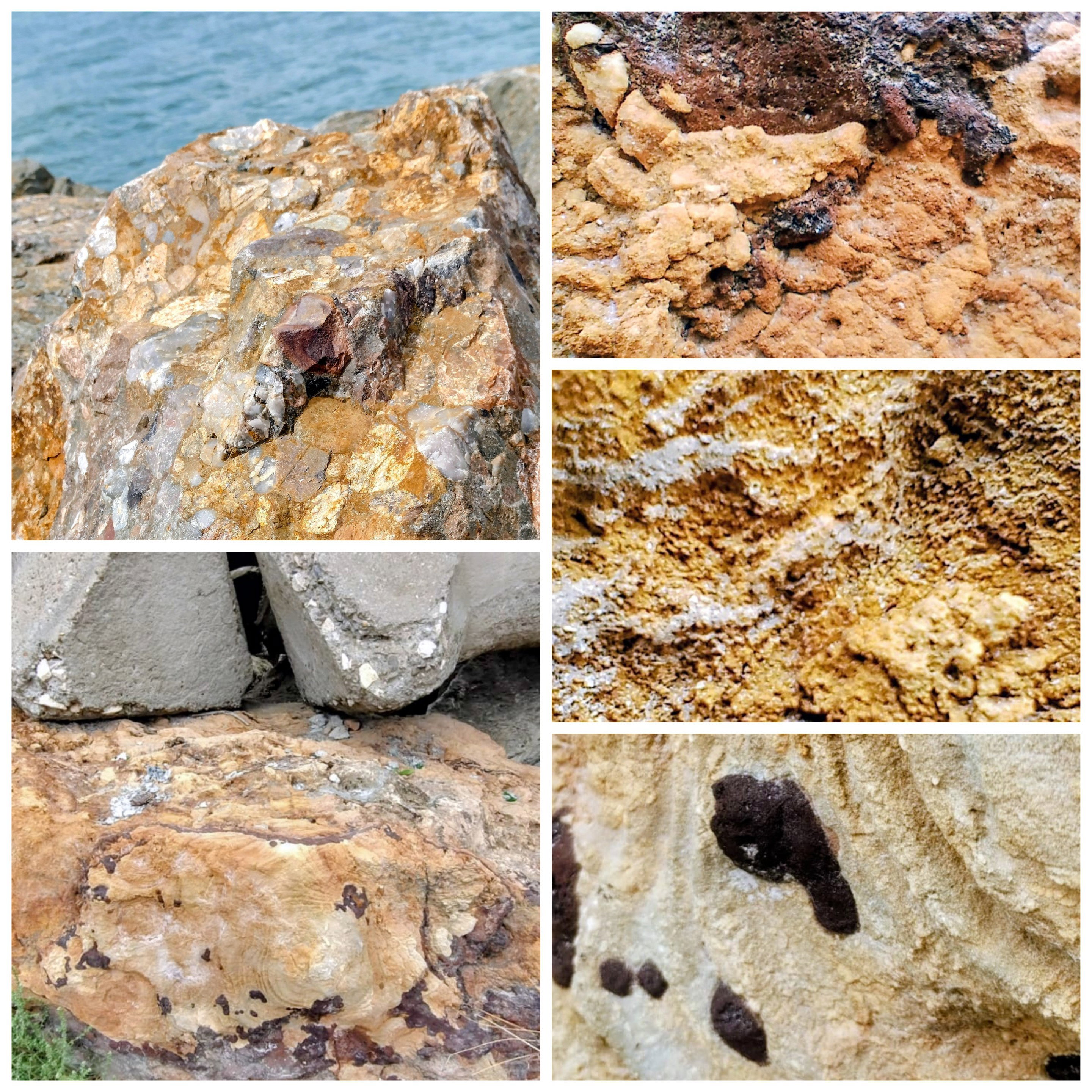
Ne întoarcem pe același drum până la Capul Singol, unde coborâm pe brațul stâng al digului. Aici vedem cum bolovanii digului încep să prindă culoare, prin precipitarea diverselor minerale sub influența factorilor de mediu.
We return along the same route to Capul Singol, where we descend along the left arm of the breakwater. Here we see how the boulders of the breakwater begin to take on color, through the precipitation of various minerals under the influence of environmental factors.
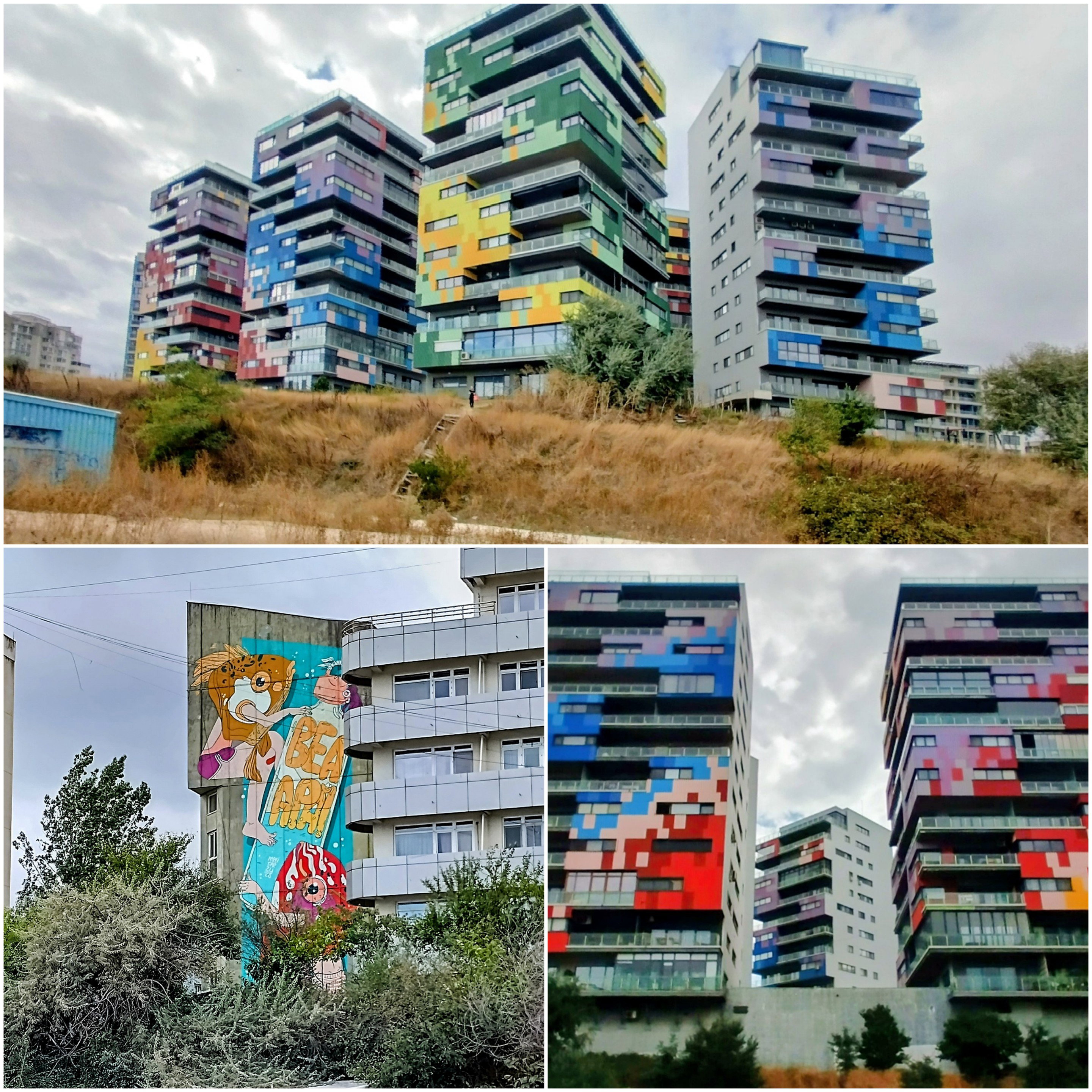
Continuăm până la Plaja Pescăriei, ceva intim și destul de greu de ocolit, întrucât, pe cât de sălbatic și frumos este acest colț, pe atât de înconjurat este de garduri de construcție din jurul blocurilor din apropiere. Da, blocurile acelea colorate pe care le-am văzut din larg!
We continue to Pescăriei Beach, something intimate and rather hard to bypass, because, as wild and beautiful as this corner is, it is just as surrounded by construction fences around the nearby apartment blocks. Yes, those colorful blocks we saw from out at sea!
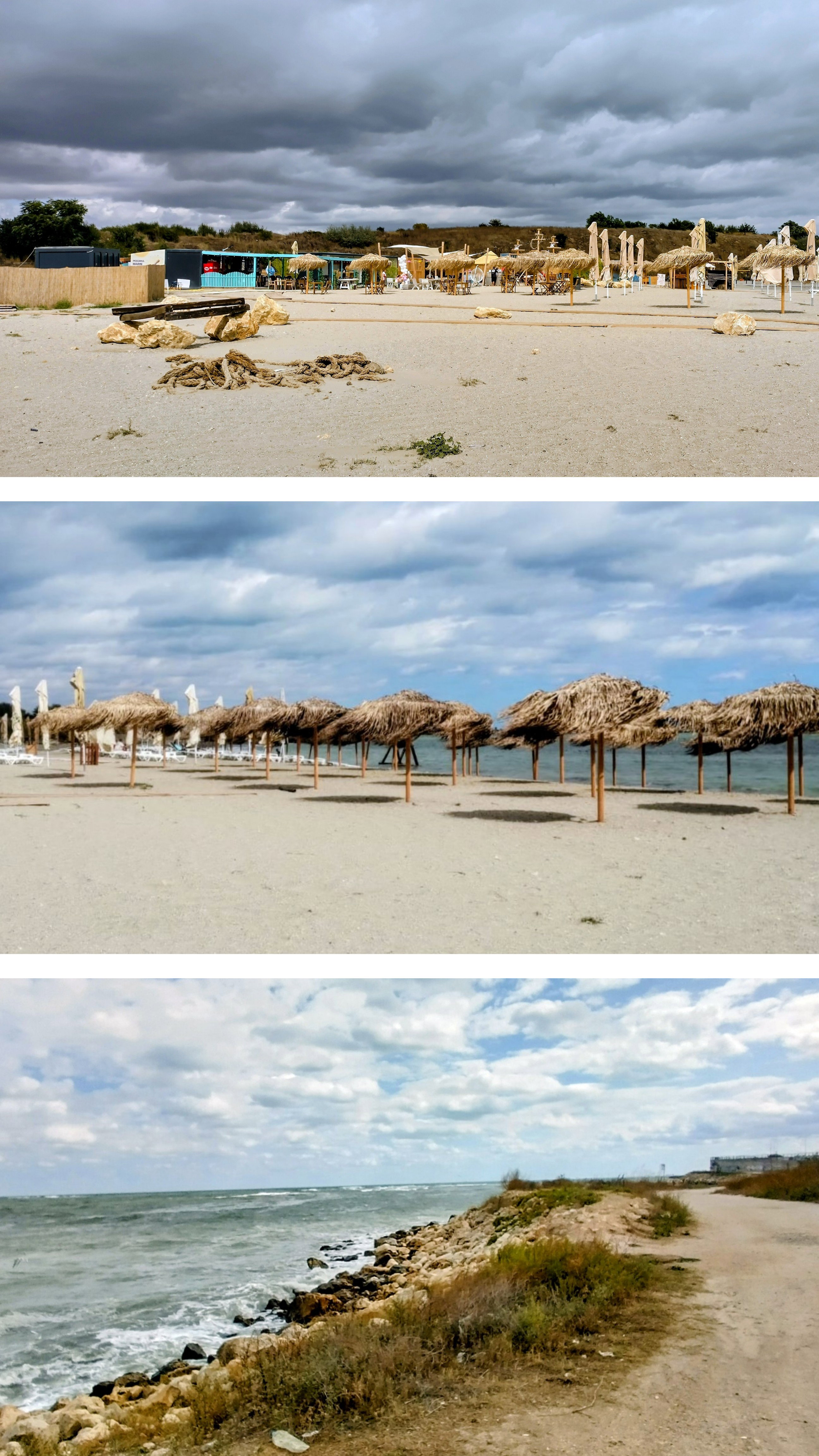
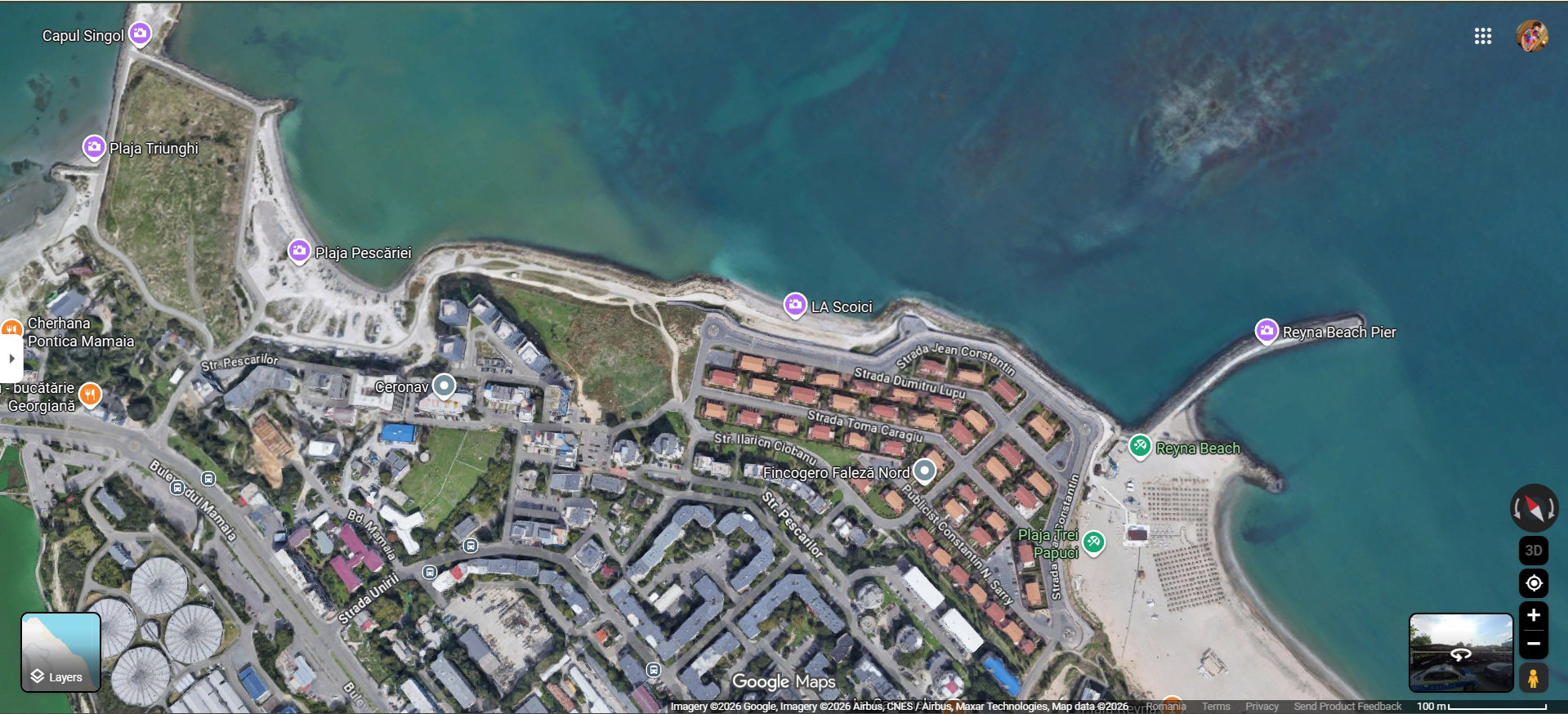
Am continuat tot pe margine, printr-o superbă zonă sălbatică, ce culmina cu Plaja La Scoici. În afară de vântul insistent, aici nu ne-a deranjat nimic.
Iar, după câteva sute de metri, am ajuns pe Plaja Trei Papuci din Constanța, plajă pe care se cuvine să o explorăm mai pe îndelete cu altă ocazie.
We continued along the edge, through a superb wild area that culminated in At Seashells Beach. Apart from the persistent wind, nothing bothered us here.
And, after a few hundred meters, we reached Three Slippers Beach in Constanța, a beach that deserves to be explored more at leisure on another occasion.
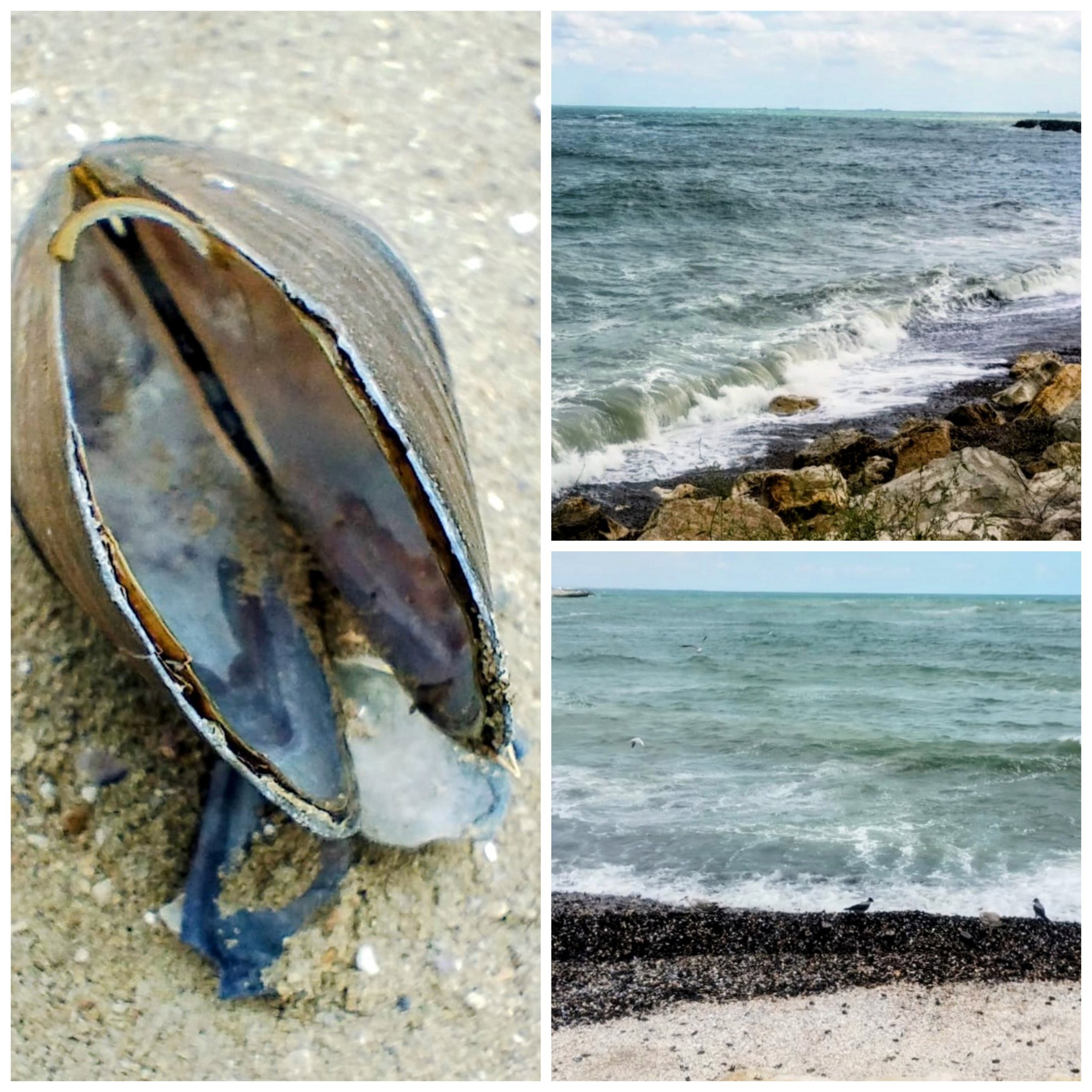
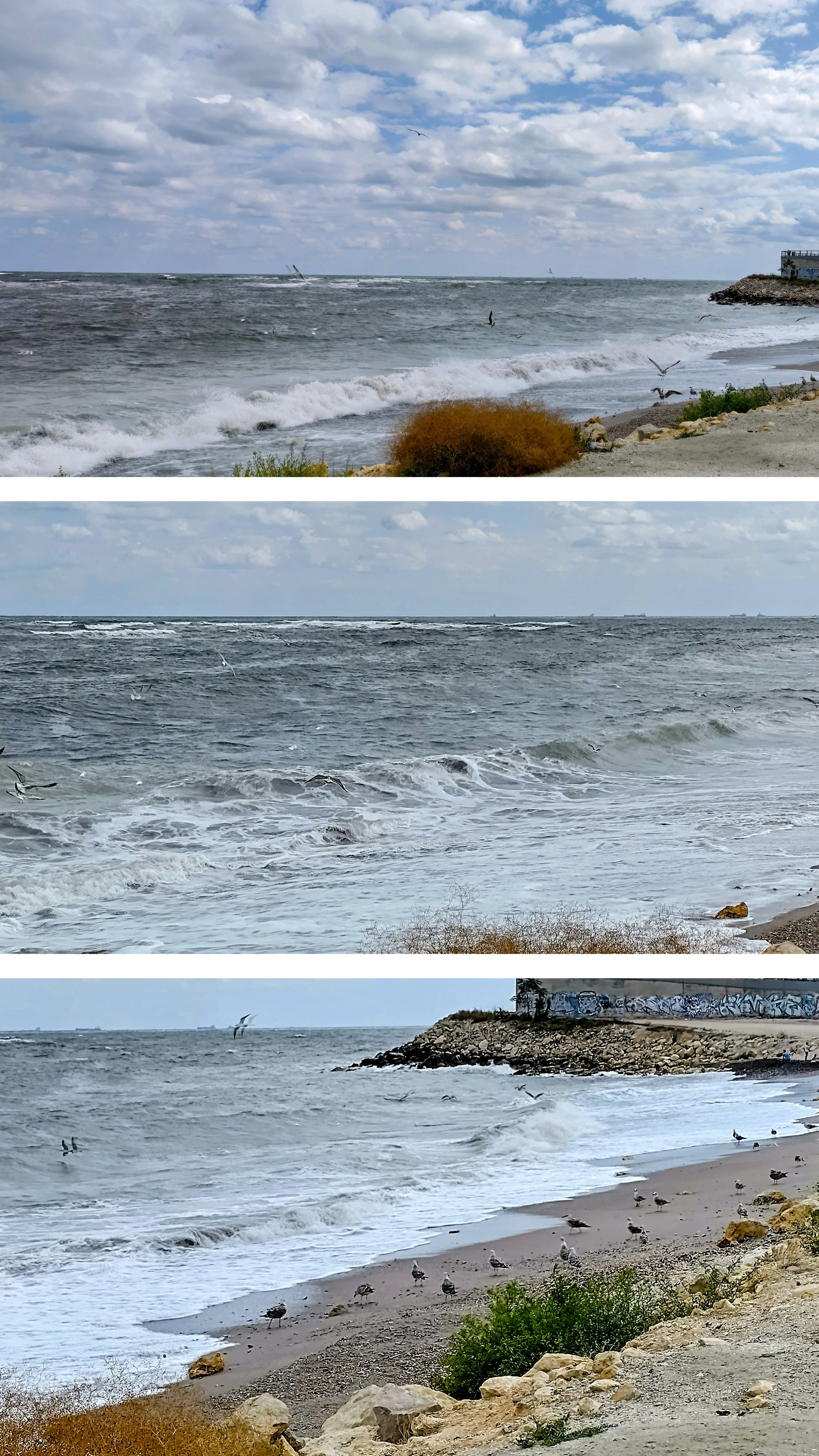
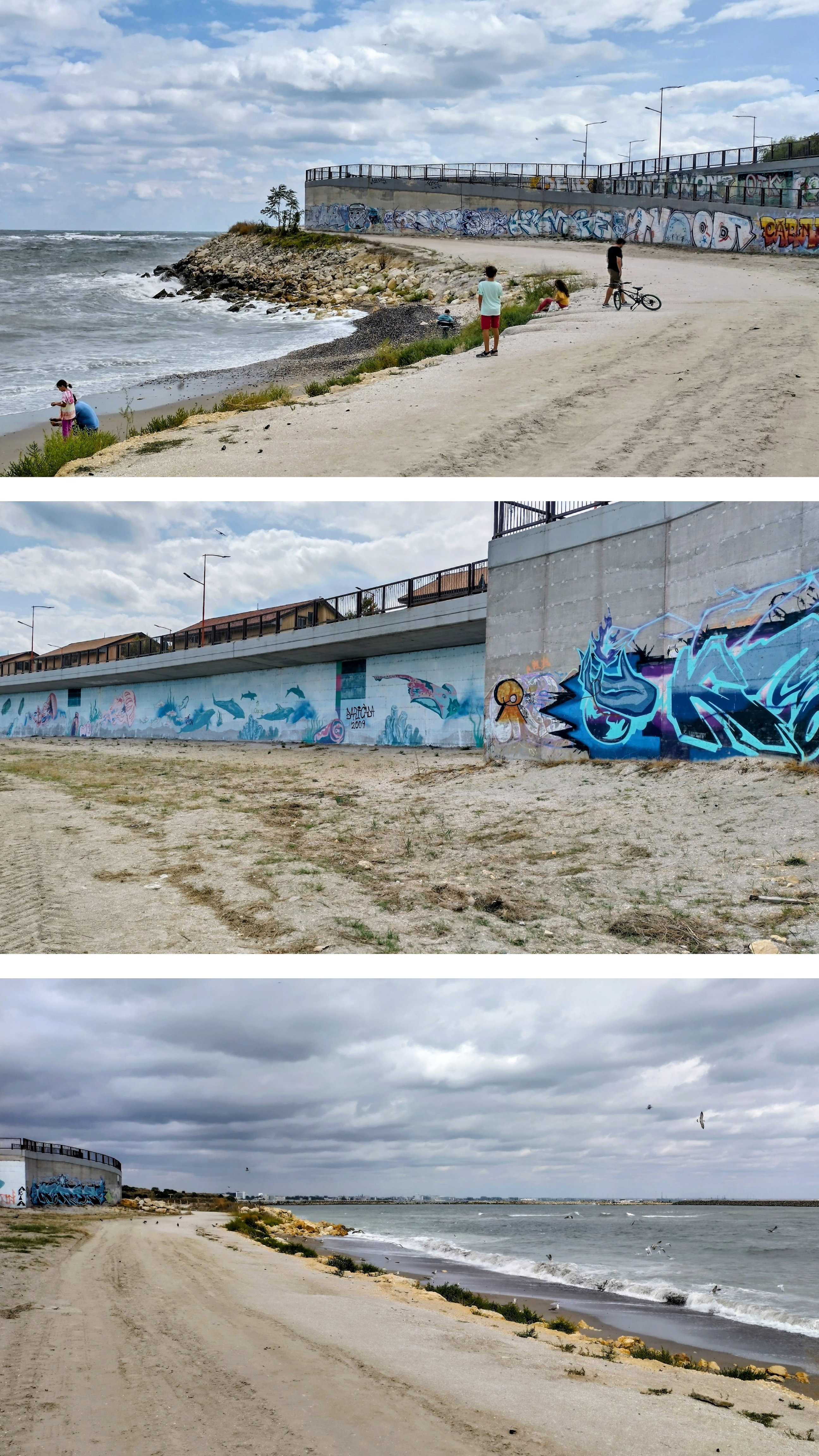
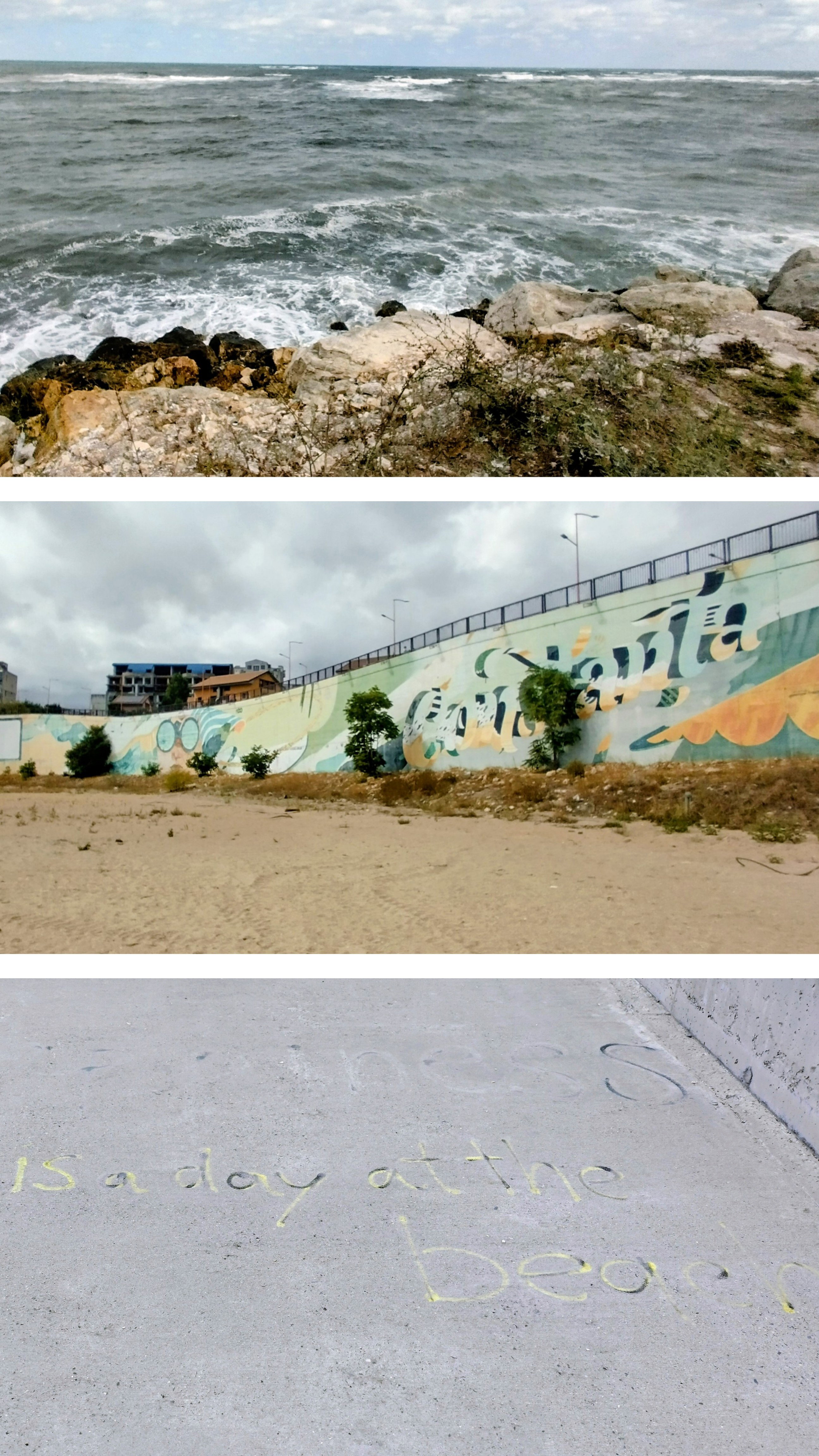
Happiness is a day at the beach
Pentru noi, aici s-a terminat cu marea, dar încă nu s-a terminat cu Constanța, pentru că mai aveam câteva ore de pierdut. Dar, cu rucsacuri în spate, pe căldură și deja înfometați, ne-am atins cota de pași pe ziua de azi și doream un scurt popas.
Căutând restaurante care, deși apăreau pe hartă, în extrasezon practicau orare atipice, am ajuns, din metru-n metru, tocmai până la McDonald’s-ul de la Delfinariu, unde am poposit și cu alte ocazii. Am oprit aici pentru prânz și apoi, pentru siestă, am continuat prin spatele Microrezervației. Am văzut Biserica de lemn Sf. Mina (doar de afară… prea cald pentru haine lungi), lebede de toate felurile și am trecut podul de pe Lacul Tăbăcăriei spre parcul cu același nume.
For us, this was where the sea part ended, but Constanța was not over yet, because we still had a few hours to spare. But with backpacks on our backs, in the heat, and already hungry, we had reached our step quota for the day and wanted a short stop.
Looking for restaurants which, although they appeared on the map, kept atypical schedules in the off-season, we ended up, meter by meter, all the way at the McDonald’s by the Dolphinarium, where we had stopped on other occasions as well. We stopped here for lunch and then, for a siesta, continued behind the Micro-Reserve. We saw the wooden Church of St. Mina — only from the outside… too hot for long clothes —, swans of all kinds, and crossed the bridge over Lake Tăbăcăriei toward the park of the same name.
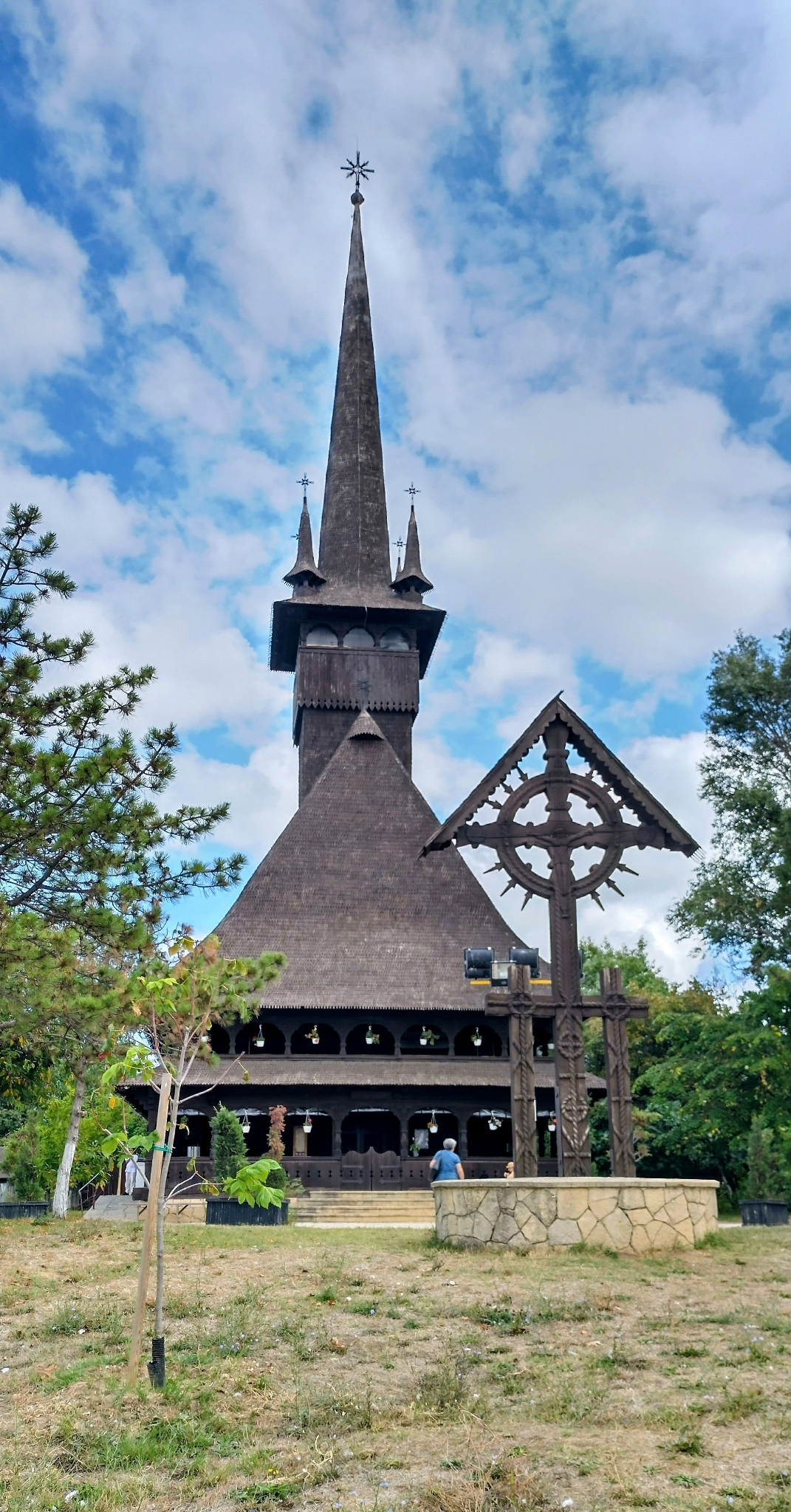
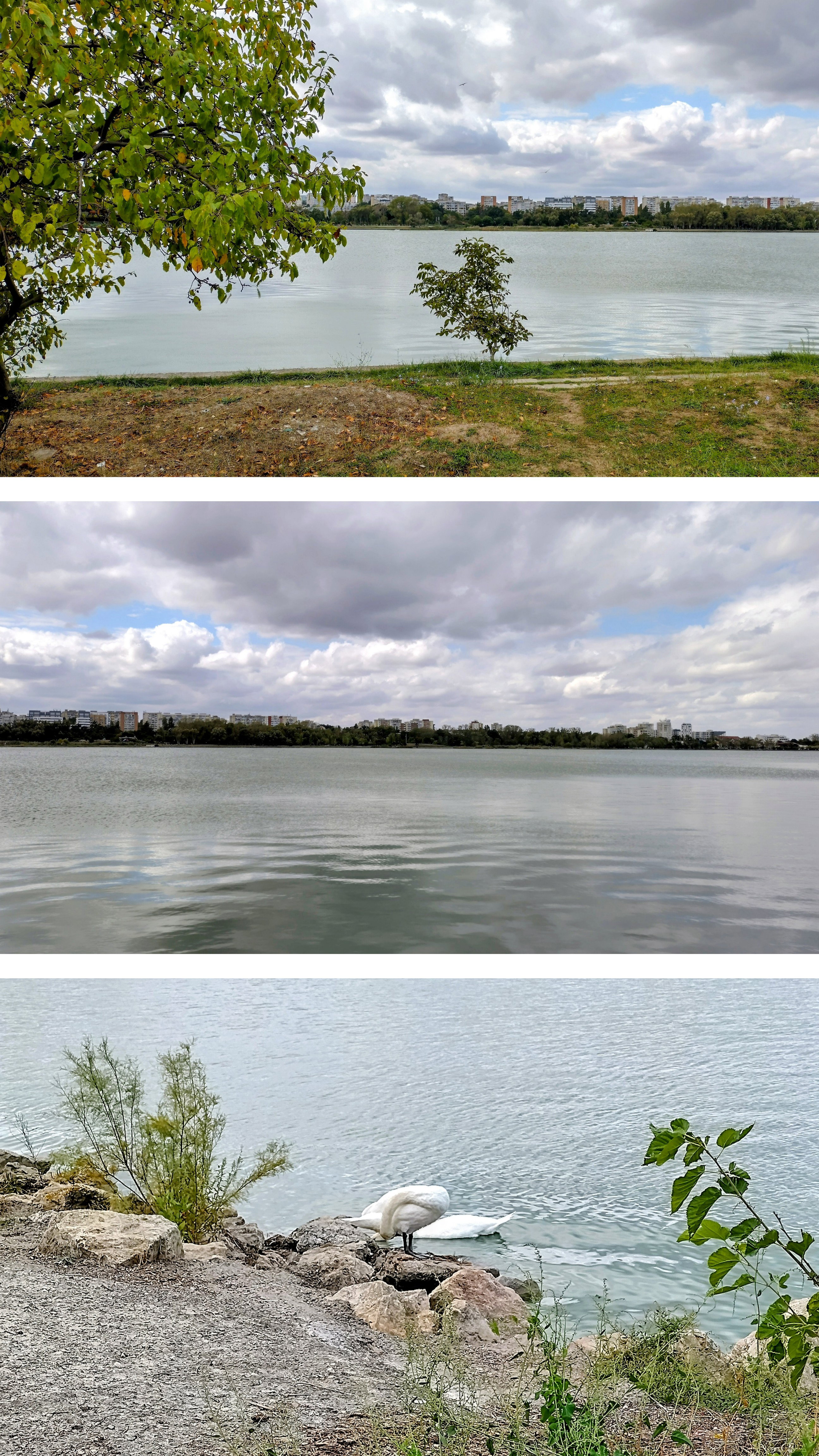
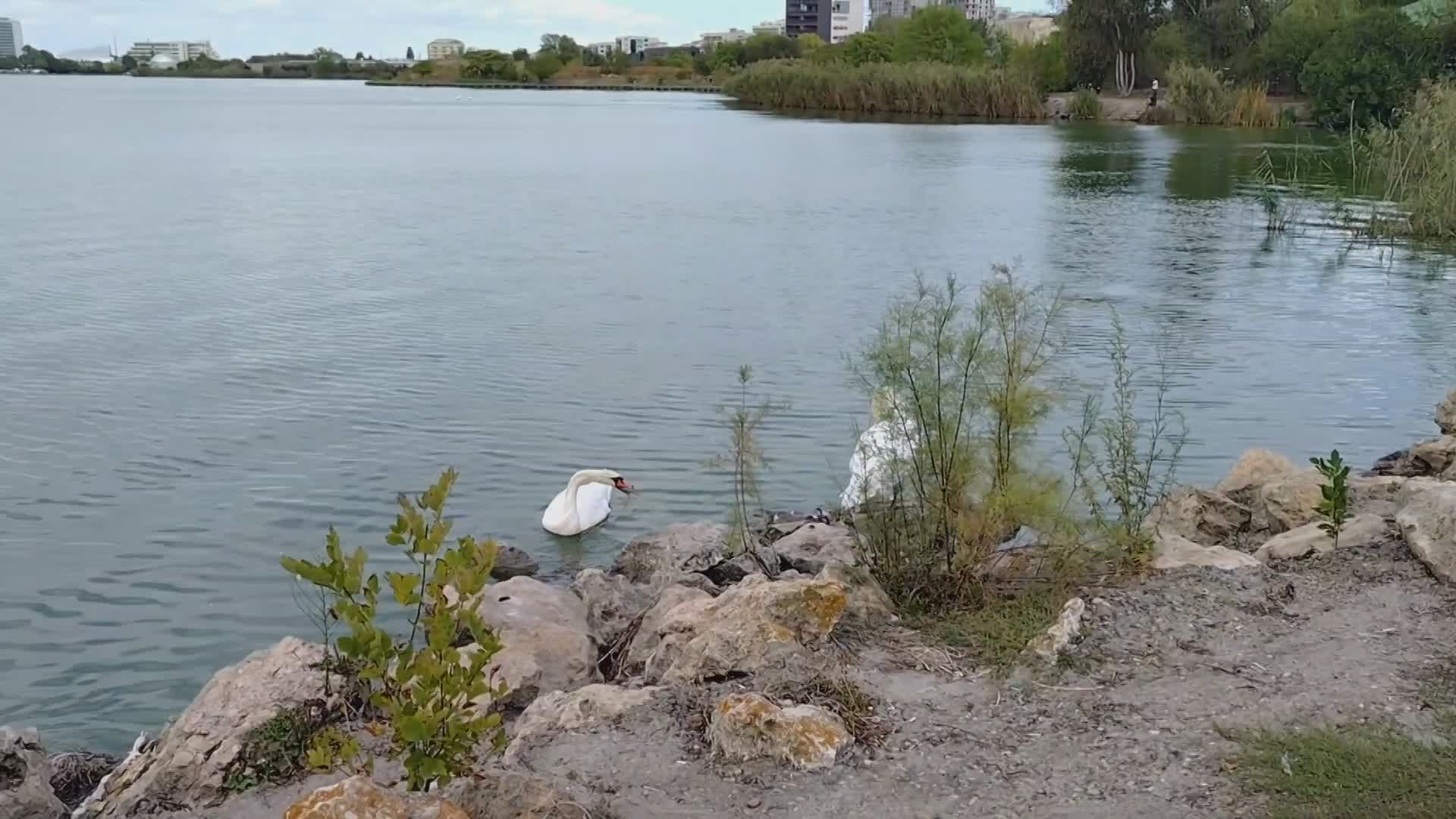
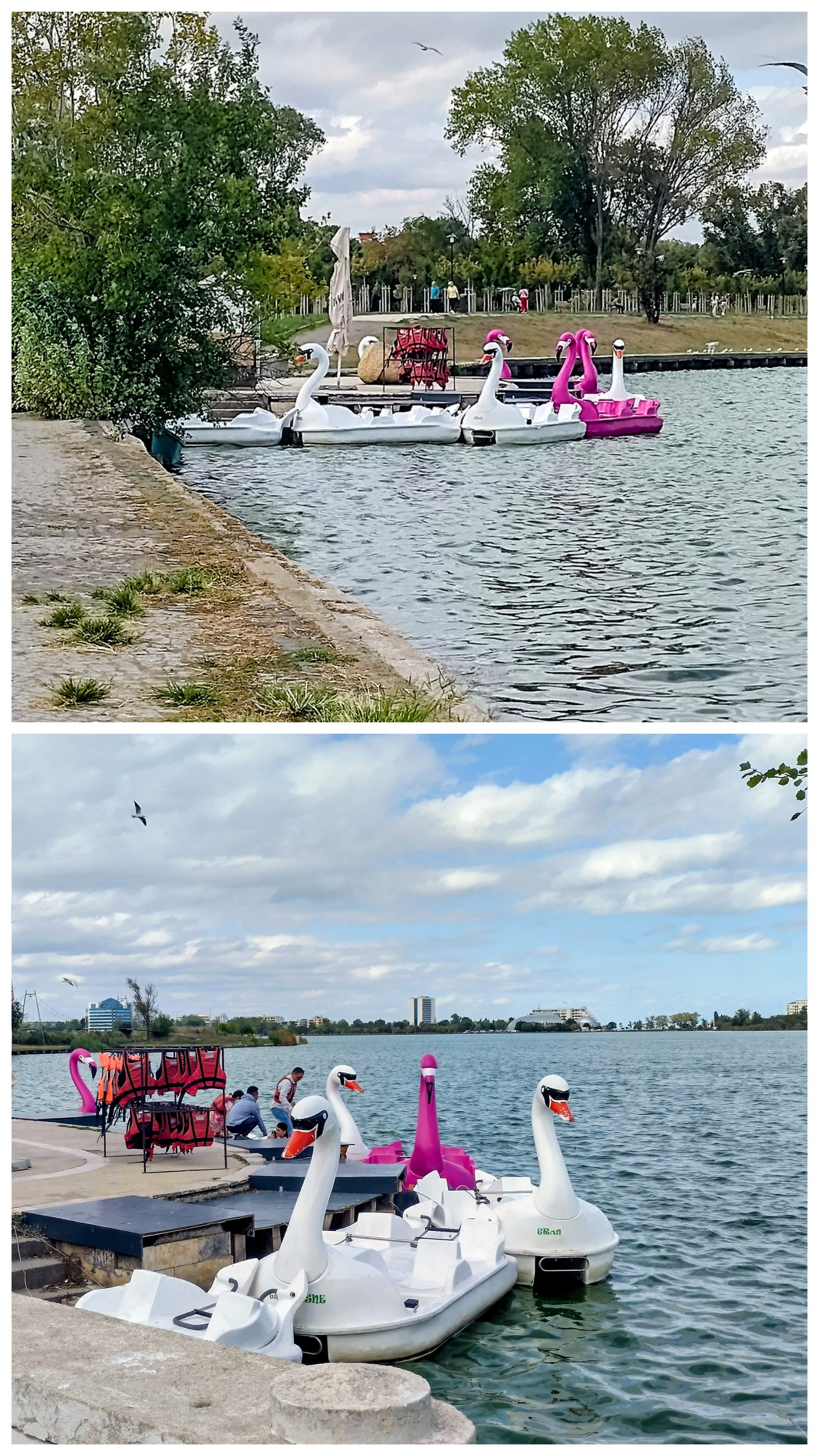
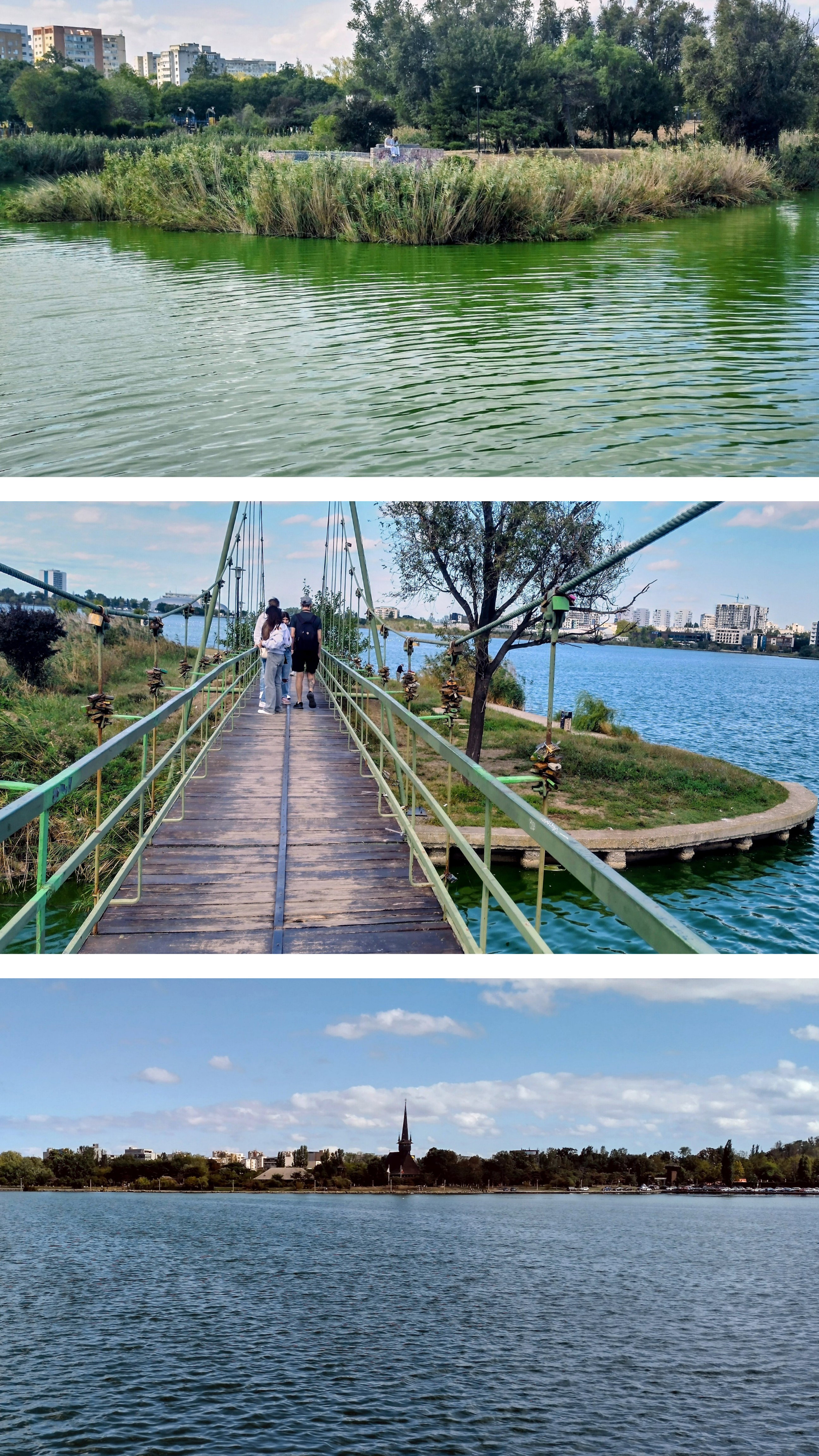
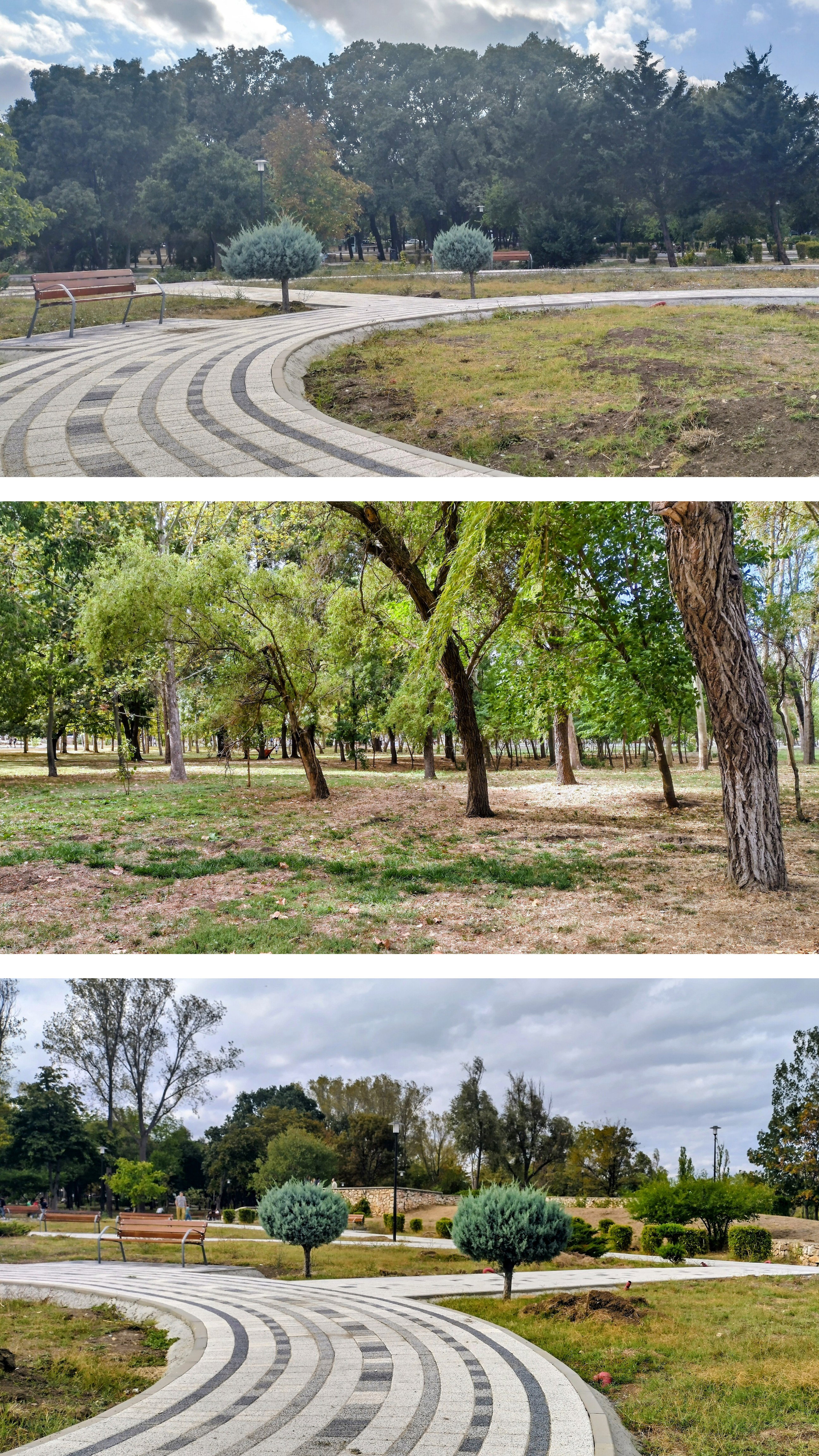
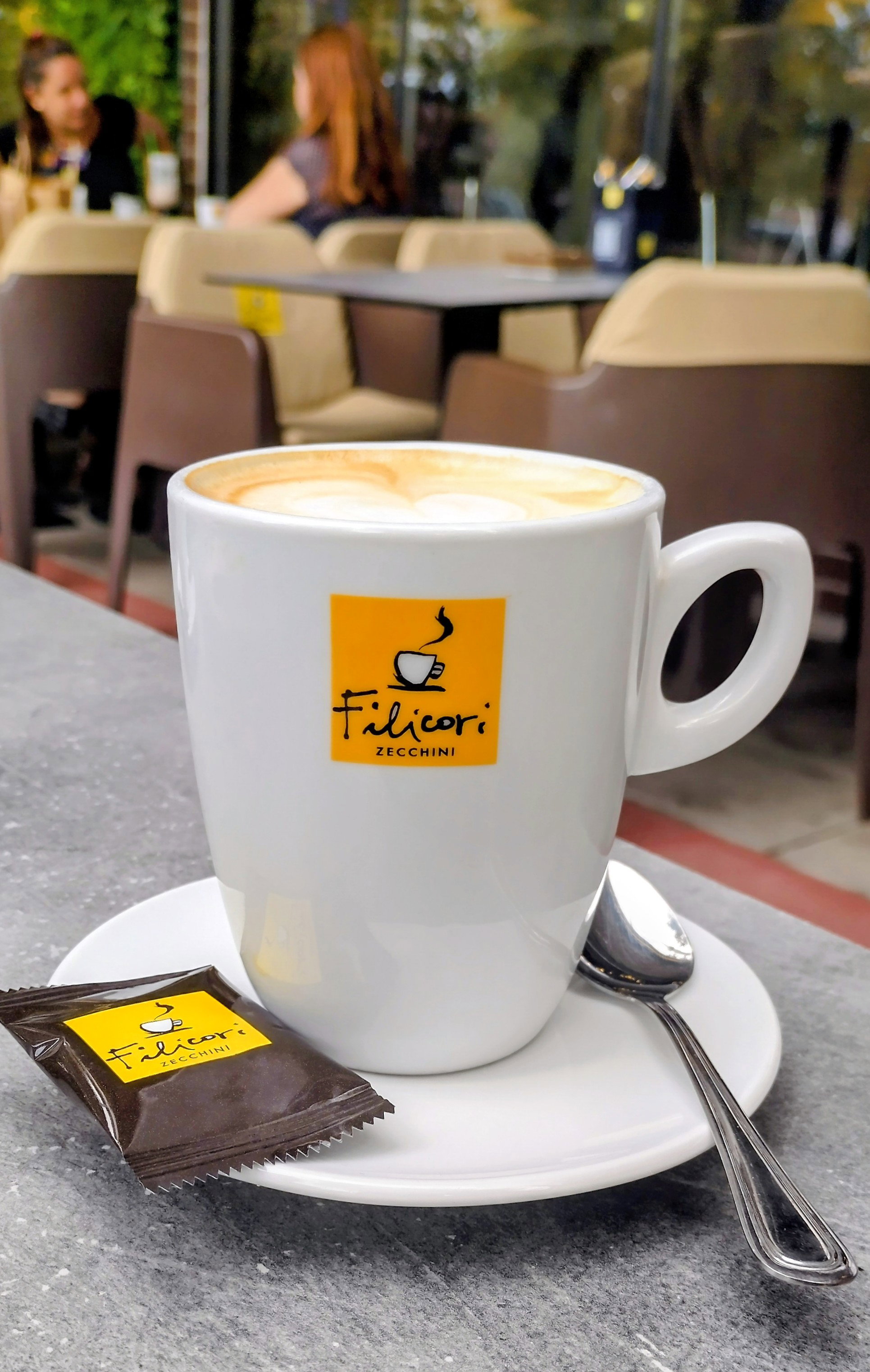
După încă o plimbare pe aici și pentru că somnul era încăpățânat, ultimul popas înainte de a porni spre gară a fost la cafeneaua Filicori, unde ne-a plăcut tot: de la cafea, la biscuițel (nu mereu sunt reușiți), la servire, muzică și atmosferă, la bulevard. Dacă revenim și la anul în zona Tăbăcăriei, ceea ce nu e exclus, vom reveni și aici.
After one more walk around here, and because sleepiness was stubborn, the last stop before heading to the station was at the Filicori café, where we liked everything — from the coffee to the little biscuit (they are not always tasty), to the service, music, and atmosphere, on the boulevard. If we come back next year as well to the Tăbăcăriei area, which is not out of the question, we will come back here too.
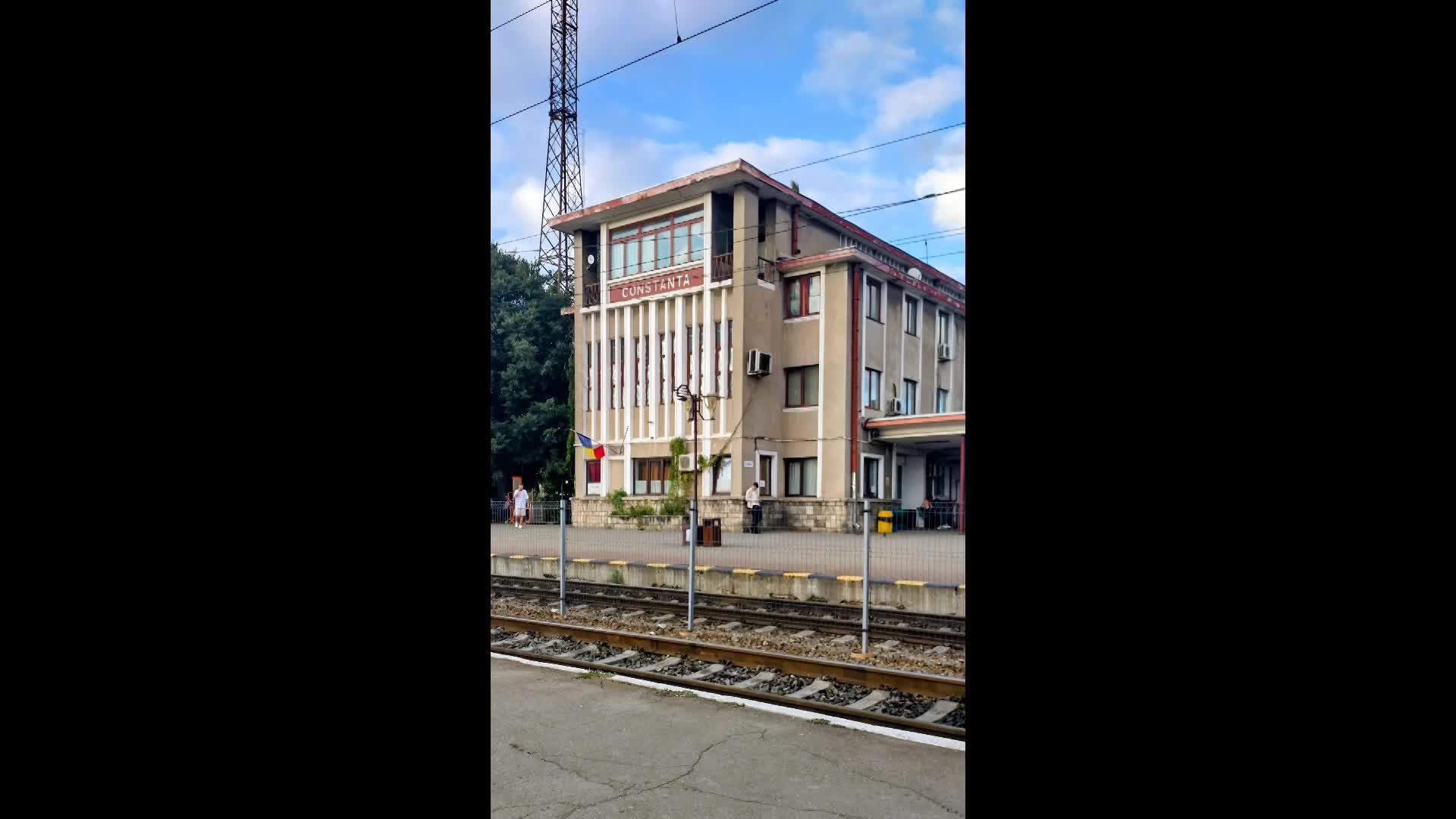
Ne-am întors seara la București cu IR 16094. Pe geam n-am mai apucat să vedem prea multe până să se lase întunericul de tot.
We returned to Bucharest in the evening on IR 16094. Through the window, we didn’t manage to see much more before darkness fell completely.
Dar, cu telefonul plin de poze și cu marea-n suflet, ne-am luat la revedere de la Mamaia: până data viitoare!
„...Mă-ntorc la tine iar și iar, mare albastră, cum se întoarce valul tău veșnic la mal…”
But, with our phone full of photos and the sea in our soul, we said goodbye to Mamaia: until next time!
“...I return to you again and again, blue sea, as your eternal wave returns to the shore…”
- Cost: 35 RON telegondola
- Durată: plimbări scurte pe fiecare segment, de ~1 oră, care pot fi prelungite după plac
- Verdict: 9/10 - merită mult!
- Cost: RON 35 for the cable car
- Duration: short walks on each segment, of about one hour, which can be extended as desired
- Verdict: 9/10 - worth it a lot!
Comments